Results by title
341 books match the query 'Geography' and 10 start with i

Imagining Serengeti
A History of Landscape Memory in Tanzania from Earliest Times to the PresentJan Bender Shetler
Ohio University Press, 2007
Many students come to African history with a host of stereotypes that are not always easy to dislodge. One of the most common is that of Africa as safari grounds—as the land of expansive, unpopulated game reserves untouched by civilization and preserved in their original pristine state by the tireless efforts of contemporary conservationists. With prose that is elegant in its simplicity and analysis that is forceful and compelling, Jan Bender Shetler brings the landscape memory of the Serengeti to life. She demonstrates how the social identities of western Serengeti peoples are embedded in specific spaces and in their collective memories of those spaces. Using a new methodology to analyze precolonial oral traditions, Shetler identifies core spatial images and reevaluates them in their historical context through the use of archaeological, linguistic, ethnographic, ecological, and archival evidence. Imagining Serengeti is a lively environmental history that will ensure that we never look at images of the African landscape in quite the same way.

Immortal River
The Upper Mississippi in Ancient and Modern TimesCalvin R. Fremling
University of Wisconsin Press, 2005
Like the Mississippi itself, Immortal River often leaves the main channel to explore the river's backwaters, floodplain, and drainage basin. The book's focus is the Upper Mississippi, from Minneapolis, Minnesota, to Cairo, Illinois. But it also includes information about the river's headwaters in northern Minnesota and about the Lower Mississippi from Cairo south to the river's mouth ninety miles below New Orleans. It offers an understanding of the basic geology underlying the river's landscapes, ecology, environmental problems, and grandeur.

In Place/Out of Place
Geography, Ideology, and TransgressionTim Cresswell
University of Minnesota Press, 1996
In Place/Out of Place was first published in 1996. Minnesota Archive Editions uses digital technology to make long-unavailable books once again accessible, and are published unaltered from the original University of Minnesota Press editions.
What is the relationship between place and behavior? In this fascinating volume, Tim Cresswell examines this question via "transgressive acts" that are judged as inappropriate not only because they are committed by marginalized groups but also because of where they occur.
In Place/Out of Place seeks to illustrate the ways in which the idea of geographical deviance is used as an ideological tool to maintain an established order. Cresswell looks at graffiti in New York City, the attempts by various "hippie" groups to hold a free festival at Stonehenge during the summer solstices of 1984–86, and the Greenham Common Women's Peace Camp in Berkshire, England. In each of the cases described, the groups involved were designated as out of place both by the media and by politicians, whose descriptions included an array of images such as dirt, disease, madness, and foreignness.
Cresswell argues that space and place are key factors in the definition of deviance and, conversely, that space and place are used to construct notions of order and propriety. In addition, whereas ideological concepts being expressed about what is good, just, and appropriate often are delineated geographically, the transgression of these delineations reveals the normally hidden relationships between place and ideology-in other words, the "out-of-place" serves to highlight and define the "in-place." By looking at the transgressions of the marginalized, Cresswell argues, we can gain a novel perspective on the "normal" and "taken-for-granted" expectations of everyday life. The book concludes with a consideration of the possibility of a "politics of transgression," arguing for a link between the challenging of spatial boundaries and the possibility of social transformation.
Tim Cresswell is currently lecturer in geography at the University of Wales.

In Search of the Rain Forest
Candace Slater, ed.
Duke University Press, 2004
From diverse disciplines—history, archaeology, sociology, literature, law, and cultural anthropology—the contributors provide case studies from Latin America, Asia, and Africa. They point the way toward a search for a rain forest that is both a natural entity and a social history, an inhabited place and a shifting set of ideas. The essayists demonstrate how the single image of a wild and yet fragile forest became fixed in the popular mind in the late twentieth century, thereby influencing the policies of corporations, environmental groups, and governments. Such simplistic conceptions, In Search of the Rain Forest shows, might lead companies to tout their “green” technologies even as they try to downplay the dissenting voices of native populations. Or they might cause a government to create a tiger reserve that displaces peaceful peasants while opening the doors to poachers and bandits. By encouraging a nuanced understanding of distinctive, constantly evolving forests with different social and natural histories, this volume provides an important impetus for protection efforts that take into account the rain forest in all of its complexity.
Contributors. Scott Fedick, Alex Greene, Paul Greenough, Nancy Peluso, Suzana Sawyer, Candace Slater, Charles Zerner
In Space We Read Time
On the History of Civilization and GeopoliticsKarl Schlögel
Bard Graduate Center, 2016
Here is both a model for thinking about history within physical space and a stimulating history of thought about space, as Schlögel reads historical periods and events within the context of their geographical location. Discussions range from the history of geography in France to what a town directory from 1930s Berlin can say about professional trades that have since disappeared. He takes a special interest in maps, which can serve many purposes—one poignant example being the German Jewish community’s 1938 atlas of emigration, which showed the few remaining possibilities for escape. Other topics include Thomas Jefferson’s map of the United States; the British survey of India; and the multiple cartographers with Woodrow Wilson at the Paris Peace Conference, where the aim was to redraw Europe’s boundaries on the basis of ethnicity. Moving deftly from the Austro-Hungarian Empire to 9/11 and from Vermeer’s paintings to the fall of the Berlin Wall, this intriguing book presents history from a completely new perspective.
Indian Ink
Script and Print in the Making of the English East India CompanyMiles Ogborn
University of Chicago Press, 2007
A commercial company established in 1600 to monopolize trade between England and the Far East, the East India Company grew to govern an Indian empire. Exploring the relationship between power and knowledge in European engagement with Asia, Indian Ink examines the Company at work and reveals how writing and print shaped authority on a global scale in the seventeenth and eighteenth centuries.
Tracing the history of the Company from its first tentative trading voyages in the early seventeenth century to the foundation of an empire in Bengal in the late eighteenth century, Miles Ogborn takes readers into the scriptoria, ships, offices, print shops, coffeehouses, and palaces to investigate the forms of writing needed to exert power and extract profit in the mercantile and imperial worlds. Interpreting the making and use of a variety of forms of writing in script and print, Ogborn argues that material and political circumstances always undermined attempts at domination through the power of the written word.
Navigating the juncture of imperial history and the history of the book, Indian Ink uncovers the intellectual and political legacies of early modern trade and empire and charts a new understanding of the geography of print culture.

Indian Reservations in the United States
Territory, Sovereignty, and Socioeconomic ChangeKlaus Frantz
University of Chicago Press, 1999
Informed by both historical research and extensive fieldwork, this book pays special attention to the natural resource base and economic outlook of the reservations, as well as the crucial issue of tribal sovereignty. Chapters also cover the demography of American Indian groups and their socioeconomic status (including standard of living, employment, and education). A new afterword treats some of the developments since the book's initial publication in German, such as the effects of the 1988 Indian gaming law that allowed Indian reservations to operate gambling establishments (with mixed success).
"Provides a good overview of the basic questions and problems facing reservation Indians today."—Peter Bolz, Journal of American History (on the German edition)
Insurgent Democracy
The Nonpartisan League in North American PoliticsMichael J. Lansing
University of Chicago Press, 2015
Michael J. Lansing aims to change that. Insurgent Democracy offers a new look at the Nonpartisan League and a new way to understand its rise and fall in the United States and Canada. Lansing argues that, rather than a spasm of populist rage that inevitably burned itself out, the story of the League is in fact an instructive example of how popular movements can create lasting change. Depicting the League as a transnational response to economic inequity, Lansing not only resurrects its story of citizen activism, but also allows us to see its potential to inform contemporary movements.
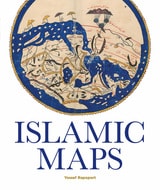
Islamic Maps
Yossef Rapoport
Bodleian Library Publishing, 2019
Islamic Maps examines Islamic visual interpretations of the world in their historical context through the map-makers themselves. What was the purpose of their maps, what choices did they make, and what arguments about the world were they trying to convey? Lavishly illustrated with stunning manuscripts, beautiful instruments, and Qibla charts, this book shows how maps constructed by Muslim map-makers capture the many dimensions of Islamic civilization across the centuries.

Isle of Fire
The Political Ecology of Landscape Burning in MadagascarChristian A. Kull
University of Chicago Press, 2004