Results by title
149 books match the query 'Group identity' and 11 start with i

Identity Complex
Making the Case for MultiplicityMichael Hames-García
University of Minnesota Press, 2011
In seemingly exhaustive arguments about identity as a category of analysis, we have made a critical error—one that Michael Hames-García sets out to correct in this revisionary look at the making and meaning of social identities. We have asked how separate identities—of race, class, ethnicity, gender, and sexuality—come to intersect. Instead, Hames-García proposes, we should begin by understanding such social identities as mutually constituting one another.
Grounded in both theoretical and political practices—in the lived realities of people’s experience—Identity Complex reinvigorates identity as a key concept and as a tool for the pursuit of social justice. Hames-García draws on a wide range of examples to show that social identities are central to how exploitation works, such as debates about the desirability of sexual minority identities in postcolonial contexts, questions about the reality of race, and the nature of the U.S. prison crisis.
Unless we understand precisely how identities take shape in relation to each other and within contexts of oppression, he contends, we will never be able to eradicate discrimination and social inequality. By analyzing the social interdependence of identities, Hames-García seeks to enable the creation of deep connections of solidarity across differences.

Identity Destabilised
Living in an Overheated WorldEdited by Thomas Hylland Eriksen and Elisabeth Schober
Pluto Press, 2016
Identity and the Failure of America
From Thomas Jefferson to the War on TerrorJohn Michael
University of Minnesota Press, 2008
From Thomas Jefferson to John Rawls, justice has been at the center of America’s self-image and national creed. At the same time, for many of its peoples-from African slaves and European immigrants to women and the poor-the American experience has been defined by injustice: oppression, disenfranchisement, violence, and prejudice.
In Identity and the Failure of America, John Michael explores the contradictions between a mythic national identity promising justice to all and the realities of a divided, hierarchical, and frequently iniquitous history and social order. Through a series of insightful readings, Michael analyzes such cultural moments as the epic dramatization of the tension between individual ambition and communal complicity in Moby-Dick, attempts to effect social change through sympathy in the novels of Lydia Marie Child and Harriet Beecher Stowe, Ralph Waldo Emerson’s antislavery activism and Frederick Douglass’s long fight for racial equity, and the divisive figures of John Brown and Nat Turner in American letters and memory.
Focusing on exemplary instances when the nature of the United States as an essentially conflicted nation turned to force, Michael ultimately posits the development of a more cosmopolitan American identity, one that is more fully and justly imagined in response to the nation’s ethical failings at home and abroad.
John Michael is professor of English and of visual and cultural studies at the University of Rochester. He is the author of Anxious Intellects: Academic Professionals, Public Intellectuals, and Enlightenment Values and Emerson and Skepticism: The Cipher of the World.
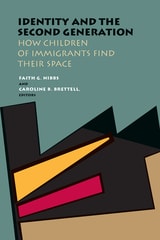
Identity and the Second Generation
How Children of Immigrants Find Their SpaceFaith G. Nibbs
Vanderbilt University Press, 2015
This book explores the social worlds of the children of immigrants. Based on rich ethnographic research, the contributors illustrate how these young people, the so-called second generation, construct and negotiate their lives. Ultimately, the driving question is profoundly important on a universal level: How do these young people construct an identity and a sense of belonging for themselves, and how do they deal with processes of inclusion and exclusion?

Improper Names
Collective Pseudonyms from the Luddites to AnonymousMarco Deseriis
University of Minnesota Press, 2015
Improper Names offers a genealogy and theory of the “improper name,” which author Marco Deseriis defines as the adoption of the same pseudonym by organized collectives, affinity groups, and individual authors. Although such names are often invented to pursue a specific social or political agenda, they are soon appropriated for different and sometimes diverging purposes. This book examines the tension arising from struggles for control of a pseudonym’s symbolic power.
Deseriis provides five fascinating and widely varying case studies. Ned Ludd was the legendary and eponymous leader of the English Luddites, textile workers who threatened the destruction of industrial machinery and then advanced a variety of economic and political demands. Alan Smithee—an alias coined by Hollywood film directors in 1969 in order to disown films that were recut by producers—became a contested signature and was therefore no longer effective to signal prevarication to Hollywood insiders. Monty Cantsin was an “open pop star” created by U.S. and Canadian artists in the late 1970s to critique bourgeois notions of authorship, but its communal character was compromised by excessive identification with individual users of the name. The Italian media activists calling themselves Luther Blissett, aware of the Cantsin experience, implemented measures to prevent individuals from assuming the alias, which was used to author media pranks, sell apocryphal manuscripts to publishers, fabricate artists and artworks, and author best-selling novels. The longest chapter here is devoted to the contemporary “hacktivist” group known as Anonymous, which protests censorship and restricted access to information and information technologies.
After delving into a rich philosophical debate on community among those who have nothing in common, the book concludes with a reflection on how the politics of improper names affects present-day anticapitalist social movements such as Occupy and 15-M.

In and Of the Mediterranean
Medieval and Early Modern Iberian StudiesMichelle M. Hamilton
Vanderbilt University Press, 2014

Inauthentic
The Anxiety over Culture and IdentityVincent J. Cheng
Rutgers University Press, 2004
Modern and contemporary cultures are increasingly marked by an anxiety over a perceived loss of authentic cultural identity. In this book, Vincent J. Cheng examines why we still cling to notions of authenticity in an increasingly globalized world that has exploded notions of authentic essences and absolute differences.
Who is “authentic” and who is “other” in a given culture? Who can speak for the “other?” What do we mean by authenticity? These are critical questions that today’s world––brought closer together and yet pulled farther apart by globalism and neocolonialism––has been unable to answer. Inauthentic compellingly probes these issues through revealing case studies on the pursuit of authenticity and identity.
Each chapter explores the ways in which we construct “authenticity” in order to replace seemingly vacated identities, including: the place of minorities in academia; mixed-race dynamics; the popularity of Irish culture in America; the Good Friday agreement in Northern Ireland; Jewish American identity; the status of Jewish America in relation to Israel and Palestine; the cultural problems of international adoptions; and the rapidly changing nature of the Asian American population in the United States.
Inauthentic combines the scholarly and the personal, informed argument and human interest. It will undoubtedly appeal to academic scholars, as well as to a broader reading audience.

Insurgent Identities
Class, Community, and Protest in Paris from 1848 to the CommuneRoger V. Gould
University of Chicago Press, 1995
The difference was due to Baron Haussmann's massive urban renovation projects between 1852 and 1868, which dispersed workers from Paris's center to newly annexed districts on the outskirts of the city. In these areas, residence rather than occupation structured social relations. Drawing on evidence from trail documents, marriage records, reports of police spies, and the popular press, Gould demonstrates that this fundamental rearrangement in the patterns of social life made possible a neighborhood insurgent movement; whereas the insurgents of 1848 fought and died in defense of their status as workers, those in 1871 did so as members of a besieged urban community.
A valuable resource for historians and scholars of social movements, this work shows that collective identities vary with political circumstances but are nevertheless constrained by social networks. Gould extends this argument to make sense of other protest movements and to offer predictions about the dimensions of future social conflict.
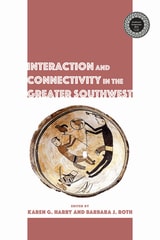
Interaction and Connectivity in the Greater Southwest
Karen Harry
University Press of Colorado, 2018
The book observes social interactions’ role in the diffusion of ideas and material culture; the way different social units, especially households, interacted within and between communities; and the importance of interaction and interconnectivity in understanding the archaeology of the Southwest’s northern periphery. Chapters demonstrate a movement away from strictly economic-driven models of social connectivity and interaction and illustrate that members of social groups lived in dynamic situations that did not always have clear-cut and unwavering boundaries. Social connectivity and interaction were often fluid, changing over time.
Interaction and Connectivity in the Greater Southwest is an impressive collection of established and up-and-coming Southwestern archaeologists collaborating to strengthen the theoretical underpinnings of the discipline. It will be of interest to professional and academic archaeologists, as well as researchers with interests in diffusion, identity, cultural transmission, borders, large-scale interaction, or social organization.
Contributors:
Richard V. N. Ahlstrom, James R. Allison, Jean H. Ballagh, Catherine M. Cameron, Richard Ciolek-Torello, John G. Douglass, Suzanne L. Eckert, Hayward H. Franklin, Patricia A. Gilman, Dennis A. Gilpin, William M. Graves, Kelley A. Hays-Gilpin, Lindsay D. Johansson, Eric Eugene Klucas, Phillip O. Leckman, Myles R. Miller, Barbara J. Mills, Matthew A. Peeples, David A. Phillips Jr., Katie Richards, Heidi Roberts, Thomas R. Rocek, Tammy Stone, Richard K. Talbot, Marc Thompson, David T. Unruh, John A. Ware, Kristina C. Wyckoff

Islam In Urban America
Sunni Muslims In ChicagoGarbi Schmidt
Temple University Press, 2004

Islamism in the Shadow of al-Qaeda
By François Burgat
University of Texas Press, 2008
A renowned authority on Islamic movements, François Burgat lived for eighteen years in the Arab world, including his time as director of the French Center for Archaeology and Social Sciences at Yemen. He also dedicated many months to fieldwork in North Africa. Bringing Burgat's decades of expertise to the complex dialogues that have marked the post-9/11 world, Islamism in the Shadow of al-Qaeda delivers much-needed clarity and historical perspective.
In Burgat's eyes, most of the West's political and media rhetoric has only fueled al-Qaeda's case, revealing a woeful lack of comprehension regarding the violent authoritarianism that divides the Middle East and creates a breeding ground for terrorism. Islamism in the Shadow of al-Qaeda provides a primer of the three eras of political Islam, from the 1928 founding of the Muslim Brothers to the rise of post-colonial dictatorships and the current radicalization of "Generation al-Qaeda." Offering a new roadmap for stability, Burgat bridges the ideologies—political, religious, and cultural—that must be traversed if the deadly sectarianism is to be superseded.