Results by title
73 books match the query 'Health Care Delivery' and 3 start with i
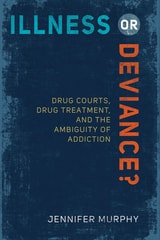
Illness or Deviance?
Drug Courts, Drug Treatment, and the Ambiguity of AddictionJennifer Murphy
Temple University Press, 2015
Is drug addiction a disease that can be treated, or is it a crime that should be punished? In her probing study, Illness or Deviance?, Jennifer Murphy investigates the various perspectives on addiction, and how society has myriad ways of handling it—incarcerating some drug users while putting others in treatment.
Illness or Deviance? highlights the confusion and contradictions about labeling addiction. Murphy’s fieldwork in a drug court and an outpatient drug treatment facility yields fascinating insights, such as how courts and treatment centers both enforce the “disease” label of addiction, yet their management tactics overlap treatment with “therapeutic punishment.” The “addict" label is a result not just of using drugs, but also of being a part of the drug lifestyle, by selling drugs. In addition, Murphy observes that drug courts and treatment facilities benefit economically from their cooperation, creating a very powerful institutional arrangement.
Murphy contextualizes her findings within theories of medical sociology as well as criminology to identify the policy implications of a medicalized view of addiction.
[more]

In Changing Times
Gay Men and Lesbians Encounter HIV/AIDSEdited by Martin P. Levine, Peter M. Nardi, and John H. Gagnon
University of Chicago Press, 1997
The HIV/AIDS epidemic has been a major catastrophe for gay communities. In less than two decades, the disease has profoundly changed the lives of gay men and lesbians. Not just a biological and viral agent, HIV has become an opportunistic social invader, reshaping communities and the distribution of wealth, altering the social careers of gay professionals and the patterns of entry into gay and lesbian life, and giving birth to groups like ACT UP and Queer Nation.
The distinguished contributors to this volume discuss the ways HIV/AIDS has changed collective and individual identities, as well as lives, of gay men and lesbians, and how these alterations have changed our perceptions of the epidemic. They cover such topics as the impact of the epidemic on small towns, cultural barriers to AIDS prevention, gay youth and intergenerational relations, and the roles of lesbians in AIDS organizations. This collection provides compelling insights into the new communities among gay men and lesbians and the new kinds of identities and relationships that are emerging from the social and cultural ferment engendered by HIV/AIDS.
Contributors include Barry D. Adam, Lourdes Arguelles, Rafael Miguel Diaz, John H. Gagnon, Gilbert Herdt, Gregory M. Herek, Nan D. Hunter, Peter M. Nardi, John L. Peterson, Anne Rivero, Gayle S. Rubin, Beth E. Schneider, and Nancy E. Stoller.
[more]
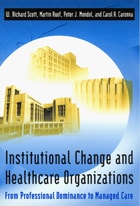
Institutional Change and Healthcare Organizations
From Professional Dominance to Managed CareW. Richard Scott, Martin Ruef, Peter J. Mendel, and Carol A. Caronna
University of Chicago Press, 2000
Few large institutions have changed as fully and dramatically as the U.S. healthcare system since World War II. Compared to the 1930s, healthcare now incorporates a variety of new technologies, service-delivery arrangements, financing mechanisms, and underlying sets of organizing principles.
This book examines the transformations that have occurred in medical care systems in the San Francisco Bay area since 1945. The authors describe these changes in detail and relate them to both the sociodemographic trends in the Bay Area and to shifts in regulatory systems and policy environments at local, state, and national levels. But this is more than a social history; the authors employ a variety of theoretical perspectives—including strategic management, population ecology, and institutional theory—to examine five types of healthcare organizations through quantitative data analysis and illustrative case studies.
Providing a thorough account of changes for one of the nation's leading metropolitan areas in health service innovation, this book is a landmark in the theory of organizations and in the history of healthcare systems.
[more]