Results by title
883 books match the query 'Historical' and 21 start with i

I Rest My Case
Mark Verstandig
Northwestern University Press, 2002
His personal story interweaves the vast forces of politics and history with intimate details of the shtetl--from the pre-war intricacies of Galician society and the textures of a traditional Jewish education, to the agonizing contradictions of Polish-Jewish relations and the complexities of post-war Jewish politics.
His account of the displaced persons camps where 'transit Jews' awaited their chance to emigrate is a signifigant contribution to a little-known aspect of post-war history.
With his gift for observation and his acute powers of analysis, Mark Verstandig has achieved the rare feat of telling the story of his people through his own history. Part autobiography, part Holocaust literature, part sociological analysis, I Rest my Case is a fine achievement.
Ibn Arabi's Small Death
Mohammed Hasan AlwanTranslated by William M. Hutchins
University of Texas Press, 2022
Ice-Out
Mary Casanova
University of Minnesota Press, 2016
Walking on thin ice: on Rainy Lake, in the northern reaches of Minnesota, it’s more than a saying. And for Owen Jensen, nineteen and suddenly responsible for keeping his mother and five brothers alive, the ice is thin indeed.
Ice-Out returns to the frigid and often brutal Prohibition-era borderland of Mary Casanova’s beloved novel Frozen, and to the characters who made it a favorite among readers of all ages. Owen, smitten with Frozen’s Sadie Rose, is struggling to make something of himself at a time when no one seems to hold the moral high ground. Bootlegging is rife, corruption is rampant, and lumber barons run roughshod over the people and the land. As hard as things seem when his father dies, stranding his impoverished family, they get considerably tougher—and more complicated—when Owen gets caught up in the suspicious deaths of a sheriff and deputy on the border.
Inspired by real events in early 1920s Minnesota, and by Mary Casanova’s own family history, Ice-Out is at once a story of young romance against terrible odds and true grit on the border between license and responsibility, rich and poor, and right and wrong in early twentieth-century America.
Imagining Wild Bill
James Butler Hickok in War, Media, and MemoryPaul Ashdown and Edward Caudill
Southern Illinois University Press, 2020
When it came to the Wild West, the nineteenth-century press rarely let truth get in the way of a good story. James Butler “Wild Bill” Hickok’s story was no exception. Mythologized and sensationalized, Hickok was turned into the deadliest gunfighter of all, a so-called moral killer, a national phenomenon even while he was alive.
Rather than attempt to tease truth from fiction, coauthors Paul Ashdown and Edward Caudill investigate the ways in which Hickok embodied the culture of glamorized violence Americans embraced after the Civil War and examine the process of how his story emerged, evolved, and turned into a viral multimedia sensation full of the excitement, danger, and romance of the West.
Journalists, the coauthors demonstrate, invented “Wild Bill” Hickok, glorifying him as a civilizer. They inflated his body count and constructed his legend in the midst of an emerging celebrity culture that grew up around penny newspapers. His death by treachery, at a relatively young age, made the story tragic, and dime-store novelists took over where the press left off. Reimagined as entertainment, Hickok’s legend continued to enthrall Americans in literature, on radio, on television, and in the movies, and it still draws tourists to notorious Deadwood, South Dakota.
American culture often embraces myths that later become accepted as popular history. By investigating the allure and power of Hickok’s myth, Ashdown and Caudill explain how American journalism and popular culture have shaped the way Civil War–era figures are remembered and reveal how Americans have embraced violence as entertainment.
Improbable Patriot
The Secret History of Monsieur de Beaumarchais, the French Playwright Who Saved the American RevolutionHarlow Giles Unger
Brandeis University Press, 2026
In 1776, the playwright and inventor Pierre-Augustin Caron de Beaumarchais (1732–99) conceived an audacious plan to send aid to the American rebels. What’s more, he convinced King Louis XVI to bankroll the project and single-handedly carried it out. By war’s end, he had supplied Washington’s army with most of its weapons and powder, though he was never paid or acknowledged by the United States. To some, he was a dashing hero, a towering intellect who saved the American Revolution. To others, he was a pure rogue, a double-dealing adventurer who stopped at nothing to advance his fame and fortune. In fact, he was both, and more: an advisor to kings, an arms dealer, and an author of some of the most enduring works of the stage, including The Marriage of Figaro and The Barber of Seville. Now in paperback, Improbable Patriot introduces readers to an unrecognized power player in the Revolutionary War.
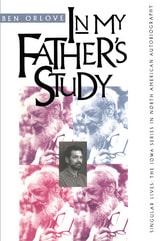
In My Father'S Study
Ben Orlove
University of Iowa Press, 1995
In 1921 Solomon Orlovski, a Russian Jew born in 1904, emigrated to America and transformed himself into Robert Orlove, a pattern maker in two senses of the term: during the day, he worked in the fur trade in New York and Chicago, making patterns for toys and hats; in his private life he became a self-taught artist who created prints, sketches, and collages in his study. More than sixty years later his son Ben—an anthropologist educated at Harvard and Berkeley—walked through the doorway of the deceased Robert's study and began to explore more than a half century of his father's experiences, thoughts, and emotions as well as his own very different life. His wry, sensitive combination of biography, memoir, and autobiography taps a remarkably rich vein of individual and collective experience in our diverse society.
Ben Orlove's dual narrative constitutes a family history of notable breadth and immediacy. By turns passionate and cool, dramatic and analytic, he excavates his father Robert's lifetime accumulation of diaries, letters, clippings, photographs, and artworks to create a convincing, deeply satisfying portrait that link both father and son.
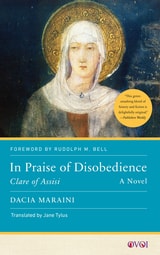
In Praise of Disobedience
Clare of Assisi, A NovelDacia Maraini
Rutgers University Press, 2023
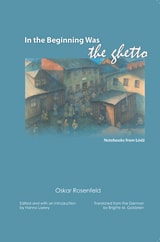
In the Beginning Was the Ghetto
Notebooks from LodzOskar Rosenfeld
Northwestern University Press, 2002
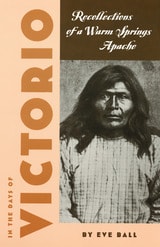
In the Days of Victorio
Recollections of a Warm Springs ApacheEve Ball; Narrated by James Kaywaykla
University of Arizona Press, 1970
"This volume contains a great deal of interesting information."—Journal of the West
"The Apache point of view [is] presented with great clarity."—Books of the Southwest
"A valuable addition to the southwestern frontier shelf and long will be drawn upon and used."—Journal of Arizona History
"A genuine contribution to the story of the Apache wars, and a very readable book as well."—Westerners Brand Book
"Shining through every page is the unquenchable spirit that was the Apache. Inured, indeed trained, to suffering, Apaches stood strong beside Victorio, Nana, and finally Geronimo in a vain attempt to maintain those things they held more dear than life itself—freedom, homeland, dignity as human beings. A warm and vital people, the Apaches had, and have, a great deal to offer."—Arizona and the West
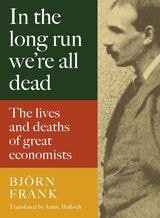
In the Long Run We're All Dead
The Lives and Deaths of Great EconomistsBjörn Frank
Haus Publishing, 2023
A fascinating and entertaining account of the lives of the most important economists of the past.
Until the late nineteenth century, economics couldn’t be studied at the university level; the field was the domain of well-educated figures whose radical curiosity drew them to a discipline that was little understood and often ridiculed. In the Long Run We’re All Dead tells the story of one of those figures in each of its thirteen chapters. Each of these extraordinary lives is worthy of fiction, and the manner of their deaths, oddly, often illuminates their work. Björn Frank shows us how these economists developed the theories for which they became famous and explains those ideas—utilitarianism, social costs, the endowment effect, and others—with reference to the lives of their creators in an engaging, irreverent, even comic style. Frank also takes daring leaps into speculation, considering how the principles of these long-gone economists might be applied to problems of today and of the future.

Indianapolis
The Bass Photo Company CollectionSusan Sutton
Indiana Historical Society Press, 2008
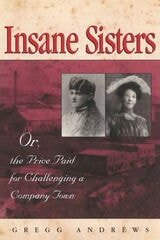
Insane Sisters
Or, the Price Paid for Challenging a Company TownGregg Andrews
University of Missouri Press, 2020
Insane Sisters is the extraordinary tale of two sisters, Mary Alice Heinbach and Euphemia B. Koller, and their seventeen- year property dispute against the nation's leading cement corporation—the Atlas Portland Cement Company.
In 1903, Atlas built a plant on the border of the small community of Ilasco, located just outside Hannibal—home of the infamous cave popularized in Mark Twain's most acclaimed novels. The rich and powerful Atlas quickly appointed itself as caretaker of Twain's heritage and sought to take control of Ilasco. However, its authority was challenged in 1910 when Heinbach inherited her husband's tract of land that formed much of the unincorporated town site. On grounds that Heinbach's husband had been in the advanced stages of alcoholism when she married him the year before, some of Ilasco's political leaders and others who had ties to Atlas challenged the will, charging Heinbach with undue influence.
To help fight against the local lawyers and politicians who wanted Atlas to own the land, Heinbach enlisted the help of her shrewd and combative sister, Euphemia Koller, by making her co-owner of the tract. In a complex case that went to the Missouri Supreme Court four times, the sisters fiercely sought to hang on to the tract. However, in 1921 the county probate court imposed a guardianship over Heinbach and a circuit judge ordered a sheriff's sale of the property. After Atlas purchased the tract, Koller waged a lonely battle to overturn the sale and expose the political conspiracies that had led to Ilasco's conversion into a company town. Her efforts ultimately resulted in her court- ordered confinement in 1927 to Missouri's State Hospital Number One for the Insane, where she remained until her death at age sixty-eight.
Insane Sisters traces the dire consequences the sisters suffered and provides a fascinating look at how the intersection of gender, class, and law shaped the history and politics of Ilasco. The book also sheds valuable new light on the wider consolidation of corporate capitalism and the use of guardianships and insanity to punish unconventional women in the early twentieth century.
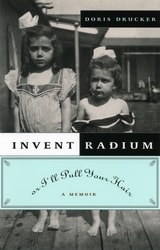
Invent Radium or I'll Pull Your Hair
A MemoirDoris Drucker
University of Chicago Press, 2004
Rothschilds and radium were the horizons of Doris's childhood. Born in Germany in the early twentieth century, she came of age in an upper-middle-class family that struggled to maintain its bourgeois respectability between the two World Wars. Doris Drucker (she met her husband Peter—of management fame—in the 1930s) has penned a lively and charming memoir that brings to life the Germany of her childhood. Rather than focusing on the rise of Hitler, Drucker weaves history into her story of the day-to-day life of a relatively apolitical family. She chronicles here the crowds that gathered to see the Zeppelin, her attempts to negotiate her Prussian mother's plans for her (like marrying well and becoming a famous scientist), ski trips and hikes, the schools she attended, her father's struggles to support the family, and all the stuff and drama that make up a childhood. Drucker's energetic storytelling, eye for the telling detail, and sly humor draw the reader into her portrait of a way of life made forever poignant by its place in history so close to the brutalities of World War II.
From the boarding school that forbade girls to look at their own legs while they bathed to the unfortunate confusion that resulted from Doris's misinterpretation of "Warsaw has fallen" as "The Waschfrau [washerwoman] has fallen," the tales recounted in Invent Radium or I'll Pull Your Hair give dimension and depth to a milieu that has been flattened by the historical events around it.
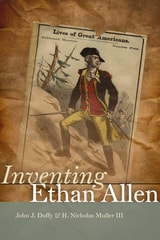
Inventing Ethan Allen
John J. Duffy and H. Nicholas Muller
University Press of New England, 2014
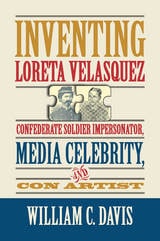
Inventing Loreta Velasquez
Confederate Soldier Impersonator, Media Celebrity, and Con ArtistWilliam C. Davis
Southern Illinois University Press, 2016
This groundbreaking biography reveals a woman quite different from the public persona she promoted. In her bestselling memoir, The Woman in Battle, Velasquez claimed she was an emphatic Confederate patriot, but in fact she never saw combat. Instead, during the war she manufactured bullets for the Union and persuaded her Confederate husband to desert the Army.
After the Civil War ended, she wore many masks, masterminding ambitious confidence schemes worth millions, such as creating a phony mining company, conning North Carolina residents to back her financially in a fake immigration scheme, and attracting investors to build a railroad across western Mexico. With various husbands, Velasquez sought her fortune both in the American West and in the Klondike, though her endeavors cost one husband his life. She also became a social reformer advocating on behalf of better prison conditions, the Cuban revolt against Spain, and the plight of Cuban refugees. Further, Velasquez was one of the first women to venture into journalism and presidential politics. Always a sensational press favorite, she displayed throughout her life an uncanny ability to manipulate popular media and to benefit from her fame in a way that prefigured celebrities of our own time, including using her testimony in a Congressional inquiry about Civil War counterfeiting as a means of promoting her latest business ventures.
So little has been known of Velasquez’s real life that some postmodern scholars have glorified her as a “woman warrior” and used her as an example in cross-gender issues and arguments concerning Hispanic nationalism. Davis firmly refutes these notions by bringing the historical Velasquez to the surface. The genuine story of Velasquez’s life is far more interesting than misguided interpretations and her own fanciful inventions.
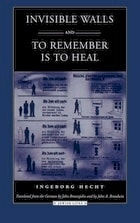
Invisible Walls and To Remember is to Heal
A German Family under the Nuremberg LawsIngeborg Hecht
Northwestern University Press, 1999
In Invisible Walls, Hecht writes of what it was like to live under these circumstances, sharing heartbreaking details of her personal life, including the loss of her daughter's father on the Russian front; the death of her own father after his deportation in 1944; and her fears of perishing coupled with the shame of faring better than most of her family and friends. This new volume adds the first translation of part of Hecht's second book, To Remember is to Heal, a collection of vignettes of encounters and experiences that resulted from the publication of the first.
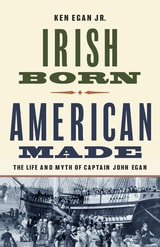
Irish Born, American Made
The Life and Myth of Captain John EganKen Egan Jr.
University of Wisconsin Press, 2026
Born to poverty in the Irish county of Tipperary, John Egan participated in some of the most dramatic events of the nineteenth century, including mass migration to the United States during a catastrophic famine, the “opening” of Japan via gunboat diplomacy, Sherman’s March to the Sea, and homesteading in the Upper Midwest. In Irish Born, American Made, his great-grandson examines the processes by which a scorned British subject became a proud American citizen.
Although Egan’s life was filled with epic drama, the author does not shy away from unsavory truths, such as his ancestor’s doubts about the virtues of abolition or his enthusiastic participation in settling land appropriated from Indigenous peoples. Equally, Egan recognizes the real hardships his ancestor faced in assimilating to American society, from the prejudices of the ascendant Know-Nothing movement to the condescending caricatures of Irish soldiers by his Union compatriots during and after the Civil War. The result is both a moving reminder of the hardships of immigration and a timely reckoning with the imperfections of our forebears.
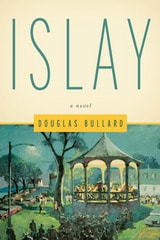
Islay
A NovelDouglas Bullard
Gallaudet University Press, 2013
Now, a new edition of the classic novel Islay promises to entertain a contemporary audience with its Deaf American dream first conceived by Douglas Bullard in 1986. Islay is the name of an imaginary island state coveted by Lyson Sulla, a Deaf man who is tired of feeling that “hearing think deaf means dumb, pat head.” Sulla signs this to his wife Mary in explanation of his desire to tum Islay into a state solely for Deaf people, with himself as governor. From there, his peripatetic quest begins.
Sulla initiates his plan by driving to Islay to survey the lay of the land. There, he meets Gene Owls, another Deaf man who also has designs on the island. Sulla then embarks on travels around the nation recruiting Deaf people to join his crusade. Along the way, he meets a Deaf doctor, a bowling alley owner, a family of peddlers, a Deaf minister, and a willing businessman. Far from a heroic character, Sulla engages in each encounter in an earthy, self-sewing fashion that sends up all parties involved, hearing and Deaf.
Islay uniquely blends classic English forms of satire with the direct, down-to-earth expression of American Sign Language ingenuously rendered throughout. Deaf himself, Bullard has created a wonderfully amusing story that features Deaf people seeking their American dream in a manner both serious and joyous at the same time.
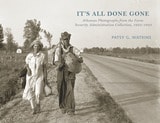
It's All Done Gone
Arkansas Photographs from the Farm Security Administration Collection, 1935-1943Patsy Watkins
University of Arkansas Press, 2018
Of the roughly one thousand FSA photographs taken in Arkansas, approximately two hundred have been selected for inclusion in this volume. Portraying workers picking cotton for five cents an hour, families evicted from homes for their connection with the Southern Tenant Farmers Union, and the effects of flood and drought that cruelly exacerbated the impact of economic disaster, these remarkable black-and-white images from Ben Shahn, Arthur Rothstein, Dorothea Lange, Walker Evans, Russell Lee, and other acclaimed photographers illustrate the extreme hardships that so many Arkansans endured throughout this era.
These powerful photographs continue to resonate, providing a glimpse of life in Arkansas that will captivate readers as they connect to a shared past.
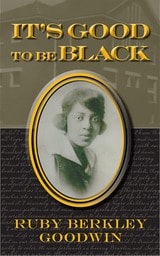
It's Good to Be Black
Ruby Berkley Goodwin
Southern Illinois University Press, 1953
From the preface by Carmen Kenya Wadley:
“Is it good to be black? To Ruby Berkley Goodwin it was....The black she writes about has nothing to do with skin color, but it does have a great deal to do with self images, values, spiritual strength, and most of all love. Unlike the contradicting definitions of blackness we see reflected in today's crime statistics, movies, television, newspapers, political speeches, advertisements, and sociological reports, Ruby Berkley Goodwin's definition of blackness is simple and to the point: black is good. It's Good to be Black is more than the story (history) of a black family living in Du Quoin, Illinois, during the early 1900s; it is a reaffirmation for all of us who know in our hearts that there is still good in the world and that some of that good is black.”

Izabela Czartoryska and the Art of Persuation in Polish Visual Culture
Agnieszka Whelan
Central European University Press, 2026
As a prominent and outspoken member of the Commonwealth’s most influential political family, Czartoryska played a significant role in shaping the public image of the reformist movement through carefully orchestrated communal and cultural displays. The book examines social interactions within the public spaces of theatres and landscape gardens, highlighting the relationship between historical events and their visual and cultural responses.
By tracing the intersections of politics, sociability, and visual culture, the study demonstrates how the life of a single individual can illuminate the broader complexities of political transformation and cultural change at the end of the eighteenth century.