Results by title
86 books match the query 'Home' and 4 start with i
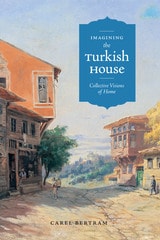
Imagining the Turkish House
Collective Visions of HomeBy Carel Bertram
University of Texas Press, 2008
"Houses can become poetic expressions of longing for a lost past, voices of a lived present, and dreams of an ideal future." Carel Bertram discovered this truth when she went to Turkey in the 1990s and began asking people about their memories of "the Turkish house." The fondness and nostalgia with which people recalled the distinctive wooden houses that were once ubiquitous throughout the Ottoman Empire made her realize that "the Turkish house" carries rich symbolic meaning. In this delightfully readable book, Bertram considers representations of the Turkish house in literature, art, and architecture to understand why the idea of the house has become such a potent signifier of Turkish identity.
Bertram's exploration of the Turkish house shows how this feature of Ottoman culture took on symbolic meaning in the Turkish imagination as Turkey became more Westernized and secular in the early decades of the twentieth century. She shows how artists, writers, and architects all drew on the memory of the Turkish house as a space where changing notions of spirituality, modernity, and identity—as well as the social roles of women and the family—could be approached, contested, revised, or embraced during this period of tumultuous change.
In Search of a Home
Rental and Shared Housing in Latin AmericaAlan Gilbert
University of Arizona Press, 1993
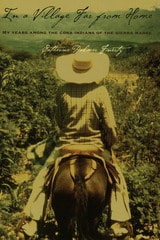
In a Village Far from Home
My Years among the Cora Indians of the Sierra MadreCatherine Palmer Finerty
University of Arizona Press, 2000
What do most career women do after a successful run on Madison Avenue? Catherine Finerty watched her friends settle into the country-club life. She opted instead for Mexico.
When the 60-year-old widow loaded up her car and headed south, what she found at the end of the road was far from what she expected. Finerty settled into a comfortable house just outside of Guadalajara and, although not a Catholic, she soon immersed herself in Franciscan volunteer work. It wasn't long before she found herself visiting small settlements hidden in the tropical mountains of western Mexico, and it was in Jesús María—so isolated that one could only get there by mule or small plane—that she found her new calling: the village nurse.
With its bugs and heat, no phones or running water, the tiny town was hardly a place to enjoy one's retirement years, but Finerty was quickly charmed by the community of Cora Indians and mestizos. Armed with modest supplies, a couple of textbooks, and common sense, she found herself delivering first aid, advising on public health, and administering injections. And in a place where people still believed in the power of shamans, providing health care sometimes required giving in to the magical belief that a hypodermic needle could cure anything.
Finerty's account of her eight years in Jesús María is both a compelling story of nursing under adverse conditions and a loving portrait of a people and their ways. She shares the joys and sorrows of this isolated world: religious festivals and rites of passage; the tragedy of illness and death in a place where people still rely on one another as much as medicine; a flash flood that causes such havoc that even less-than-pious village men attend Mass daily. And she introduces a cast of characters not unlike those in a novel: Padre Domingo and his airborne medical practice; the local bishop, who frowns on Finerty's slacks; Chela, a mestiza from whom she rents her modest two-room house (complete with scorpions); and the young Cora Indian woman Chuy, from whom she gains insight into her new neighbors.
Blending memoir and travel writing, In a Village Far from Home takes readers deep into the Sierra Madre to reveal its true treasure: the soul of a people.
In the Home of the Famous Dead
Collected PoemsJo McDougall
University of Arkansas Press, 2015