Results by title
260 books match the query 'Human ecology' and 12 start with i

Imperial Creatures
Humans and Other Animals in Colonial Singapore, 1819-1942Timothy P. Barnard
National University of Singapore Press, 2019
Through a multidisciplinary consideration of fauna, Imperial Creatures weaves together a series of tales to document how animals were cherished, monitored, employed, and slaughtered in a colonial society. All animals, including humans, Barnard shows, have been creatures of imperialism in Singapore. Their stories teach us lessons about the structures that upheld such a society and how it developed over time, lessons of relevance to animal historians, to historians of Singapore, and to urban historians and imperial historians with an interest in environmental themes.
In Earshot of Water
Notes from the Columbia PlateauPaul Lindholdt
University of Iowa Press, 2011
p.MsoNormal, li.MsoNormal, div.MsoNormal { margin: 0in 0in 0.0001pt; font-size: 12pt; font-family: "Times New Roman"; }div.Section1 { page: Section1; }
Whether the subject is the plants that grow there, the animals that live there, the rivers that run there, or the people he has known there, Paul Lindholdt’s In Earshot of Water illuminates the Pacific Northwest in vivid detail. Lindholdt writes with the precision of a naturalist, the critical eye of an ecologist, the affection of an apologist, and the self-revelation and self-awareness of a personal essayist in the manner of Annie Dillard, Loren Eiseley, Derrick Jensen, John McPhee, Robert Michael Pyle, and Kathleen Dean Moore.
Exploring both the literal and literary sense of place, with particular emphasis on environmental issues and politics in the far Northwest, Lindholdt weds passages from the journals of Lewis and Clark, the log of Captain James Cook, the novelized memoir of Theodore Winthrop, and Bureau of Reclamation records growing from the paintings that the agency commissioned to publicize its dams in the 1960s and 1970s, to tell ecological and personal histories of the region he knows and loves.
In Lindholdt’s beautiful prose, America’s environmental legacies—those inherited from his blood relatives as well as those from the influences of mass culture—and illuminations of the hazards of neglecting nature’s warning signs blur and merge and reemerge in new forms. Themes of fathers and sons layer the book, as well—the narrator as father and as son—interwoven with a call to responsible social activism with appeals to reason and emotion. Like water itself, In Earshot of Water cascades across boundaries and blends genres, at once learned and literary.
In Search of the Rain Forest
Candace Slater, ed.
Duke University Press, 2004
From diverse disciplines—history, archaeology, sociology, literature, law, and cultural anthropology—the contributors provide case studies from Latin America, Asia, and Africa. They point the way toward a search for a rain forest that is both a natural entity and a social history, an inhabited place and a shifting set of ideas. The essayists demonstrate how the single image of a wild and yet fragile forest became fixed in the popular mind in the late twentieth century, thereby influencing the policies of corporations, environmental groups, and governments. Such simplistic conceptions, In Search of the Rain Forest shows, might lead companies to tout their “green” technologies even as they try to downplay the dissenting voices of native populations. Or they might cause a government to create a tiger reserve that displaces peaceful peasants while opening the doors to poachers and bandits. By encouraging a nuanced understanding of distinctive, constantly evolving forests with different social and natural histories, this volume provides an important impetus for protection efforts that take into account the rain forest in all of its complexity.
Contributors. Scott Fedick, Alex Greene, Paul Greenough, Nancy Peluso, Suzana Sawyer, Candace Slater, Charles Zerner
In The Nature Of Things
Language, Politics, and the EnvironmentJane Bennett
University of Minnesota Press, 1993
Informed by recent developments in literary criticism and social theory, In the Nature of Things addresses the presumption that nature exists independent of culture and, in particular, of language. The theoretical approaches of the contributors represent both modernist and postmodernist positions, including feminist theory, critical theory, Marxism, science fiction, theology, and botany. They demonstrate how the concept of nature is invoked and constituted in a wide range of cultural projects—from the Bible to science fiction movies, from hunting to green consumerism. Ultimately, it weeks to link the work of theorists concerned with nature and the environment to nontheorists who share similar concerns.
Contributors include R. McGreggor Cawley, Romand Coles, William E. Connolly, Jan E. Dizard, Valerie Hartouni, Cheri Lucas Jennings, Bruce H. Jennings, Timothy W. Luke, Shane Phelan, John Rodman, Michael J. Shapiro, and Wade Sikorski.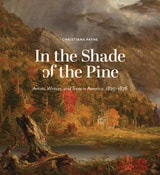
In the Shade of the Pine
Artists, Writers, and Trees in America, 1825-1876Christiana Payne
University of Arkansas Press, 2026
In the Shade of the Pine: Artists, Writers, and Trees in America, 1825–1876 explores the significance of trees in the visual and literary imagination of mid-nineteenth-century America through the work of seven artists and writers: Thomas Cole’s explorations of the Catskills; Albert Bierstadt’s portrayal of the splendid trees of California, including the ancient giant sequoias; the paintings and drawings of Asher Brown Durand and Frederic Edwin Church; the photographs of William James Stillman; and the environmental writings of Susan Fenimore Cooper and Henry David Thoreau.
This richly illustrated volume shows the unique influence the ecology of their land had on the emotional and intellectual landscapes of a generation. In their careful study of the woods—the beauty of trees, their practical importance to human beings and other living creatures, and the power of the forest to confer spiritual and emotional benefits—these artists and writers laid the groundwork for an ecological consciousness that remains vitally relevant today.
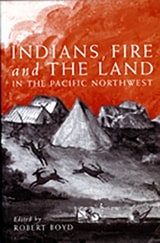
Indians, Fire, and the Land in the Pacific Northwest
Robert Boyd
Oregon State University Press, 1999
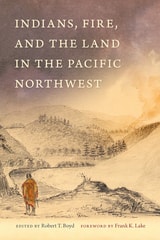
Indians, Fire, and the Land in the Pacific Northwest
Robert Boyd
Oregon State University Press, 2021
Instead of discovering a land blanketed by dense forests, early explorers of the Pacific Northwest encountered a varied landscape including open woods, meadows, and prairies. Far from a pristine wilderness, much of the Northwest was actively managed and shaped by the hands of its Native American inhabitants. Their primary tool was fire.
This volume takes an interdisciplinary approach to one of the most important issues concerning Native Americans and their relationship to the land. Over more than 10,000 years, Native Americans in the Northwest learned the intricacies of their local environments and how to use fire to create desired effects, mostly in the quest for food.
Drawing on historical journals, Native American informants, and ethnobotanical and forestry studies, this book’s contributors describe local patterns of fire use in eight ecoregions, representing all parts of the Native Northwest, from southwest Oregon to British Columbia and from Puget Sound to the Northern Rockies. Their essays provide glimpses into a unique understanding of the environment, one that draws on traditional ecological knowledge. Together, these writings also offer historical perspective on the contemporary debate over “prescribed burning” and management of public lands.
This updated edition includes a foreword by Frank K. Lake and a new epilogue by editor Robert T. Boyd. Contributors include Stephen Arno, Stephen Barrett, Theresa Ferguson, David French, Eugene Hunn, Leslie Johnson, Jeff LaLande, Estella Leopold, Henry Lewis, Helen H. Norton, Reg Pullen, William Robbins, John Ross, Nancy Turner, and Richard White.
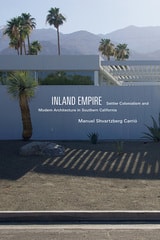
Inland Empire
Settler Colonialism and Modern Architecture in Southern CaliforniaManuel Shvartzberg Carrió
Duke University Press, 2026
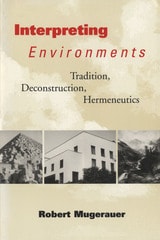
Interpreting Environments
Tradition, Deconstruction, HermeneuticsBy Robert Mugerauer
University of Texas Press, 1995
In this pioneering book, Robert Mugerauer seeks to make deconstruction and hermeneutics accessible to people in the environmental disciplines, including architecture, planning, urban studies, environmental studies, and cultural geography.
Mugerauer demonstrates each methodology through a case study. The first study uses the traditional approach to recover the meaning of Jung's and Wittgenstein's houses by analyzing their historical, intentional contexts. The second case study utilizes deconstruction to explore Egyptian, French neoclassical, and postmodern attempts to use pyramids to constitute a sense of lasting presence. And the third case study employs hermeneutics to reveal how the American understanding of the natural landscape has evolved from religious to secular to ecological since the nineteenth century.

Is It Painful To Think
Conversations with Arne NaessDavid Rothenberg
University of Minnesota Press, 1992
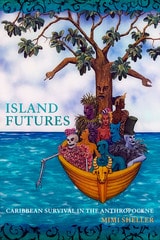
Island Futures
Caribbean Survival in the AnthropoceneMimi Sheller
Duke University Press, 2020
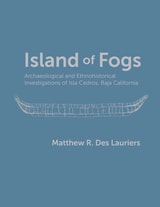
Island of Fogs
Archaeological and Ethnohistorical Investigations of Isla Cedros, Baja CaliforniaMatthew R Des Lauriers
University of Utah Press, 2010
Located off the west coast of the Mexican state of Baja California, Isla Cedros—Island of Fogs—is site to some of the most extensive and remarkable archeological discoveries on the continent. Two sites dated to before 12,000 cal BP have been excavated, as well as portions of two large village sites dated to the last one thousand years. Among the artifacts discovered are the earliest fishhooks found on the continent.
Drawing on ten years of his own historical, ethnographic, and archaeological research, Matthew Des Lauriers uses Isla Cedros to form hypotheses regarding the ecological, economic, and social nature of island societies. Des Lauriers uses a comparative framework in order to examine both the development and evolution of social structures among Pacific coast maritime hunter-gatherers as well as to track patterns of change.
Because it examines the issue of whether human populations can intensively harvest natural resources without causing ecological collapse, Island of Fogs provides a relevant historical counterpart to modern discussions of ecological change and alternative models for sustainable development.
Winner of the Society for American Archaeology Book Award.