Results by title
95 books match the query 'Ideology' and 11 start with i
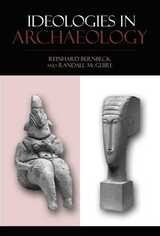
Ideologies in Archaeology
Edited by Reinhard Bernbeck and Randall McGuire
University of Arizona Press, 2011
Contributors to this volume focus on elements of life in past societies that “went without saying” and that concealed different forms of power as obvious and unquestionable. From the use of burial rites as political theater in Iron Age Germany to the intersection of economics and elite power in Mississippian mound building, the contributors uncover complex manipulations of power that have often gone unrecognized. They show that Occam’s razor—the tendency to favor simpler explanations—is sometimes just an excuse to avoid dealing with the historical world in its full complexity.
Jean-Paul Demoule’s concluding chapter echoes this sentiment and moreover brings a continental European perspective to the preceding case studies. In addition to situating this volume in a wider history of archaeological currents, Demoule identifies the institutional and cultural factors that may account for the current direction in North American archaeology. He also offers a defense of archaeology in an era of scientific relativism, which leads him to reflect on the responsibilities of archaeologists.
Includes contributions by: Susan M. Alt, Bettina Arnold, Uzi Baram, Reinhard Bernbeck, Matthew David Cochran, Jean-Paul Demoule, Kurt A. Jordan, Susan Kus, Vicente Lull, Christopher N. Matthews, Randall H. McGuire, Rafael Micó, Cristina Rihuete Herrada, Paul Mullins, Sue Novinger, Susan Pollock, Victor Raharijaona, Roberto Risch, Kathleen Sterling, Ruth M. Van Dyke, and LouAnn Wurst

Ideologies in the Age of Extremes
Liberalism, Conservatism, Communism, Fascism 1914-1991Willie Thompson
Pluto Press, 2010
This is a history of political ideologies during the period famously described by Eric Hobsbawn as ‘The Age of Extremes’ - from the First World War to the collapse of the Soviet Union.
Ideologies in the Age of Extremes introduces the key ideologies of the age; liberalism, conservatism, communism and fascism. Willie Thompson identifies the political influence of mass movements as a key feature. He uses a powerful approach that considers the different ideologies in relation to each other. This allows him to shows that they often emerged from a common root or merged into a common future, stealing each other’s clothes and reinventing themselves as the stark opposite of a competing ideology.
This sophisticated yet accessible analysis will be of great interest to students of 20th century history and political theory.
Ideology
David Mclellan
University of Minnesota Press, 1995
Ideology and Power in the Middle East
Studies in Honor of George LenczowskiPeter J. Chelkowski and Robert J. Pranger, eds.
Duke University Press, 1988
Ideology and Superstructure in Historical Materialism
Franz Jakubowski
Pluto Press, 2002
In the same period, only Lukacs and Korsch attempted to deal systemically with these problems, and it is they who are generally recognised as the main inspiration behind what is called Western Marxism, yet Franz Jakubowski is a key figure in the development of Marxist thought. And, unlike the others, Jakubowski was also an activist, and for this reason avoids the unnecessarily dense language of his fellow theoreticians.
Ideology and Superstructure is rare in that it successfully conveys complex problems in a simple and straightforward form. At a time when the literature on Marx has become excessively obscuranist, Jakubowski's work serves as a useful antidote, and is an ideal text for introducing novices to the basics of Marxist theory.
Ideology and the Theory of Political Choice
Melvin Hinich and Michael C. Munger
University of Michigan Press, 1996
Ideology of Adventure
Studies in Modern Consciousness, 1100-1750Michael Nerlich
University of Minnesota Press, 1988
Ideology, Culture and the Process of Schooling
Henry Giroux
Temple University Press, 1984

Ideology, Culture, and Translation
Scott S. Elliott
SBL Press, 2012
Ideology, Interrupted
A Theory of Political PrecarityRobin Truth Goodman
University of Minnesota Press, 2026
A powerful argument that the failure of ideology has created political disconnection and apathy
Political institutions increasingly fail to provide representations where citizens can recognize, identify, and imagine themselves as part of the institutions’ democratic project. Robin Truth Goodman argues that this disconnection is because ideology itself has gotten interrupted. Reversing Louis Althusser’s famous formulation of ideology as “calling” to citizens who, in response, turn toward the call, she argues that citizens now believe that ideology has turned away from them and stopped calling, endangering the most basic processes of modern democracies.
Deconstructing the widespread failure of democratic institutions to connect with individuals, Goodman examines recent works by authors such as Claire Vaye Watkins, Colson Whitehead, Ling Ma, Han Kang, and Ruth Ozeki that interrogate subjective agency within three different sites of social struggle: eco-catastrophe, pandemic, and food insecurity. She shows the themes that emerge from the novels reflecting and extending how the privatization and technologization of political decision-making have effectively cut off politicians and political institutions from the people they are supposed to serve.
Basing her study in the political philosophy of Judith Butler, Hannah Arendt, Julia Kristeva, and other prominent feminists, Goodman draws parallels with gender theory and argues that precarity in democratic societies has prevented citizens from finding points of engagement within politics. Diagnosing this widespread inability to translate private struggles into collective responses, Ideology, Interrupted is a powerful and inspiring call for new forms of societal bonds and political engagement to rejuvenate our democratic systems.
Retail e-book files for this title are screen-reader friendly.

In Place/Out of Place
Geography, Ideology, and TransgressionTim Cresswell
University of Minnesota Press, 1996
In Place/Out of Place was first published in 1996. Minnesota Archive Editions uses digital technology to make long-unavailable books once again accessible, and are published unaltered from the original University of Minnesota Press editions.
What is the relationship between place and behavior? In this fascinating volume, Tim Cresswell examines this question via "transgressive acts" that are judged as inappropriate not only because they are committed by marginalized groups but also because of where they occur.
In Place/Out of Place seeks to illustrate the ways in which the idea of geographical deviance is used as an ideological tool to maintain an established order. Cresswell looks at graffiti in New York City, the attempts by various "hippie" groups to hold a free festival at Stonehenge during the summer solstices of 1984–86, and the Greenham Common Women's Peace Camp in Berkshire, England. In each of the cases described, the groups involved were designated as out of place both by the media and by politicians, whose descriptions included an array of images such as dirt, disease, madness, and foreignness.
Cresswell argues that space and place are key factors in the definition of deviance and, conversely, that space and place are used to construct notions of order and propriety. In addition, whereas ideological concepts being expressed about what is good, just, and appropriate often are delineated geographically, the transgression of these delineations reveals the normally hidden relationships between place and ideology-in other words, the "out-of-place" serves to highlight and define the "in-place." By looking at the transgressions of the marginalized, Cresswell argues, we can gain a novel perspective on the "normal" and "taken-for-granted" expectations of everyday life. The book concludes with a consideration of the possibility of a "politics of transgression," arguing for a link between the challenging of spatial boundaries and the possibility of social transformation.
Tim Cresswell is currently lecturer in geography at the University of Wales.