Results by title
53 books match the query 'In art' and 5 start with i
Icon Dresden
Baroque City, Air War Symbol, Political TokenSusanne Vees-Gulani
University of Michigan Press, 2026
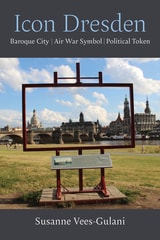
Icon Dresden explores how memory and politics in Dresden after its 1945 bombing are deeply intertwined with the city’s urban history. It highlights the complex origins of Dresden’s reputation as an exclusively cultural center, focusing on urban planning, marketing, tourism, and the city’s visual archive since the 17th century. Based on this iconic status, a narrative of victimhood arose after its destruction that ignored responsibilities while highlighting the city’s innocence. Despite its origin in Nazi propaganda, this narrative influenced postwar political discourse in socialist and post-reunification Germany. Icon Dresden also provides insight into Dresden’s role under National Socialism and the GDR’s evasive response to this history. It reveals how the strong presence of far-right movements in the city today stems from multiple discourses formed over centuries and communicated from generation to generation.
Drawing on urban, heritage, and tourism studies, visual and memory studies, and environmental psychology, Icon Dresden examines Dresden’s history, identity, visual representations, and rebuilding decisions. It exposes the narratives that define its place in German and international memory and how, paradoxically, they support both Dresden’s current image as a symbol of peace and reconciliation and its backing of nativist and far-right movements.
Drawing on urban, heritage, and tourism studies, visual and memory studies, and environmental psychology, Icon Dresden examines Dresden’s history, identity, visual representations, and rebuilding decisions. It exposes the narratives that define its place in German and international memory and how, paradoxically, they support both Dresden’s current image as a symbol of peace and reconciliation and its backing of nativist and far-right movements.
[more]
Icon and Devotion
Sacred Spaces in Imperial RussiaOleg Tarasov
Reaktion Books, 2002
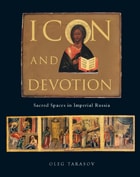
Icon and Devotion offers the first extensive presentation in English of the making and meaning of Russian icons. The craft of icon-making is set into the context of forms of worship that emerged in the Russian Orthodox Church in the mid-seventeenth century. Oleg Tarasov shows how icons have held a special place in Russian consciousness because they represented idealized images of Holy Russia. He also looks closely at how and why icons were made. Wonder-working saints and the leaders of such religious schisms as the Old Believers appear in these pages, which are illustrated in halftones with miniature paintings, lithographs and engravings never before published in the English-speaking world.
By tracing the artistic vocabulary, techniques and working methods of icon painters, Tarasov shows how icons have been integral to the history of Russian art, influenced by folk and mainstream currents alike. As well as articulating the specifically Russian piety they invoke, he analyzes the significance of icons in the cultural life of modern Russia in the context of popular prints and poster design.
By tracing the artistic vocabulary, techniques and working methods of icon painters, Tarasov shows how icons have been integral to the history of Russian art, influenced by folk and mainstream currents alike. As well as articulating the specifically Russian piety they invoke, he analyzes the significance of icons in the cultural life of modern Russia in the context of popular prints and poster design.
[more]
Illuminated Paris
Essays on Art and Lighting in the Belle ÉpoqueHollis Clayson
University of Chicago Press, 2019
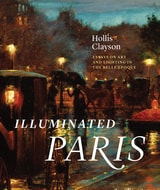
The City of Light. For many, these four words instantly conjure late nineteenth-century Paris and the garish colors of Toulouse-Lautrec’s iconic posters. More recently, the Eiffel Tower’s nightly show of sparkling electric lights has come to exemplify our fantasies of Parisian nightlife. Though we reflect longingly on such scenes, in Illuminated Paris, Hollis Clayson shows that there’s more to these clichés than meets the eye. In this richly illustrated book, she traces the dramatic evolution of lighting in Paris and how artists responded to the shifting visual and cultural scenes that resulted from these technologies. While older gas lighting produced a haze of orange, new electric lighting was hardly an improvement: the glare of experimental arc lights—themselves dangerous—left figures looking pale and ghoulish. As Clayson shows, artists’ representations of these new colors and shapes reveal turn-of-the-century concerns about modernization as electric lighting came to represent the harsh glare of rapidly accelerating social change. At the same time, in part thanks to American artists visiting the city, these works of art also produced our enduring romantic view of Parisian glamour and its Belle Époque.
[more]
Imaging Hoover Dam
The Making of a Cultural IconAnthony F. Arrigo
University of Nevada Press, 2014
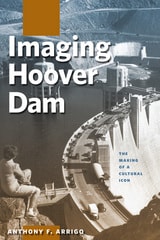
The mighty Hoover Dam, starting as a dream of land developers and farmers, became the most ambitious civil engineering project of the Great Depression. This landmark in the middle of the Mojave Desert, holding back the largest man-made lake in America, also became, like Mount Rushmore or the Empire State Building, a visual and cultural icon. The power and meanings of this icon came not through a single image but via myriad visual representations, in government propaganda, advertising, journalism, and art. Even before it was built, these images were used to shape the public’s perception of the project and frame the dam as the linchpin to an expanding American economic empire in the desert Southwest.
Anthony F. Arrigo has researched a wide array of primary sources and archival materials to trace the project from its earliest representations in illustrations to the documentary photography of its construction and later depictions of the structure in commercial promotions, fine art photography, and paintings. Analyzing Hoover Dam through the trajectory of imagery across several decades, rather than the narrative of its construction, illuminates the underlying cultural and ecological imperatives in the drive to build it, including the influence of religious doctrine and the American agrarian movement. Arrigo also discusses various portrayals of laborers, women, minority groups, nature, and technology in this imagery. In time, the visual icon of power and domination was commercialized to sell cars, vacations, and more.
Imaging Hoover Dam is an important work in both visual rhetoric and cultural studies. It will also intrigue readers interested in such varied topics as the history of the American Southwest, the Great Depression and the New Deal, social and environmental issues, and American popular culture.
[more]

Insurgent Aesthetics
Security and the Queer Life of the Forever WarRonak K. Kapadia
Duke University Press, 2019
In Insurgent Aesthetics Ronak K. Kapadia theorizes the world-making power of contemporary art responses to US militarism in the Greater Middle East. He traces how new forms of remote killing, torture, confinement, and surveillance have created a distinctive post-9/11 infrastructure of racialized state violence. Linking these new forms of violence to the history of American imperialism and conquest, Kapadia shows how Arab, Muslim, and South Asian diasporic multimedia artists force a reckoning with the US war on terror's violent destruction and its impacts on immigrant and refugee communities. Drawing on an eclectic range of visual, installation, and performance works, Kapadia reveals queer feminist decolonial critiques of the US security state that visualize subjugated histories of US militarism and make palpable what he terms “the sensorial life of empire.” In this way, these artists forge new aesthetic and social alliances that sustain critical opposition to the global war machine and create alternative ways of knowing and feeling beyond the forever war.
[more]