Results by title
72 books match the query 'Indian authors' and 6 start with i
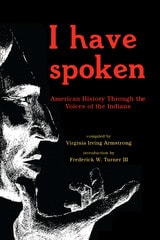
I Have Spoken
American History Through The Voices Of The IndiansVirginia I. Armstrong
Ohio University Press, 1971
I Have Spoken is a collection of American Indian oratory from the 17th to the 20th century, concentrating on speeches focusing around Indian-white relationships, especially treaty-making negotiations. A few letters and other writings are also included.
Here, in their own words, is the Indian’s story told with integrity, with drama, with caustic wit, with statesmanship, with poetic impact; a story of proffered friendship, of broken promises, of hope, of disillusionment, of pride, of a whole land and life gone sour.
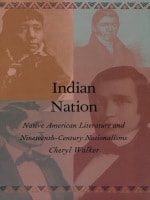
Indian Nation
Native American Literature and Nineteenth-Century NationalismsCheryl Walker
Duke University Press, 1997
Walker examines the rhetoric and writings of nineteenth-century Native Americans, including William Apess, Black Hawk, George Copway, John Rollin Ridge, and Sarah Winnemucca. Demonstrating with unique detail how these authors worked to transform venerable myths and icons of American identity, Indian Nation chronicles Native American participation in the forming of an American nationalism in both published texts and speeches that were delivered throughout the United States. Pottawattomie Chief Simon Pokagon’s "The Red Man’s Rebuke," an important document of Indian oratory, is published here in its entirety for the first time since 1893.
By looking at this writing through the lens of the best theoretical work on nationality, postcoloniality, and the subaltern, Walker creates a new and encompassing picture of the relationship between Native Americans and whites. She shows that, contrary to previous studies, America in the nineteenth century was intercultural in significant ways.
Indians Don’t Cry
Gaawiin Mawisiiwag AnishinaabegGeorge Kenny
University of Manitoba Press, 2014
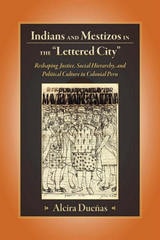
Indians and Mestizos in the "Lettered City"
Reshaping Justice, Social Hierarchy, and Political Culture in Colonial PeruAlcira Duenas
University Press of Colorado, 2010
Scholars have long assumed that Spanish rule remained largely undisputed in Peru between the 1570s and 1780s, but educated elite Indians and mestizos challenged the legitimacy of Spanish rule, criticized colonial injustice and exclusion, and articulated the ideas that would later be embraced in the Great Rebellion in 1781. Their movement extended across the Atlantic as the scholars visited the seat of the Spanish empire to negotiate with the king and his advisors for social reform, lobbied diverse networks of supporters in Madrid and Peru, and struggled for admission to religious orders, schools and universities, and positions in ecclesiastic and civil administration.
Indians and Mestizos in the "Lettered City" explores how scholars contributed to social change and transformation of colonial culture through legal, cultural, and political activism, and how, ultimately, their significant colonial critiques and campaigns redefined colonial public life and discourse. It will be of interest to scholars and students of colonial history, colonial literature, Hispanic studies, and Latin American studies.
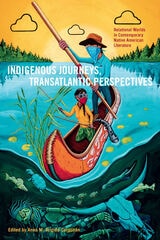
Indigenous Journeys, Transatlantic Perspectives
Relational Worlds in Contemporary Native American LiteratureAnna M Brígido-Corachán
Michigan State University Press, 2023
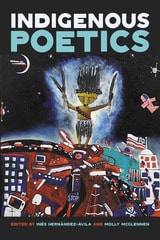
Indigenous Poetics
Inés Hernández-Ávila
Michigan State University Press, 2025