Results by title
59 books match the query 'Indians, Treatment of' and 4 start with i
Indian Assimilation in the Franciscan Area of Nueva Vizcaya
William B. Griffen
University of Arizona Press, 1979
Indian Given
Racial Geographies across Mexico and the United StatesMaría Josefina Saldaña-Portillo
Duke University Press, 2016
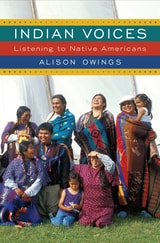
Indian Voices
Listening to Native AmericansOwings, Alison
Rutgers University Press, 2012
In Indian Voices, Alison Owings takes readers on a fresh journey across America, east to west, north to south, and around again. Owings's most recent oral history—engagingly written in a style that entertains and informs—documents what Native Americans say about themselves, their daily lives, and the world around them.
Young and old from many tribal nations speak with candor, insight, and (unknown to many non-Natives) humor about what it is like to be a Native American in the twenty-first century. Through intimate interviews many also express their thoughts about the sometimes staggeringly ignorant, if often well-meaning, non-Natives they encounter—some who do not realize Native Americans still exist, much less that they speak English, have cell phones, use the Internet, and might attend powwows and power lunches.
Indian Voices, an inspiring and important contribution to the literature about the original Americans, will make every reader rethink the past—and present—of the United States.
Indigenous Movements, Self-Representation, and the State in Latin America
Edited by Kay B. Warren and Jean E. Jackson
University of Texas Press, 2003
Throughout Latin America, indigenous peoples are responding to state violence and pro-democracy social movements by asserting their rights to a greater measure of cultural autonomy and self-determination. This volume's rich case studies of movements in Colombia, Guatemala, and Brazil weigh the degree of success achieved by indigenous leaders in influencing national agendas when governments display highly ambivalent attitudes about strengthening ethnic diversity.
The contributors to this volume are leading anthropologists and indigenous activists from the United States and Latin America. They address the double binds of indigenous organizing and "working within the system" as well as the flexibility of political tactics used to achieve cultural goals outside the scope of state politics. The contributors answer questions about who speaks for indigenous communities, how indigenous movements relate to the popular left, and how conflicts between the national indigenous leadership and local communities play out in specific cultural and political contexts. The volume sheds new light on the realities of asymmetrical power relations and on the ways in which indigenous communities and their representatives employ Western constructions of subjectivity, alterity, and authentic versus counterfeit identity, as well as how they manipulate bureaucratic structures, international organizations, and the mass media to advance goals that involve distinctive visions of an indigenous future.