Results by title
73 books match the query 'Indians of Central America' and 5 start with i

I Won't Stay Indian, I'll Keep Studying
Race, Place, and Discrimination in a Costa Rican High SchoolKaren Stocker
University Press of Colorado, 2005
Stocker reveals how overt and hidden curricula taught ethnic, racial, and gendered identities and how the dominant ideology of the town, present in school, conveyed racist messages to students.
"I Won't Stay Indian, I'll Keep Studying" documents how students from the reservation reacted to, coped with, and resisted discrimination. Considering the students' experiences in the context of the Costa Rican educational system as a whole, Stocker discusses policy shifts that might reduce institutionalized discrimination. Her interpretation of the experiences of these students makes a significant contribution to anthropology, Latin American studies, critical race theory, and educational theory.
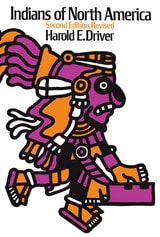
Indians of North America
Harold E. Driver
University of Chicago Press, 1969
For this second edition, Harold Driver made extensive revisions in chapter content and organization, incorporating many new discoveries and interpretations in archeology and related fields. He also revised several of the maps and added more than 100 bibliographical items. Since the publication of the first edition, there has been an increased interest in the activities of Indians in the twentieth century; accordingly, the author placed much more emphasis on this period.
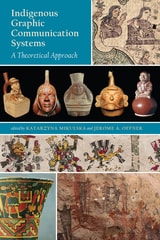
Indigenous Graphic Communication Systems
A Theoretical ApproachKatarzyna Mikulksa
University Press of Colorado, 2025
By examining case studies from across the Americas, the authors pursue an enhanced understanding of Native American graphic communication systems and how the study of graphic expression can provide insight into ancient cultures and societies, expressed in indigenous words. Focusing on examples from Central Mexico and the Andes, the authors explore the overlap among writing, graphic expression, and orality in indigenous societies, inviting reevaluation of the Western notion that writing exists only to record language (the spoken chain of speech) as well as accepted beliefs of Western alphabetized societies about the accuracy, durability, and unambiguous nature of their own alphabetized texts. The volume also addresses the rapidly growing field of semasiography and relocates it more productively as one of several underlying operating principles in graphic communication systems.
Indigenous Graphic Communication Systems reports new results and insights into the meaning of the rich and varied content of indigenous American graphic expression and culture as well as into the societies and cultures that produce them. It will be of great interest to Mesoamericanists, students, and scholars of anthropology, archaeology, art history, ancient writing systems, and comparative world history.
The research for and publication of this book have been supported in part by the National Science Centre of Poland (decision no. NCN-KR-0011/122/13) and the Houston Museum of Natural Science.
Contributors:
Angélica Baena Ramírez, Christiane Clados, Danièle Dehouve, Stanisław Iwaniszewski, Michel R. Oudijk, Katarzyna Szoblik, Loïc Vauzelle, Gordon Whittaker, Janusz Z. Wołoszyn, David Charles Wright-Carr
Indigenous Interfaces
Spaces, Technology, and Social Networks in Mexico and Central AmericaEdited by Jennifer Gómez Menjívar and Gloria Elizabeth Chacón; Foreword by Arturo Arias
University of Arizona Press, 2019
Indigenous Interfaces provides the first thorough examination of indigeneity at the interface of cyberspace. Correspondingly, it examines the impact of new media on the struggles for self-determination that Indigenous peoples undergo in Mexico and Central America. The volume’s contributors highlight the fresh approaches that Mesoamerica’s Indigenous peoples have given to new media—from YouTubing Maya rock music to hashtagging in Zapotec. Together, they argue that these cyberspatial activities both maintain tradition and ensure its continuity. Without considering the implications of new technologies, Indigenous Interfaces argues, twenty-first-century indigeneity in Mexico and Central America cannot be successfully documented, evaluated, and comprehended.
Indigenous Interfaces rejects the myth that indigeneity and information technology are incompatible through its compelling analysis of the relationships between Indigenous peoples and new media. The volume illustrates how Indigenous peoples are selectively and strategically choosing to interface with cybertechnology, highlights Indigenous interpretations of new media, and brings to center Indigenous communities who are resetting modes of communication and redirecting the flow of information. It convincingly argues that interfacing with traditional technologies simultaneously with new media gives Indigenous peoples an edge on the claim to autonomous and sovereign ways of being Indigenous in the twenty-first century.
Contributors
Arturo Arias
Debra A. Castillo
Gloria Elizabeth Chacón
Adam W. Coon
Emiliana Cruz
Tajëëw Díaz Robles
Mauricio Espinoza
Alicia Ivonne Estrada
Jennifer Gómez Menjívar
Sue P. Haglund
Brook Danielle Lillehaugen
Paul Joseph López Oro
Rita M. Palacios
Gabriela Spears-Rico
Paul Worley
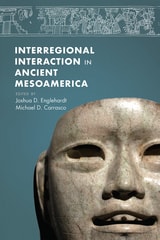
Interregional Interaction in Ancient Mesoamerica
Joshua Englehardt
University Press of Colorado, 2019
Archaeologists have long recognized the crucial role of interregional interaction in the development and cultural dynamics of ancient societies, particularly in terms of the evolution of sociocultural complexity and economic systems. Recent research has further expanded the archaeological, art historical, ethnographic, and epigraphic records in Mesoamerica, permitting a critical reassessment of the complex relationship between interaction and cultural dynamics. This volume builds on and amplifies earlier research to examine sociocultural phenomena—including movement, migration, symbolic exchange, and material interaction—in their role as catalysts for variability in cultural systems.
Interregional cultural exchange in pre-Columbian Mesoamerica played a key role in the creation of systems of shared ideologies, the production of regional or “international” artistic and architectural styles, shifting sociopolitical patterns, and changes in cultural practices and meanings. Interregional Interaction in Ancient Mesoamerica highlights, engages with, and provokes questions pertinent to understanding the complex relationship between interaction, sociocultural processes, and cultural innovation and change in the ancient societies and cultural histories of Mesoamerica and will be of interest to archaeologists, linguists, and art historians.
Contributors: Philip J. Arnold III, Lourdes Budar, José Luis Punzo Diaz, Gary Feinman, David Freidel, Elizabeth Jiménez Garcia, Guy David Hepp, Kerry M. Hull, Timothy J. Knab, Charles L. F. Knight, Blanca E. Maldonado, Joyce Marcus, Jesper Nielsen, John M. D. Pohl, Iván Rivera, D. Bryan Schaeffer, Niklas Schulze