Results by title
748 books match the query 'Influence' and 24 start with i
I Heart Obama
Erin Aubry Kaplan
University Press of New England, 2016

I'm Not There
Noah Tsika
University of Texas Press, 2023
An examination of director Todd Haynes and his Bob Dylan biopic.
As the first and only Bob Dylan “biopic,” I’m Not There caused a stir when released in 2007. Offering a surreal retelling of moments from Dylan’s life and career, the film is perhaps best known for its distinctive approach to casting, including Cate Blanchett and Marcus Carl Franklin, a Black child actor, as versions of Dylan though none of the characters bear his name. Greenlit by Bob Dylan himself, the film uses Dylan’s music as a score, a triumph for famed queer filmmaker Todd Haynes after encountering issues with copyright in previous projects.
Noah Tsika eloquently characterizes all the ways that Dylan and Haynes harmonize in their methods and sensibilities, interpreting the rule-breaking film as a biography that refuses chronology, disdains factual accuracy, flirts with libel, and cannibalizes Western cinema. Fitting the film’s inspiration, creation, and reception alongside its continuing afterlife, Tsika examines Dylan’s music in the film through the context of intellectual property, raising questions about who owns artistic material and artistic identities and how such material can be reused and repurposed. Tsika’s adventurous analysis touches on gender, race, queerness, celebrity, popular culture, and the law, while offering much to Haynes and Dylan fans alike.

Ideogram
History of a Poetic MethodBy Laszlo K. Géfin
University of Texas Press, 1982
The ideogram changed the course of modern American poetry, and Ideogram is the first history of this important poetic tradition.
In modern poetry the ideogram is an idea presented to the reader by means of the juxtaposition of concrete particulars, usually without connective words or phrases. The poem is therefore presented in precise images, usually very tersely, and free from conventional form and meter. The idea of presenting a concept in this manner derives in part from Ernest Fenollosa's essay "The Chinese Character as a Medium for Poetry," the Chinese written character itself being a juxtaposition of pictographs to form a new meaning.
Ezra Pound's search for an alternative to traditional forms of verse composition resulted in his use of the ideogrammic method which, Laszlo K. Géfin asserts, became the major mode of presentation in twentieth-century American poetry. Two generations of avant-garde, experimental poets since Pound have turned to it for inspiration, evolving their own methods from its principles.
Géfin begins by tracing the development of Pound's poetics from the pre-Imagist stage through Imagism and Vorticism to the formulation of the ideogrammic method. He then examines the Objectivist poetics of Louis Zukofsky, Charles Reznikoff, and George Oppen; the contributions to the ideogrammic tradition of William Carlos Williams; and the Projectivist theories of Charles Olson, Robert Duncan, and Robert Creeley. He concludes with an exploration of Allen Ginsberg's theory of the ellipse and Gary Snyder's "riprap" method. Throughout, Géfin maintains that the ideogrammic mode is the literary representation of the twentieth-century post-logical—even post-humanist—world view.
Idleness Working
the Discourse of Love's Labor from Ovid through Chaucer and GowerGregory M. Sadlek
Catholic University of America Press, 2004
Imagining Monsters
Miscreations of the Self in Eighteenth-Century EnglandDennis Todd
University of Chicago Press, 1995
Mary Toft's outrageous claim was accepted because of a common belief that the imagination of a pregnant woman could deform her fetus, creating a monster within her. Drawing on largely unexamined material from medicine, embryology, philosophy, and popular "monster" exhibitions, Todd shows that such ideas about monstrous births expressed a fear central to scientific, literary, and philosophical thinking: that the imagination could transgress the barrier between mind and body.
In his analysis of the Toft case, Todd exposes deep anxieties about the threat this transgressive imagination posed to the idea of the self as stable, coherent, and autonomous. Major works of Pope and Swift reveal that they, too, were concerned with these issues, and Imagining Monsters provides detailed discussions of Gulliver's Travels and The Dunciad illustrating how these writers used images of monstrosity to explore the problematic nature of human identity. It also includes a provocative analysis of Pope's later work that takes into account his physical deformity and his need to defend himself in a society that linked a deformed body with a deformed character.
Imagining the Method
Reception, Identity, and American Screen PerformanceJustin Owen Rawlins
University of Texas Press, 2024
A revisionist history of Method acting that connects the popular reception of “methodness” to entrenched understandings of screen performance still dominating American film discourse today.
Only one performance style has dominated the lexicon of the casual moviegoer: “Method acting.” The first reception-based analysis of film acting, Imagining the Method investigates how popular understandings of the so-called Method—what its author Justin Rawlins calls "methodness"—created an exclusive brand for white, male actors while associating such actors with rebellion and marginalization. Drawing on extensive archival research, the book maps the forces giving shape to methodness and policing its boundaries.
Imagining the Method traces the primordial conditions under which the Method was conceived. It explores John Garfield's tenuous relationship with methodness due to his identity. It considers the links between John Wayne's reliance on "anti-Method" stardom and Marlon Brando and James Dean's ascribed embodiment of Method features. It dissects contemporary emphases on transformation and considers the implications of methodness in the encoding of AI performers. Altogether, Justin Rawlins offers a revisionist history of the Method that shines a light on the cultural politics of methodness and the still-dominant assumptions about race, gender, and screen actors and acting that inform how we talk about performance and performers.
Imperial Designs, Postimperial Extremes
Studies in Interdisciplinary and Comparative History of Russia and Eastern EuropeAndrei Cusco
Central European University Press, 2023
Anchored in the Russian Empire, but not limited to it, the eight studies in this volume explore the nineteenth-century imperial responses to the challenge of modernity, the dramatic disruptions of World War I, the radical scenarios of the interwar period and post-communist endgames at the different edges of Eurasia. The book continues and amplifies the historiographic momentum created by Alfred J. Rieber’s long and fruitful scholarly career.
First, the volume addresses the attempts of Russian imperial rulers and elites to overcome the economic backwardness of the empire with respect to the West. The ensuing rivalry of several interest groups (entrepreneurs, engineers, economists) created new social forms in the subsequent rounds of modernization. The studies explore the dynamics of the metamorphoses of what Rieber famously conceptualized as a “sedimentary society” in the pre-revolutionary and early Soviet settings.
Second, the volume also expands and dwells on the concept of frontier zones as dynamic, mutable, shifting areas, characterized by multi-ethnicity, religious diversity, unstable loyalties, overlapping and contradictory models of governance, and an uneasy balance between peaceful co-existence and bloody military clashes. In this connection, studies pay special attention to forced and spontaneous migrations, and population politics in modern Eurasia.

In Dylan Town
A Fan's LifeDavid Gaines
University of Iowa Press, 2015
Gaines’s personal journey toward creating such communities of passionate knowledge encompasses his own coming of age and marriages, fatherhood, and teaching. As a devoted fan who is also a professor of American literature, questions about teaching and learning are central to his experience. When asked, “Why Dylan?” he says, “He’s the writer I care about the most. He’s been the way into the best and longest running conversations I have ever had.” Talking with students, exchanging Dylan trivia with fellow fans, or cheering on fan-musicians doing Dylan covers during the Dylan Days festival, Gaines shows that, for many people, being a fan of popular culture couples serious critical and creative engagement with heartfelt commitment. Here, largely unheralded, the ideal of liberal education is realized every day.

In Julia's Kitchen
Practical and Convivial Kitchen Design Inspired by Julia ChildPamela Heyne and Jim Scherer
University Press of New England, 2016
In Senghor's Shadow
Art, Politics, and the Avant-Garde in Senegal, 1960–1995Elizabeth Harney
Duke University Press, 2004
Heavily illustrated with nearly one hundred images, including some in color, In Senghor’s Shadow surveys the work of a range of Senegalese artists, including painters, muralists, sculptors, and performance-based groups—from those who worked at the height of Senghor’s patronage system to those who graduated from art school in the early 1990s. Harney reveals how, in the 1970s, avant-gardists contested Negritude beliefs by breaking out of established artistic forms. During the 1980s and 1990s, artists such as Moustapha Dimé, Germaine Anta Gaye, and Kan-Si engaged with avant-garde methods and local artistic forms to challenge both Senghor’s legacy and the broader art world’s understandings of cultural syncretism. Ultimately, Harney’s work illuminates the production and reception of modern Senegalese art within the global arena.
In from the Cold
Latin America's New Encounter with the Cold WarGilbert M. Joseph and Daniela Spenser, eds.
Duke University Press, 2008
The collection's contributors examine international and everyday contests over political power and cultural representation, focusing on communities and groups above and underground, on state houses and diplomatic board rooms manned by Latin American and international governing elites, on the relations among states regionally, and, less frequently, on the dynamics between the two great superpowers themselves. In addition to charting new directions for research on the Latin American Cold War, In From the Cold seeks to contribute more generally to an understanding of the conflict in the global south.
Contributors. Ariel C. Armony, Steven J. Bachelor, Thomas S. Blanton, Seth Fein, Piero Gleijeses, Gilbert M. Joseph, Victoria Langland, Carlota McAllister, Stephen Pitti, Daniela Spenser, Eric Zolov
In the Aftermath of Genocide
Armenians and Jews in Twentieth-Century FranceMaud S. Mandel
Duke University Press, 2003
In the Aftermath of Genocide reveals that Armenian and Jewish survivors rarely sought to shed the obvious symbols of their ethnic and religious identities. Mandel shows that following the 1915 genocide and the Holocaust, these communities, if anything, seemed increasingly willing to mobilize in their own self-defense and thereby call attention to their distinctiveness. Most Armenian and Jewish survivors were neither prepared to give up their minority status nor willing to migrate to their national homelands of Armenia and Israel. In the Aftermath of Genocide suggests that the consolidation of the nation-state system in twentieth-century Europe led survivors of genocide to fashion identities for themselves as ethnic minorities despite the dangers implicit in that status.
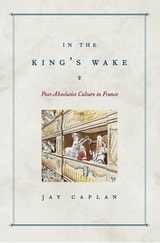
In the King's Wake
Post-Absolutist Culture in FranceJay Caplan
University of Chicago Press, 1999
While absolutist culture had focused on value directly represented in people (e.g., those of noble blood) and things (e.g., coins made of precious metals), post-absolutist culture instead explored the capacity of signs to stand for something real (e.g., John Law's banknotes or Marivaux's plays in which actions rather than birth signify nobility). Between the image of the Sun King and visions of the godlike Romantic self, Caplan discovers a post-absolutist France wracked by surprisingly modern conflicts over the true sources of value and legitimacy.

Indie Cinema Online
Sarah E.S. Sinwell
Rutgers University Press, 2020
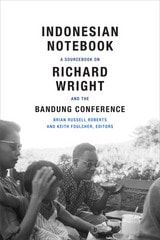
Indonesian Notebook
A Sourcebook on Richard Wright and the Bandung ConferenceBrian Russell Roberts and Keith Foulcher, editors
Duke University Press, 2016
Influence and Intertextuality in Literary History
John B. Clayton
University of Wisconsin Press, 1991
This important collection explores and clarifies two of the most contested ideas in literary theory today, influence and intertextuality. The study of influence tends to center on major authors and canonical works, identifying prior documents as “sources” or “contexts” for a given author. Intertextuality, on the other hand, is a concept unconcerned with authors as individuals; it treats all texts as part of a network of discourse that includes culture, history, and social practices as well as other literary works. In thirteen essays drawing on the entire spectrum of English and American literary history, this volume considers the relationship between these two terms—their rivalry, their kinship, their range of uses.
Debates about these two concepts have been crucial to the “new historicism” and the resurgence of interest in literary history. The essays in this volume employ a refreshing array of examples from that history—poetry of the Renaissance and the twentieth century, novels of the eighteenth through twentieth centuries, Old English texts, and postmodernist productions that have served as recurrent “intertexts” for contemporary theory. The contributors treat such currently vital questions as the role of the author, canon formation, gender, causality, and the social dimension of texts. They illuminate old assumptions and new ideas about agency that lie behind notions of influence, and they examine models of an anonymous textual field that lie behind notions of intertextuality.
The volume takes much of its character from its own intertextual origin as a group project of the English faculty at the University of Wisconsin–Madison. Though diverse in their academic interests, concerns, and experience, the contributors particpated in an ongoing intellectual exchange that is a model of how new scholarship can arise from dialogue.

Inheriting the Holocaust
A Second-Generation MemoirPaula S. Fass
Rutgers University Press, 2011
Fass begins her journey through time and relationships when she travels to Poland and locates birth certificates of the murdered siblings she never knew. That journey to recover her family's story provides her with ever more evidence for the perplexing reliability of memory and its winding path toward historical reconstruction. In the end, Fass recovers parts of her family's history only to discover that Poland is rapidly re-imagining the role Jews played in the nation's past.
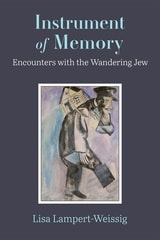
Instrument of Memory
Encounters with the Wandering JewLisa Lampert-Weissig
University of Michigan Press, 2024
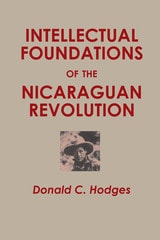
Intellectual Foundations of the Nicaraguan Revolution
By Donald C. Hodges
University of Texas Press, 1986
In this critical study of the thought of Augusto Cesar Sandino and his followers, Donald C. Hodges has discovered a coherent ideological thread and political program, which he succeeds in tracing to Mexican and Spanish sources. Sandino's strong religious inclination in combination with his anarchosyndicalist political ideology established him as a religious seer and moral reformer as well as a political thinker and is the prototype of the curious blend of Marxism and Christianity of the late twentieth-century Nicaraguan government, the Frente Sandinista de Liberación Nacional.

International Trotskyism, 1929-1985
A Documented Analysis of the MovementRobert J. Alexander
Duke University Press, 1991
Renowned scholar Robert J. Alexander has amassed, from disparate sources, an unprecedented amount of primary and secondary material to provide a documentary history of the origins, development, and nature of the Trotskyist movement around the world. Drawing on interviews and correspondence with Trotskyists, newspaper reports and pamphlets, historical writings including the annotated writings of Trotsky in both English and French, historical memoirs of Trotskyist leaders, and documents of the Fourth International, Alexander recounts the history of the movement since Trotsky’s exile from the Soviet Union in 1929.
Organized alphabetically in a double-column, country-by-country format this book charts the formation and growth of Trotskyism in more than sixty-five countries, providing biographic information about its most influential leaders, detailed accounts of Trotsky’s personal involvement in the development of the movement in each country, and thorough reports of its various factions and splits. Multiple chapters are reserved for countries where the movement was more active or fully developed and various chapters are organized around crucial thematic issues, such as the Fourth International. The chapters are followed by extensive name, organization, publication, and subject indexes, which provide optimal access to the wealth of information contained in the main body of the work.
Invested Interests
Capital, Culture, and the World BankBret Benjamin
University of Minnesota Press, 2007
Despite the World Bank’s profound impact on economic, political, and social conditions during the post–World War II era, cultural critics who rigorously theorize other institutions of colonialism and globalization have largely ignored the institution. Working to correct this blind spot, Bret Benjamin’s Invested Interests presents the first extended cultural analysis of the World Bank.
In Invested Interests, Benjamin contends that the World Bank has, from its inception, trafficked in culture. From the political context in which the Bank was chartered to its evolution into an interventionist development agency with vast, unchecked powers, Benjamin explores the Bank’s central role in the global dissemination of Fordist-Keynesianism, its conflicted support for nationalism and the nation-state, and its emerging awareness of the relationships between economics and culture. Benjamin argues that the Bank shapes, and is in turn shaped by, historical pressures of the age—most significantly the rise of third world national liberation movements. Reading a broad array of midcentury archival materials, Benjamin examines not only the Bank’s own growing attentiveness to cultural work but also its prominent place in the thinking of such anti-imperialist intellectuals as Aimé Césaire, Frantz Fanon, and Richard Wright.
Benjamin maps the Bank’s contemporary rhetorical maneuvering in the wake of ever-intensifying protests, offering close readings of the World Bank’s corporate literature, the activities of the antiglobalization World Social Forum, and the writings of prominent Bank critic Arundhati Roy, including her novel The God of Small Things.
Deftly investigating the World Bank’s ideological struggles over six decades, Invested Interests develops a conceptually and politically nuanced critique of the Bank as a cultural institution deeply enmeshed in the last century’s historical transformations of imperial power and anti-imperial struggle.
Bret Benjamin is associate professor of English and director of undergraduate studies at the University of Albany, SUNY.
Invisibility and Influence
A Literary History of AfroLatinidadesRegina Marie Mills
University of Texas Press, 2024
2026 Honorable Mention, Best Academic Themed Book, College Level, International Latino Book Awards
2026 Honorable Mention, Latinx Studies Section, Social Sciences Category, Latin American Studies Association (LASA)
A rich literary study of AfroLatinx life writing, this book traces how AfroLatinxs have challenged their erasure in the United States and Latin America over the last century.
Invisibility and Influence demonstrates how a century of AfroLatinx writers in the United States shaped life writing, including memoir, collective autobiography, and other formats, through depictions of a wide range of “Afro-Latinidades.” Using a woman-of-color feminist approach, Regina Marie Mills examines the work of writers and creators often excluded from Latinx literary criticism. She explores the tensions writers experienced in being viewed by others as only either Latinx or Black, rather than as part of their own distinctive communities. Beginning with Arturo (Arthur) Schomburg, who contributed to wider conversations about autobiographical technique, Invisibility and Influence examines a breadth of writers, including Jesús Colón; members of the Young Lords; Piri Thomas; Lukumi santera and scholar Marta Moreno Vega; and Black Mexican American poet Ariana Brown. Mills traces how these writers confront the distorted visions of AfroLatinxs in the United States, Latin America, and the Caribbean, and how they created and expressed AfroLatinx spirituality, politics, and self-identity, often amidst violence. Mapping how AfroLatinx writers create their own literary history, Mills reveals how AfroLatinx life writing shapes and complicates discourses on race and colorism in the Western Hemisphere.
Dialogues in AfroLatinidad Podcast:https://www.youtube.com/watch?v=FIhF-pdeW3A
Invisible Enemies
The American War on Vietnam, 1975-2000Edwin A. Martini
University of Massachusetts Press, 2007
Beginning where most histories of the Vietnam War end, Invisible Enemies examines the relationship between the United States and Vietnam following the American pullout in 1975. Drawing on a broad range of sources, from White House documents and congressional hearings to comic books and feature films, Edwin Martini shows how the United States continued to wage war on Vietnam “by other means” for another twenty-five years. In addition to imposing an extensive program of economic sanctions, the United States opposed Vietnam's membership in the United Nations, supported the Cambodians, including the Khmer Rouge, in their decade-long war with the Vietnamese, and insisted that Vietnam provide a “full accounting” of American MIAs before diplomatic relations could be established. According to Martini, such policies not only worked against some of the stated goals of U.S. foreign policy, they were also in opposition to the corporate economic interests that ultimately played a key role in normalizing relations between the two nations in the late 1990s.
Martini reinforces his assessment of American diplomacy with an analysis of the “cultural front”—the movies, myths, memorials, and other phenomena that supported continuing hostility toward Vietnam while silencing opposing views of the war and its legacies. He thus demonstrates that the “American War on Vietnam” was as much a battle for the cultural memory of the war within the United States as it was a lengthy economic, political, and diplomatic campaign to punish a former adversary.
Invisible Walls and To Remember is to Heal
A German Family under the Nuremberg LawsIngeborg Hecht
Northwestern University Press, 1999
In Invisible Walls, Hecht writes of what it was like to live under these circumstances, sharing heartbreaking details of her personal life, including the loss of her daughter's father on the Russian front; the death of her own father after his deportation in 1944; and her fears of perishing coupled with the shame of faring better than most of her family and friends. This new volume adds the first translation of part of Hecht's second book, To Remember is to Heal, a collection of vignettes of encounters and experiences that resulted from the publication of the first.