Results by title
65 books match the query 'Intercultural communication' and 4 start with i

Imagining China
Rhetorics of Nationalism in an Age of GlobalizationStephen J. Hartnett
Michigan State University Press, 2017
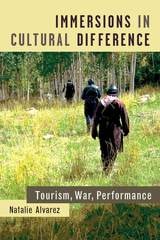
Immersions in Cultural Difference
Tourism, War, PerformanceNatalie Alvarez
University of Michigan Press, 2018
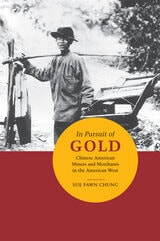
In Pursuit of Gold
Chinese American Miners and Merchants in the American WestSue Fawn Chung
University of Illinois Press, 2011
Both a history of an overlooked community and a well-rounded reassessment of prevailing assumptions about Chinese miners in the American West, In Pursuit of Gold brings to life in rich detail the world of turn-of-the-century mining towns in the Northwest. Sue Fawn Chung meticulously recreates the lives of Chinese immigrants, miners, merchants, and others who populated these towns and interacted amicably with their white and Native American neighbors, defying the common perception of nineteenth-century Chinese communities as insular enclaves subject to increasing prejudice and violence.
While most research has focused on Chinese miners in California, this book is the first extensive study of Chinese experiences in the towns of John Day in Oregon and Tuscarora, Island Mountain, and Gold Creek in Nevada. Chung illustrates the relationships between miners and merchants within the communities and in the larger context of immigration, arguing that the leaders of the Chinese and non-Chinese communities worked together to create economic interdependence and to short-circuit many of the hostilities and tensions that plagued other mining towns.
Peppered with fascinating details about these communities from the intricacies of Chinese gambling games to the techniques of hydraulic mining, In Pursuit of Gold draws on a wealth of historical materials, including immigration records, census manuscripts, legal documents, newspapers, memoirs, and manuscript collections. Chung supplements this historical research with invaluable first-hand observations of artifacts that she experienced in archaeological digs and restoration efforts at several of the sites of the former booming mining towns.
In clear, analytical prose, Chung expertly characterizes the movement of Chinese miners into Oregon and Nevada, the heyday of their mining efforts in the region, and the decline of the communities due to changes in the mining industry. Highlighting the positive experiences and friendships many of the immigrants had in these relatively isolated mining communities, In Pursuit of Gold also suggests comparisons with the Chinese diaspora in other locations such as British Columbia and South Africa.
Intercultural Communication
A Practical GuideBy Tracy Novinger
University of Texas Press, 2001
Successfully communicating with people from another culture requires learning more than just their language. While fumbling a word or phrase may cause embarrassment, breaking the unspoken cultural rules that govern personal interactions can spell disaster for businesspeople, travelers, and indeed anyone who communicates across cultural boundaries. To help you avoid such damaging gaffes, Tracy Novinger has compiled this authoritative, practical guide for deciphering and following "the rules" that govern cultures, demonstrating how these rules apply to the communication issues that exist between the United States and Mexico.
Novinger begins by explaining how a major proportion of communication within a culture occurs nonverbally through behavior and manners, shared attitudes, common expectations, and so on. Then, using real-life examples and anecdotes, she pinpoints the commonly occurring obstacles to communication that can arise when cultures differ in their communication techniques. She shows how these obstacles come into play in contacts between the U.S. and Mexico and demonstrates that mastering the unspoken rules of Mexican culture is a key to cementing business and social relationships. Novinger concludes with nine effective, reliable principles for successfully communicating across cultures.