Results by title
123 books match the query 'Internet' and 6 start with i

I Found It on the Internet
Coming of Age OnlineFrances Jacobson Harris
American Library Association, 2011
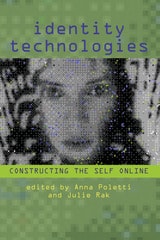
Identity Technologies
Constructing the Self OnlineEdited by Anna Poletti and Julie Rak
University of Wisconsin Press, 2013

Imaginary Futures
From Thinking Machines to the Global VillageRichard Barbrook
Pluto Press, 2007
Richard Barbrook argues that at the height of the Cold War the Americans invented the only working model of communism in human history, the Internet. Yet, for all of its libertarian potential, the goal of this high-tech project was geopolitical dominance. The ownership of time was control over the destiny of humanity. The potentially subversive theory of cybernetics was transformed into the military-friendly project of "artificial intelligence." Capitalist growth became the fastest route to the "information society." The rest of the world was expected to follow America's path into the networked future.
Today, we're still being told that the Net is creating the information society---and that America today is everywhere else tomorrow. Barbrook shows how this idea serves a specific geopolitical purpose. Thankfully, at the beginning of the twenty-first century, the DIY ethic of the Net shows that people can resist these authoritarian prophecies by shaping information technologies in their own interest. Ultimately, if we don't want the future to be what it used to be, we must invent our own improved and truly revolutionary future.
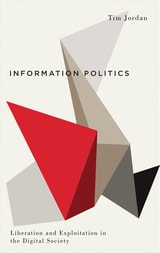
Information Politics
Liberation and Exploitation in the Digital SocietyTim Jordan
Pluto Press, 2015
The first of Pluto Press’s new Digital Barricades series, focusing on ground-breaking critical explorations of resistance within the digital world, Information Politics explores the exploitations both facilitated by, and contested through, increases in information flows; the embedding of information technologies in daily life; and the intersection of network and control protocols. Anyone hoping to get to grips with the rapidly changing terrain of digital culture and conflict should start here.
Intellectual Freedom Manual, Eleventh Edition
Erin Office for Intellectual Freedom
American Library Association, 2026
When someone faces a difficult intellectual freedom (IF) issue, they usually don’t have time to wade through dense text to find the answers they need. Designed as a real-world reference, OIF’s Intellectual Freedom Manual provides trusted, comprehensive guidance for every library worker, from the volunteer to the director, in plain language. Whether you’re developing or reviewing policies, on-boarding new staff or trustees, responding to challenges and controversies, or studying librarianship, you’ll find this a vital tool, with features such as
- contributions that center the voices of Black, Indigenous, and other People of Color (BIPOC) and LGBTQIA+ people, who are often targeted by censorship efforts;
- chapters that begin with an overview explaining the big ideas and offering reflection questions;
- an introduction to IF and why it matters, drawing on ALA's core IF documents and supported with adaptable policy worksheets;
- information and best practice guidance on key topics such as access, children and youth, censorship and internet filtering, collection development and management, copyright, meeting rooms and exhibit spaces, library programming, politics and religion, privacy, and visits and requests from law enforcement;
- stories from real people whose lives have been impacted by IF, showing how library policies shape culture, protect staff and users, and affect real people;
- concise breakdowns of IF issues from legal experts, helping you understand the laws and how they apply in real situations;
- practical advice on advocating for IF, getting help when challenges arise, lobbying, and working with your elected officials;
- a thorough index to help you quickly find the information you need; and
- a helpful glossary and selected bibliography of additional resources.
Internet and Wireless Security
Robert Temple
The Institution of Engineering and Technology, 2002