Results by title
448 books match the query 'Interviews' and 15 start with i
I Am of Ireland
Women of the North Speak OutElizabeth Shannon
University of Massachusetts Press, 1997
I Will Mix Your Blood with Coal
Snapshots from the East of UkraineOleksandr Mykhed, Tanya Savchynska, and David Mossop
Northwestern University Press, 2025
In 2014, the Russian army, with support from local militants, occupied parts of Ukraine’s two easternmost regions—once the beating industrial heart of the Soviet Union—where coal extraction has since exhausted both the human population and the natural resources. In late 2016, Oleksandr Mykhed set out on a research trip to explore the deep history and contested present of the area from the perspective of a fellow countryman who’d never been there.
Mykhed brings us on a painful yet hopeful journey across the Ukrainian east, sharing conversations with locals, snippets from archival documents, and the complicated perspectives of prominent cultural figures, such as writer Serhiy Zhadan, historian Olena Stiazhkina, and philosopher Ihor Kozlovsky, who was imprisoned and tortured for nearly two years.
I Will Mix Your Blood with Coal invites us to meet generations of coal miners. To learn about the Belgian and British investors who founded the east’s industrial cities. To remember the harrowing events of the First and Second World Wars and the incalculable brutality of Soviet history. To see the activists who are even now working to improve the country. To hear sweet memories of a lost utopia that never existed. Mykhed provides a unique portrait of life in the east during the war, before the full-scale invasion that would change everything.
I'm Afraid of That Water
A Collaborative Ethnography of a West Virginia Water CrisisLuke Eric Lassiter
West Virginia University Press, 2020
On January 9, 2014, residents across Charleston, West Virginia, awoke to an unusual licorice smell in the air and a similar taste in the public drinking water. That evening residents were informed the tap water in tens of thousands of homes, hundreds of businesses, and dozens of schools and hospitals—the water made available to as many as 300,000 citizens in a nine-county region—had been contaminated with a chemical used for cleaning crushed coal.
This book tells a particular set of stories about that chemical spill and its aftermath, an unfolding water crisis that would lead to months, even years, of fear and distrust. It is both oral history and collaborative ethnography, jointly conceptualized, researched, and written by people—more than fifty in all—across various positions in academia and local communities. I’m Afraid of That Water foregrounds the ongoing concerns of West Virginians (and people in comparable situations in places like Flint, Michigan) confronted by the problem of contamination, where thresholds for official safety may be crossed, but a genuine return to normality is elusive.

INVISIBLE AUTHOR
LAST ESSAYSChristine Brooke-Rose
The Ohio State University Press, 2002
In Her Own Words
Conversations with Composers in the United StatesJennifer Kelly
University of Illinois Press, 2014
In Time
Poets, Poems, and the RestC. K. Williams
University of Chicago Press, 2012
In the Shadow of Cortés
Conversations Along the Route of ConquestKathleen Ann Myers
University of Arizona Press, 2015
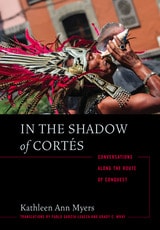
Following the route of Hernán Cortés, In the Shadow of Cortés offers a visual and cultural history of the legacy of contact between Spaniards and indigenous civilizations. The book is a reflective journey that presents a diversity of voices, images, and ideas about history and conquest. Specialist in Mexican culture Kathleen Ann Myers teams up with prize-winning translators and photographers to offer a unique reading experience that combines accessible interpretative essays with beautifully translated interviews and dozens of historical and contemporary black-and-white and color images, including some by award-winner Steven Raymer. The result offers readers multiple perspectives on these pivotal events as imagined and re-envisioned today by Mexicans both in their homeland and in the United States.
In the Shadow of Cortés offers an extensive visual narrative about conquest and, ultimately, about Mexican history. It traces the symbolic geography of the conquest and shows how the historical memory of colonialism continues to shape lives today.
Indigenous Voices in Digital Spaces
Cindy Tekobbe
Utah State University Press, 2024
Tekobbe’s methods for analyzing and understanding Indigenous knowledges online center Indigenous storytelling and “thick” (broad, deep, and complex) Indigenous meaning-making. Employing this thickness to interpret Indigenous knowledge ways resists the settler-colonial logics that tend to flatten complex Indigenous concepts into one-note representations of racial stereotypes. Native Americans’ use of social media and digital platforms to support social movements uniquely constructs Indigenous identities as living, producing, and culture-making people, which confronts the commonplace, one-dimensional narrative that Indigenous North Americans either live in isolation or are people of history resigned to the long-forgotten past. Tekobbe’s methods are applicable to additional online research to break through Western paradigms of oppositional critique, the colonial power matrix embedded in hierarchical and taxonomical classification systems, and participant objectification.
Indigenous Voices in Digital Spaces offers new methodological and epistemological opportunities to explore digital communities and technologies, problematizing conventional Western critique. This book is useful to instructors in Indigenous studies, internet studies, digital literacies, cultural studies, and communications, as well as Indigenous and internet studies researchers.
Inner Lives of Deaf Children
Interviews and AnalysisMartha Sheridan
Gallaudet University Press, 2005
By conducting interviews with seven deaf children, ages seven to ten, Martha Sheridan offers a fresh look at their private thoughts and feelings in this watershed book. Each child possesses a unique cultural background, and Sheridan communicated with each in his or her preferred method of communication. Her procedure remained consistent with each: In addition to standard questions, Sheridan asked each child to draw a picture based on his or her life, then tell a story about it. Next, she showed them magazine pictures and asked them to describe what they saw.
The results proved to be as varied as they were engaging. Angie, an adopted deaf girl who communicates in Signed English, expressed a desire to attend a hearing college when she grows up while also stating she hoped her own children will be deaf. Joe, an African-American, hard of hearing boy, drew pictures of deaf people who are teased in a public school, reflecting his own difficult experiences.
Sheridan calls upon her tenure as a social worker as well as her own experience as a deaf child growing up in a hearing family in analyzing her study’s results. She writes, “These children have strengths, they have positive experiences, and they enjoy positive relationships.” Inner Lives of Deaf Children will prove to be an enlightening read for parents and scholars alike.
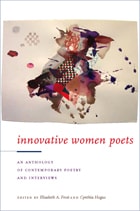
Innovative Women Poets
An Anthology of Contemporary Poetry and InterviewsElisabeth A. Frost
University of Iowa Press, 2007

Interrogating Cultural Studies
Theory, Politics and PracticeEdited by Paul Bowman
Pluto Press, 2003
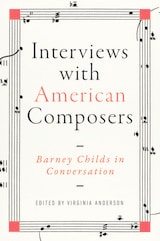
Interviews with American Composers
Barney Childs in ConversationBarney Childs. Edited by Virginia Anderson
University of Illinois Press, 2022
Virginia Anderson edits the first published collection of these conversations. She pairs each interview with a contextual essay by a contemporary expert that shows how the composer's discussion with Childs fits into his life and work. Together, the interviewees cover a broad range of ideas and concerns around topics like education, notation, developments in electronic music, changing demands on performers, and tonal music.
Innovative and revealing, Interviews with American Composers is an artistic and historical snapshot of American music at an important crossroads.

Intimate With Walt
Whitmans Conversataions With Horace TraubelGary Schmidgall
University of Iowa Press, 2001
In Intimate with Walt Gary Schmidgall has condensed Traubel's nearly 5,000 pages into one manageable volume featuring the many self-revealing, humorous, nostalgic, and often curmudgeonly words of the Good Gray Poet. The book is divided into five sections, each consisting of several chapters: the first, presenting Walt on himself, his family, and his daily life and visitors at the only home he ever owned; the second, on his artistic credos, the literary life, and a large array of comments on the writing, publication of, and critical reaction to Leaves of Grass; the third, focusing on his friends, admirers, idols, and lovers; the fourth and longest, presenting his no-holds-barred views on a variety of topics, including the American scene, race, religion, music, and even alcohol; and finally, a gathering of passages revealing Whitman's struggles with his infirmities, his poignant final days, and Traubel's observations on Whitman's deathbed scene and burial rites.
Islam and the West
A Conversation with Jacques DerridaMustapha Chérif
University of Chicago Press, 2008
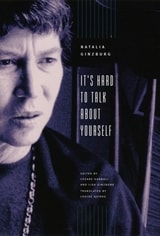
It's Hard to Talk about Yourself
Natalia Ginzburg
University of Chicago Press, 2003
Ginzburg's marriage to Leone Ginzburg, who met his death at the hands of the Nazis for his anti-Fascists activities, and her work for the Einaudi publishing house placed her squarely in the center of Italian political and cultural life. But whether writing about the Turin of her childhood, the Abruzzi countryside, where her family was interned during World War II, or contemporary Rome, Ginzburg never shied away from the traumas of history-even if she approached them only indirectly, through the mundane details and catastrophes of personal life.
Intensely reserved, Ginzburg said that she "crept toward autobiography stealthily like a wolf." But she did openly discuss her life and her work in an extraordinary series of interviews for Italian radio in 1990. Never before published in English, It's Hard to Talk about Yourself presents a vivid portrait of Ginzburg in her own words on the forces that shaped her remarkable life-politics, publishing, literature, and family. This fluid translation will join Ginzburg's autobiography, Family Sayings, as one of the most important records of her life and, as the editors write in their preface, "the last, unexpected, original book by Natalia Ginzburg."