Results by title
87 books match the query 'Iraq' and 4 start with i
In Time of War
Understanding American Public Opinion from World War II to IraqAdam J. Berinsky
University of Chicago Press, 2009
From World War II to the war in Iraq, periods of international conflict seem like unique moments in U.S. political history—but when it comes to public opinion, they are not. To make this groundbreaking revelation, In Time of War explodes conventional wisdom about American reactions to World War II, as well as the more recent conflicts in Korea, Vietnam, the Gulf, Afghanistan, and Iraq. Adam Berinsky argues that public response to these crises has been shaped less by their defining characteristics—such as what they cost in lives and resources—than by the same political interests and group affiliations that influence our ideas about domestic issues.
With the help of World War II–era survey data that had gone virtually untouched for the past sixty years, Berinsky begins by disproving the myth of “the good war” that Americans all fell in line to support after the Japanese bombed Pearl Harbor. The attack, he reveals, did not significantly alter public opinion but merely punctuated interventionist sentiment that had already risen in response to the ways that political leaders at home had framed the fighting abroad. Weaving his findings into the first general theory of the factors that shape American wartime opinion, Berinsky also sheds new light on our reactions to other crises. He shows, for example, that our attitudes toward restricted civil liberties during Vietnam and after 9/11 stemmed from the same kinds of judgments we make during times of peace.
With Iraq and Afghanistan now competing for attention with urgent issues within the United States, In Time of War offers a timely reminder of the full extent to which foreign and domestic politics profoundly influence—and ultimately illuminate—each other.
Instructions for American Servicemen in Iraq during World War II
United States Army
University of Chicago Press, 2007
The U.S. military could certainly have used that bit of wisdom in 2003, as violence began to eclipse the Iraq War’s early successes. Ironically, had the Army only looked in its own archives, they would have found it—that piece of advice is from a manual the U.S. War Department handed out to American servicemen posted in Iraq back in 1943.
The advice in Instructions for American Servicemen in Iraq during World War II,presented here in a new facsimile edition, retains a surprising, even haunting, relevance in light of today’s muddled efforts to win Iraqi hearts and minds. Designed to help American soldiers understand and cope with what was at the time an utterly unfamiliar culture—the manual explains how to pronounce the word Iraq, for instance—this brief, accessible handbook mixes do-and-don’t-style tips (“Always respect the Moslem women.” “Talk Arabic if you can to the people. No matter how badly you do it, they will like it.”) with general observations on Iraqi history and society. The book’s overall message still rings true—dramatically so—more than sixty years later: treat an Iraqi and his family with honor and respect, and you will have a strong ally; treat him with disrespect and you will create an unyielding enemy.
With a foreword by Lieutenant Colonel John A. Nagl reflecting on the manual’s continuing applicability—and lamenting that it was unknown at the start of the invasion—this new edition of Instructions for American Servicemen in Iraq will be essential reading for anyone who cares about the future of Iraq and the fate of the American soldiers serving there.
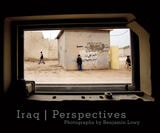
Iraq | Perspectives
Benjamin Lowy
Duke University Press, 2011
The Center for Documentary Studies / Honickman First Book Prize in Photography
Benjamin Lowy’s powerful and arresting color photographs, taken over a six-year period through Humvee windows and military-issue night vision goggles, capture the desolation of a war-ravaged Iraq as well as the tension and anxiety of both U.S. soldiers and Iraqi civilians. To photograph on the streets unprotected was impossible for Lowy, so he made images that illuminate this difficulty by shooting photographs through the windows and goggles meant to help him, and soldiers, to see. In doing so he provides us with a new way of looking at the war—an entirely different framework for regarding and thinking about the everyday activities of Iraqis in a devastated landscape and the movements of soldiers on patrol, as well as the alarm and apprehension of nighttime raids.
“Iraq was a land of blast walls and barbed wire fences. I made my first image of a concrete blast wall through the window of my armored car. These pictures show a fragment of Iraqi daily life taken by a transient passenger in a Humvee; yet they are a window to a world where work, play, tension, grief, survival, and everything in between are as familiar as the events of our own lives. . . . [In] the ‘Nightvision’ images . . . as soldiers weave through the houses and bedrooms of civilians during nighttime military raids, they encounter the faces of their suspects as well as bystanders, many of whom are parents protecting their children. . . . I hope that these images provide the viewer with momentary illumination of the fear and desperation that is war.”—Benjamin Lowy

Israel and the Clash of Civilisations
Iraq, Iran and the Plan to Remake the Middle EastJonathan Cook
Pluto Press, 2008
Journalist Jonathan Cook explores Israel’s key role in persuading the Bush administration to invade Iraq, as part of a plan to remake the Middle East, and their joint determination to isolate Iran and prevent it from acquiring nuclear weapons that might rival Israel’s own.
This concise and clearly argued book makes the case that Israel's desire to be the sole regional power in the Middle East neatly chimed with Bush’s objectives in the “war on terror”.
Examining a host of related issues, from the ethnic cleansing of Palestinians to the role of Big Oil and the demonisation of the Arab world, Cook argues that the current chaos in the Middle East is the objective of the Bush administration – a policy that is equally beneficial to Israel.