Results by title
593 books match the query 'Jews' and 33 start with i
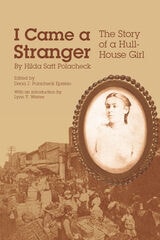
I Came a Stranger
The Story of a Hull-House GirlHilda Satt Polacheck
University of Illinois Press, 1989

I Rest My Case
Mark Verstandig
Northwestern University Press, 2002
His personal story interweaves the vast forces of politics and history with intimate details of the shtetl--from the pre-war intricacies of Galician society and the textures of a traditional Jewish education, to the agonizing contradictions of Polish-Jewish relations and the complexities of post-war Jewish politics.
His account of the displaced persons camps where 'transit Jews' awaited their chance to emigrate is a signifigant contribution to a little-known aspect of post-war history.
With his gift for observation and his acute powers of analysis, Mark Verstandig has achieved the rare feat of telling the story of his people through his own history. Part autobiography, part Holocaust literature, part sociological analysis, I Rest my Case is a fine achievement.
Impure Migration
Jews and Sex Work in Golden Age ArgentinaMir Yarfitz
Rutgers University Press, 2019
Impurity and Purification in Early Judaism and the Jesus Tradition
Thomas Kazen
SBL Press, 2021
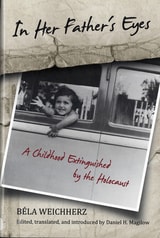
In Her Father's Eyes
A Childhood Extinguished by the HolocaustBéla Weichherz, Edited by Daniel H. Magilow
Rutgers University Press, 2008
In Her Father's Eyes is a moving tale about Jewish life and a father's profound love for his only child. By bridging prewar and wartime periods, the diary also provides a rich context for understanding the history from which the Holocaust emerged.
In My Father'S Study
Ben Orlove
University of Iowa Press, 1995
In 1921 Solomon Orlovski, a Russian Jew born in 1904, emigrated to America and transformed himself into Robert Orlove, a pattern maker in two senses of the term: during the day, he worked in the fur trade in New York and Chicago, making patterns for toys and hats; in his private life he became a self-taught artist who created prints, sketches, and collages in his study. More than sixty years later his son Ben—an anthropologist educated at Harvard and Berkeley—walked through the doorway of the deceased Robert's study and began to explore more than a half century of his father's experiences, thoughts, and emotions as well as his own very different life. His wry, sensitive combination of biography, memoir, and autobiography taps a remarkably rich vein of individual and collective experience in our diverse society.
Ben Orlove's dual narrative constitutes a family history of notable breadth and immediacy. By turns passionate and cool, dramatic and analytic, he excavates his father Robert's lifetime accumulation of diaries, letters, clippings, photographs, and artworks to create a convincing, deeply satisfying portrait that link both father and son.
In Search of American Jewish Culture
Stephen J. Whitfield
Brandeis University Press, 2001
In Their Own Image
New York Jews in Jazz Age Popular CultureMerwin, Ted
Rutgers University Press, 2006
The Jazz Age of the 1920s is an era remembered for illegal liquor, innovative music and dance styles, and burgeoning ideas of social equality. It was also the period during which second-generation Jews began to emerge as a significant demographic in New York City. In TheirOwn Image examines thegrowing cultural visibility of Jewish life amid this vibrant scene.
From the vaudeville routines of Fanny Brice, Eddie Cantor, George Jessel, and Sophie Tucker, to the slew of Broadway comedies about Jewish life and the silent films that showed immigrant families struggling to leave the ghetto, images and representations of Jews became staples of interwar popular culture. Through the performing arts, Jews expressed highly ambivalent feelings about their identification with Jewish and American cultures. Ted Merwin shows how they became American by producing and consuming not images of another group, but images of themselves. As a result, they humanized Jewish stereotypes, softened anti-Semitic attitudes, and laid the groundwork for today’s Jewish comedians.
An entertaining look at the role popular culture plays in promoting the acculturation of an ethnic group, In Their Own Image enhances our understanding of American Jewish history and provides a model for the study of other groups and their integration into mainstream society.
In Times of Crisis
Essays on European Culture, Germans, and JewsSteven E. Aschheim
University of Wisconsin Press, 2001
The nineteenth- and twentieth-century relationship between European culture, German history, and the Jewish experience produced some of the West’s most powerful and enduring intellectual creations—and, perhaps in subtly paradoxical and interrelated ways, our century’s darkest genocidal moments. In Times of Crisis explores the flashpoints of this vexed relationship, mapping the coordinates of a complex triangular encounter of immense historical import.
In essays that range from the question of Nietzsche’s legacy to the controversy over Daniel Goldhagen’s Hitler’s Willing Executioners, the distinguished historian Steven E. Aschheim presents this encounter as an ongoing dialogue between two evolving cultural identities. He touches on past dimensions of this exchange (such as the politics of Weimar Germany) and on present dilemmas of grasping and representing it (such as the Israeli discourse on the Holocaust). His work inevitably traces the roots and ramifications of Nazism but at the same time brings into focus historical circumstances and contemporary issues often overshadowed or distorted by the Holocaust.
These essays reveal the ubiquitous charged inscriptions of Nazi genocide within our own culture and illuminate the projects of some later thinkers and historians—from Hannah Arendt to George Mosse to Saul Friedlander—who have wrestled with its problematics and sought to capture its essence. From the broadly historical to the personal, from the politics of Weimar Germany to the experience of growing up German Jewish in South Africa, the essays expand our understanding of German Jewish history in particular, but also of historical processes in general.
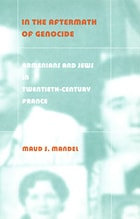
In the Aftermath of Genocide
Armenians and Jews in Twentieth-Century FranceMaud S. Mandel
Duke University Press, 2003
In the Aftermath of Genocide reveals that Armenian and Jewish survivors rarely sought to shed the obvious symbols of their ethnic and religious identities. Mandel shows that following the 1915 genocide and the Holocaust, these communities, if anything, seemed increasingly willing to mobilize in their own self-defense and thereby call attention to their distinctiveness. Most Armenian and Jewish survivors were neither prepared to give up their minority status nor willing to migrate to their national homelands of Armenia and Israel. In the Aftermath of Genocide suggests that the consolidation of the nation-state system in twentieth-century Europe led survivors of genocide to fashion identities for themselves as ethnic minorities despite the dangers implicit in that status.
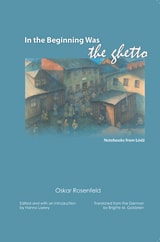
In the Beginning Was the Ghetto
Notebooks from LodzOskar Rosenfeld
Northwestern University Press, 2002
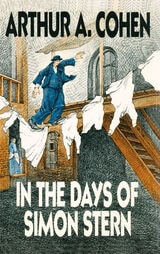
In the Days of Simon Stern
Arthur A. Cohen
University of Chicago Press, 1987
"A majestic work of fiction that should stand world literature's test of time, to be read and reread. A masterpiece."—Commonweal
"This book ensnares one of the most extraordinarily daring ideas to inhabit an American novel in a number of years. For one thing, it is that risky devising, dreamed of only by the Thomas Manns of the world, a serious and vastly conceived fiction bled out of the theological imagination. For another, it is clearly an 'American' novel—altogether American, despite its Jewish particularity: it is not so much about the history of the Jews as it is about the idea of the New World as haven. . . . In its teeming particularity every vein of this book runs with a brilliance of Jewish insight and erudition to be found in no other novelist. Arthur Cohen is the first writer of any American generation to compose a profoundly Jewish fiction on a profoundly Western theme."—Cynthia Ozick, New York Times Book Review
"This stately, ambitious amalgam of Jewish myth, history, theology, and speculations on the Jewish soul is like an enormous Judaic archeological ruin—often hard for the uninitiated to interpret, but impressive. . . . Intelligent, inventive, fascinating."—New Yorker
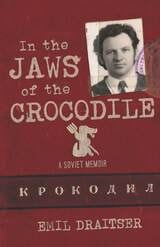
In the Jaws of the Crocodile
A Soviet MemoirEmil Draitser
University of Wisconsin Press, 2021
In this captivating memoir, Draitser explores what it means to be a satirist in a country lacking freedom of expression. His experience provides a window into the lives of a generation of artists who were allowed to poke fun and make readers laugh, as long as they toed a narrow, state-approved line. In the Jaws of the Crocodile also includes several of Draitser’s wry pieces translated into English for the first time.
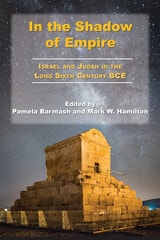
In the Shadow of Empire
Israel and Judah in the Long Sixth Century BCEPamela Barmash
SBL Press, 2021
Empires Come and Go, Homelands Never
Readers of the Hebrew Bible know the basic story line: during the early sixth century BCE the Babylonian ruler Nebuchadnezzar sacked Jerusalem, deported a portion of the population to Mesopotamia, and triggered a crisis of faith in the minds of prophets, priests, and liturgists that still echoes through the centuries. Though many Judahites chose to make their way home under Persian imperial control, the straightforward biblical story of exile and return masks many complex issues of evidence and fact. Unlike previous studies that focused narrowly on the Babylonian exile of the Judahite elites, this volume widens the geographical and temporal scope to include the Assyrian, Babylonian, and Persian Empires. Improved access to and understanding of relevant texts, iconography, and material culture provide an opportunity for scholars to reappraise methods of imperial control and the responses of those in exile and under occupation. Contributors Pamela Barmash, Ryan P. Bonfiglio, Caralie Cooke, Lisbeth S. Fried, Martien A. Halvorson-Taylor, Mark W. Hamilton, Matt Waters, and Ian D. Wilson lay a firm foundation for future work on the long sixth century.
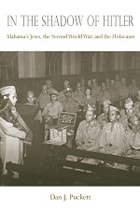
In the Shadow of Hitler
Alabama's Jews, the Second World War, and the HolocaustDan J. Puckett
University of Alabama Press, 2014
In this extensive study of how southern Jews in the United States responded to the Nazi persecution of European Jews, Dan J. Puckett recounts the divisions between Alabama Jews in the early 1930s. As awareness of the horrors of the Holocaust spread, Jews across Alabama from different backgrounds and from Reform, Conservative, and Orthodox traditions worked to bridge their internal divisions in order to mount efforts to save Jewish lives in Europe. Only by leveraging their collective strength were Alabama’s Jews able to sway the opinions of newspaper editors, Christian groups, and the general public as well as lobby local, state, and national political leaders.
Puckett’s comprehensive analysis is enlivened and illustrated by true stories that will fascinate all readers of southern history. One such story concerns the Altneuschule Torah of Prague and describes how the Nazis, during their brutal occupation of Czechoslovakia, confiscated 1,564 Torahs and sacred Judaic objects from communities throughout Bohemia and Moravia as exhibits in a planned museum to the extinct Jewish race. Recovered after the war by the Czech Memorial Scrolls Trust, the Altneuschule Torah was acquired in 1982 by the Orthodox congregation Ahavas Chesed of Mobile. Ahavas Chesed re-consecrated the scroll as an Alabama memorial to Czech Jews who perished in Nazi death camps.
In the Shadow of Hitler illustrates how Alabama’s Jews, in seeking to influence the national and international well-being of Jews, were changed, emerging from the war period with close cultural and religious cooperation that continues today.
In the Shadow of Race
Jews, Latinos, and Immigrant Politics in the United StatesVictoria Hattam
University of Chicago Press, 2007
Victoria Hattam locates the origins of ethnicity in the New York Zionist movement of the early 1900s. In a major revision of widely held assumptions, she argues that Jewish activists identified as ethnics not as a means of assimilating and becoming white, but rather as a way of defending immigrant difference as distinct from race—rooted in culture rather than body and blood. Eventually, Hattam shows, the Immigration and Naturalization Service and the Census Bureau institutionalized this distinction by classifying Latinos as an ethnic group and not a race. But immigration and the resulting population shifts of the last half century have created a political opening for reimagining the relationship between immigration and race. How to do so is the question at hand.
In the Shadow of Race concludes by examining the recent New York and Los Angeles elections and the 2006 immigrant rallies across the country to assess the possibilities of forging a more robust alliance between immigrants and African Americans. Such an alliance is needed, Hattam argues, to more effectively redress the persistent inequalities in American life.
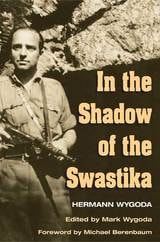
In the Shadow of the Swastika
Hermann Wygoda
University of Illinois Press, 1998
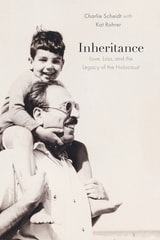
Inheritance
Love, Loss, and the Legacy of the HolocaustCharlie Scheidt
Rutgers University Press, 2026
2026 Independent Publisher Book Awards (IPPY) Silver Medal in the Autobiography/Memoir II (Coming of Age/Family Legacy) category.
After his mother’s death, Charlie Scheidt discovered a trove of historic documents that set him on a decade-long journey to uncover his family’s hidden past during the Holocaust. Joined by Kat Rohrer, the granddaughter of a Nazi officer, Scheidt embarked on a quest to trace his family’s harrowing efforts to escape from Nazi-occupied Europe. As they investigated, they uncovered stories of survival and loss. Their journey takes them across generations and continents, revealing a legacy of love, loss, and resilience. Grappling with questions about the long-lasting effects of inherited trauma, the book asks whether it is possible to break free of a familial cycle. This memoir, rooted in his family’s escape and the lasting trauma that followed, is a powerful reflection on history’s enduring scars, the importance of remembrance, and healing across generations.
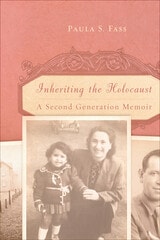
Inheriting the Holocaust
A Second-Generation MemoirPaula S. Fass
Rutgers University Press, 2011
Fass begins her journey through time and relationships when she travels to Poland and locates birth certificates of the murdered siblings she never knew. That journey to recover her family's story provides her with ever more evidence for the perplexing reliability of memory and its winding path toward historical reconstruction. In the end, Fass recovers parts of her family's history only to discover that Poland is rapidly re-imagining the role Jews played in the nation's past.
Inside Separate Worlds
Life Stories of Young Blacks, Jews, and LatinosDavid Schoem, Editor
University of Michigan Press, 1991
Inside the Antisemitic Mind
The Language of Jew-Hatred in Contemporary GermanyMonika Schwarz-Friesel and Jehuda Reinharz
Brandeis University Press, 2017
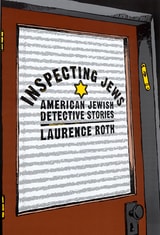
Inspecting Jews
American Jewish Detective StoriesRoth, Laurence
Rutgers University Press, 2003
Inthis book, Laurence Roth argues that the popular genre of Jewish detective stories offers new insights into the construction of ethnic and religious identity. Roth frames his study with the concept of “kosher hybridity” to look at the complex process of mediation between Jewish and American culture in which Jewish writers voice the desire to be both different from and yet the same as other Americans. He argues that the detective story, located at the intersection of narrative and popular culture in modern America, examines the need for order in a disorderly society, and thus offers a window into the negotiation of Jewish identity differing from that of literary fiction. The writers of these popular cultural texts, which are informed by contradiction and which thrive on intended and unintended ironies, formulate idioms for American Jewish identities that intentionally and unintentionally create social, ethnic, and religious syntheses in American Jewish life. Roth examines stories about American Jewish detectives—including Harry Kemelman’s Rabbi Small, Faye Kellerman’s Peter Decker and Rina Lazarus, Stuart Kaminsky’s Abe Lieberman, and Rochelle Krich’s Jessica Drake—not only as a genre of literature but also as a reflection of contemporary acculturation in the American Jewish popular arts.
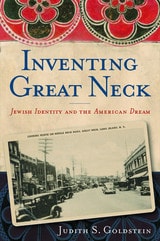
Inventing Great Neck
Jewish Identity and the American DreamGoldstein, Judith S
Rutgers University Press, 2006
Great Neck, New York, is one of America’s most fascinating suburbs. Since the mid-nineteenth century, generations have been attracted to this once quiet enclave for its easy access to New York City and its tranquil setting by the Long Island Sound. It became an illustrious suburb, home to numerous film and theatrical luminaries, among them Groucho Marx, Eddie Cantor, Oscar Hammerstein II, and Alan King. Famous writers who lived there include Ring Lardner and, of course, F. Scott Fitzgerald, who used Great Neck as the inspiration for his classic novel The Great Gatsby.
Although frequently recognized as home to well-known personalities, Great Neck is also notable for the conspicuous way it transformed itself from a Gentile community, to a mixed one, and, finally, in the 1960s, to one in which Jews were the majority. In Inventing Great Neck, Judith Goldstein recounts these histories in which Great Neck emerges as a leader in the reconfiguration of the American suburb.The book spans four decades of rapid change, beginning with the 1920s. First, the community served as a playground for New York’s socialites and celebrities. In the forties, it developed one of the country’s most outstanding school systems and served as the temporary home to the United Nations. In the sixties it provided strong support to the civil rights movement.
Inventing Great Neck is about the allure of suburbia, including the institutions that bind it together, and the social, economic, cultural, and religious tensions that may threaten its vibrancy. Anyone who has lived in a suburban town, particularly one in the greater metropolitan area, will be intrigued by this rich narrative, which illustrates not only Jewish identity in America but the struggle of the American dream itself through the heart of the twentieth century.
Invisible Walls and To Remember is to Heal
A German Family under the Nuremberg LawsIngeborg Hecht
Northwestern University Press, 1999
In Invisible Walls, Hecht writes of what it was like to live under these circumstances, sharing heartbreaking details of her personal life, including the loss of her daughter's father on the Russian front; the death of her own father after his deportation in 1944; and her fears of perishing coupled with the shame of faring better than most of her family and friends. This new volume adds the first translation of part of Hecht's second book, To Remember is to Heal, a collection of vignettes of encounters and experiences that resulted from the publication of the first.
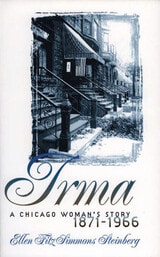
Irma
A Chicago Woman's Story, 1871-1966Ellen Fitzsimmons Steinberg
University of Iowa Press, 2004
Irma’s journals and diaries were private accounts in which she chronicled the rhythm of her days and the shape of her life. She recorded her thoughts and short quotations from her reading, jotted down her own poems and short stories, constructed dinner-party menus, and wrote biographical sketches of her family. Interspersed among the records of what she did when and with whom are a number of lengthy reflections on Chicago history, her early life, religious beliefs, education, her aspirations, disappointments, sorrows, and successes. She documented her family’s activities during the Chicago Fire, the city’s rebuilding, early educational curricula in the city’s schools, what it was like to participate in the suffrage movement and vote for the first time, the effect of the Great Depression on the middle class, and World War II as seen from her perspective.
In each chapter, Ellen Steinberg has set Irma’s contemporary entries and later memoirs against the context of the Chicago history that Irma knew so well. Irma’s story will fascinate those interested in diaries and autobiography, women’s history, and Chicago history. From a plethora of rich source materials—including over half a million words of Irma’s writings alone—Steinberg has created a seamless, fascinating narrative about a Chicago woman who, although “nobody famous” (in her words), lived a vital life in a vibrant city.
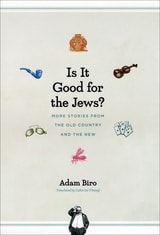
Is It Good for the Jews?
More Stories from the Old Country and the NewAdam Biro
University of Chicago Press, 2009
“Jewish stories,” writes Adam Biro, “resemble every people’s stories.” Yet at the same time there is no better way to understand the soul, history, millennial suffering, or, crucially, the joys of the Jewish people than through such tales—“There’s nothing,” writes Biro, “more revelatory of the Jewish being.”
With Is It Good for the Jews? Biro offers a sequel to his acclaimed collection of stories Two Jews on a Train. Through twenty-nine tales—some new, some old, but all finely wrought and rich in humor—Biro spins stories of characters coping with the vicissitudes and reverses of daily life, while simultaneously painting a poignant portrait of a world of unassimilated Jewish life that has largely been lost to the years. From rabbis competing to see who is the most humble, to the father who uses suicide threats to pressure his children into visiting, to three men berated by the Almighty himself for playing poker, Biro populates his stories with memorable characters and absurd—yet familiar—situations, all related with a dry wit and spry prose style redolent of the long tradition of Jewish storytelling.
A collection simultaneously of foibles and fables, adversity and affection, Is It Good for the Jews? reminds us that if in the beginning was the word, then we can surely be forgiven for expecting a punch line to follow one of these days.
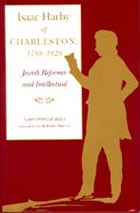
Isaac Harby of Charleston, 1788-1828
Jewish Reformer and IntellectualGary Phillip Zola
University of Alabama Press, 1994
The visionary voice who helped shape American Judaism—and Charleston’s cultural soul.
Isaac Harby of Charleston, 1788–1828 is a richly detailed biography that brings to life one of early America’s most fascinating and underappreciated Jewish intellectuals. Gary Phillip Zola offers a compelling portrait of Harby—a playwright, newspaper editor, drama critic, educator, and religious reformer—who emerged as a central figure in Charleston’s vibrant cultural scene during the early 19th century. At a time when Charleston was experiencing both economic prosperity and cultural efflorescence, Harby stood at the crossroads of literary ambition and religious innovation.
A descendant of Sephardic Jews, Harby was deeply engaged in the intellectual and civic life of his city. He founded a literary journal at just eighteen, established a private academy, and wrote prolifically on politics, education, and religion. But his most enduring legacy lies in his role as a pioneer of Reform Judaism in America. As a founding member of the Reformed Society of Israelites in 1825, Harby advocated for a rational, modernized approach to Jewish worship—one that emphasized universal ethics and intellectual engagement over ritual formalism. His efforts, though controversial in his time, laid the groundwork for the broader Reform movement that would flourish later in the century.
Drawing on newly uncovered archival materials, including Harby’s personal library and writings, Zola’s biography not only illuminates Harby’s life and thought but also offers a window into the broader cultural, religious, and political transformations of the early American republic. This book is essential reading for anyone interested in American Jewish history, Southern intellectual life, and the roots of religious reform in the United States.

Israel and Settler Society
Lorenzo Veracini
Pluto Press, 2006
Veracini challenges two important myths: firstly, that the Israeli-Palestinian dispute is unique and defies comparative approaches; and secondly that the struggle is mainly based in nationality and religion and therefore different to typical colonial conflicts. On the contrary, Veracini shows how Israeli society is organised along apartheid lines -- and that apartheid was not unique to South Africa, but a common feature of colonisation. He examines wars of decolonization, and conflicts where whole native populations were all but eradicated -- as in Australia. Comparing and contrasting these with the more recent history of Israel and Palestine, he offers a critical perspective on colonialism as well as important new insights into patterns of imperialism today.
Israel's Dead Soul
Authored by Steven Salaita
Temple University Press, 2011
In his courageous book, Israel's Dead Soul, Steven Salaita explores the failures of Zionism as a political and ethical discourse. He argues that endowing nation-states with souls is a dangerous phenomenon because it privileges institutions and corporations rather than human beings.
Asserting that Zionism has been normalized--rendered "benign" as an ideology of "multicultural conviviality"—Salaita critiques the idea that Zionism, as an exceptional ideology, leads to a lack of critical awareness of the effects of the Israeli occupation in Palestinian territory and to an unquestioning acceptance of Israel as an ethnocentric state.
Salaita's analysis targets the Anti-Defamation League, films such as Munich and Waltz with Bashir, intellectuals including Cornel West and Michael Eric Dyson, gay rights activists, and other public figures who mourn the decline of Israel's "soul." His pointed account shows how liberal notions of Zionism are harmful to various movements for justice.
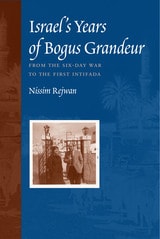
Israel's Years of Bogus Grandeur
From the Six-Day War to the First IntifadaBy Nissim Rejwan
University of Texas Press, 2006
On the eve of the Six-Day War in 1967, Israel was nineteen years old and as much an adolescent as the average nineteen-year-old person. Issues of identity and transition were the talk among Israeli intellectuals, including the writer Nissim Rejwan. Was Israel a Jewish state or a democratic state? And, most frustratingly, who was a Jew? As Nancy Berg's foreword makes clear, these issues became more critical and complex in the two decades after the war as Israel matured into a regional power. Rejwan, an Iraqi-born Jew whose own fate was tied to the answers, addresses the questions of those days in his letters, essays, and remembrances collected in Israel's Years of Bogus Grandeur.
Israel's overwhelming victory in 1967 brought control of the former Palestinian territories; at the same time, Oriental Jews (i.e., those not from Europe) became a majority in the Israeli population. The nation, already surrounded by hostile, recently humiliated Arab neighbors, now had an Arab majority (Jewish, Muslim, Druze, and Christian) within its borders—yet European Jews continued to run the country as their own. Rejwan wrote tirelessly about the second-class status of Arab Israelis (and especially of Arab Jews), encouraging a more inclusive attitude that might eventually help heal the wounds left by the Six-Day War. His studies in sociology at Tel Aviv University informed his work. For his cause, Rejwan lost his job and many of his friends but never his pen. Through Munich, Entebbe, political scandals, economic crises, and the beginning of the Intifada, Rejwan narrates Israel's growing pains with feisty wit and unwavering honesty.
Israel
Politics, Myths and Identity CrisesAkiva Orr
Pluto Press, 1994
It All Began in Nuremberg
Between History and MemoryRita Thalmann
University of Michigan Press, 2015
Itineraries in Conflict
Israelis, Palestinians, and the Political Lives of TourismRebecca L. Stein
Duke University Press, 2008
Combining vivid ethnographic detail, postcolonial theory, and readings of Israeli and Palestinian popular texts, Stein considers a broad range of Israeli leisure cultures of the Oslo period with a focus on the Jewish desires for Arab things, landscapes, and people that regional diplomacy catalyzed. Moving beyond conventional accounts, she situates tourism within a broader field of “discrepant mobility,” foregrounding the relationship between histories of mobility and immobility, leisure and exile, consumption and militarism. She contends that the study of Israeli tourism must open into broader interrogations of the Israeli occupation, the history of Palestinian dispossession, and Israel’s future in the Arab Middle East. Itineraries in Conflict is both a cultural history of the Oslo process and a call to fellow scholars to rethink the contours of the Arab-Israeli conflict by considering the politics of popular culture in everyday Israeli and Palestinian lives.