Results by title
486 books match the query 'LGBTQ+' and 25 start with i

I Contain Multitudes
A New Life of Walt WhitmanEric G. Wilson
University of Chicago Press, 2027
Lively and entertaining, this is the first comprehensive biography of Walt Whitman in more than twenty-five years, drawing on significant new discoveries and scholarship.
Walt Whitman is not only one of the most influential and popular poets in American history but also a symbol of American character and independence, as important to our nation’s identity as Abraham Lincoln, Harriet Beecher Stowe, or Louis Armstrong. While his poetry and exuberant style still inspire writers today, our understanding of his life is due for an update. It has been over a quarter of a century since the last full-length biography of Whitman, and in that time several works by Whitman have been rediscovered—including a novel and a men’s health manual—that put Whitman in a new light. In I Contain Multitudes, Eric G. Wilson draws on these discoveries to give us a fresh life of Whitman, one that reveals him to be more playful, flexible, and pragmatic than we had known.
Whitman emerges here as an artist adept in almost every literary genre. Across these varied writings, he fashioned a comedic vision based on the multifariousness of the cosmos. In his life as well, he created a wide range of personae. Like an experienced actor, Whitman had many roles and selves at the ready: the urban dandy, the Broadway bohemian, the humble Civil War nurse. Wilson’s portrait casts well-studied Whitman traits in a new light: his radical egalitarianism, he shows, was suffused with humor—to be a good citizen meant not taking yourself too seriously—and his famous powers of empathy resulted in darkly funny challenges to oppressive hierarchies.
Wilson tells Whitman’s life in dozens of brief, vivid segments, an innovative approach that reflects Whitman’s own existential and literary brio. Presenting the multitudinous Whitman with both stylistic gusto and scholarly rigor, I Contain Multitudes reads as much like a novel as the authoritative biography it is.

I Have Not Loved You With My Whole Heart
Cris Harris
Oregon State University Press, 2021
In a book rich with remembrances of the Pacific Northwest of the 1970s–1990s, Cris Harris pulls the reader through turning points in a household crowded with abuse, addiction, neglect, acceptance, and grief, as well as the healing that comes after reconciliation. In recognizing perpetrators of violence as complex people—as selves we can recognize—Harris wrestles with paradox: the keening dissonance of loving people with hard edges, the humor of horrible situations, and how humor can cover for anger. He shows how violence can mark us and courageously lays bare those marks, owning them as his own precious history, born of a fierce species of love.
I Have Not Loved You With My Whole Heart will speak to readers whose family members came out late in life, and to those who lost loved ones in the AIDS crisis of the late 1980s and 1990s. Those with complicated relationships to faith, survivors of abuse, and anyone who has lived with family crisis will also find healing in these pages.
I Have Not Loved You With My Whole Heart
Cris Harris
Oregon State University Press, 2021
In a book rich with remembrances of the Pacific Northwest of the 1970s–1990s, Cris Harris pulls the reader through turning points in a household crowded with abuse, addiction, neglect, acceptance, and grief, as well as the healing that comes after reconciliation. In recognizing perpetrators of violence as complex people—as selves we can recognize—Harris wrestles with paradox: the keening dissonance of loving people with hard edges, the humor of horrible situations, and how humor can cover for anger. He shows how violence can mark us and courageously lays bare those marks, owning them as his own precious history, born of a fierce species of love.
I Have Not Loved You With My Whole Heart will speak to readers whose family members came out late in life, and to those who lost loved ones in the AIDS crisis of the late 1980s and 1990s. Those with complicated relationships to faith, survivors of abuse, and anyone who has lived with family crisis will also find healing in these pages.
I Live in the Country & other dirty poems
Arielle Greenberg
Four Way Books, 2020
I Woke a Lake
Susan McCabe
University Press of Colorado, 2025
Identities
Edited by Kwame Anthony Appiah and Henry Louis Gates Jr.
University of Chicago Press, 1995
Leading scholars in literary criticism, anthropology, sociology, and philosophy explore such topics as "Gypsies" in the Western imagination, the mobilization of the West in Chinese television, the lesbian identity and the woman's gaze in fashion photography, and the regulation of black women's bodies in early 20th-century urban areas. This collection of twenty articles brings together the special issue of Critical Inquiry entitled "Identities" (Summer 1992), two other previously published essays, and five previously published critical responses and rejoinders, all of which is interrogated in two new essays by Michael Gorra and Judith Butler.
Contributors include Elizabeth Abel, Kwame Anthony Appiah, Akeel Bilgrami, Daniel Boyarin, Jonathan Boyarin, Judith Butler, Hazel V. Carby, Xiaomei Chen, Diana Fuss, Henry Louis Gates, Jr., Avery Gordon, Michael Gorra, Cheryl Herr, Saree S. Makdisi, Walter Benn Michaels, Christopher Newfield, Gananath Obeyesekere, Molly Anne Rothenberg, Gayatri Chakravorty Spivak, Sara Suleri, Katie Trumpener, and Joseph Valente.
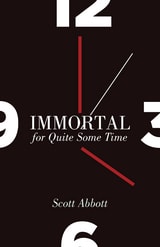
Immortal for Quite Some Time
Scott Abbott
University of Utah Press, 2016
Winner of the Utah Arts Council's Original Writing Competition Book Manuscript Prize in Creative Nonfiction
Winner of the 15 Bytes Book Award for Creative Nonfiction
“This is not a memoir. Rather, this is a fraternal meditation on the question: ‘Are we friends, my brother?’ The story is uncertain, the characters are in flux, the voices are plural, the photographs are as troubled as the prose. This is not a memoir.”
Thus Scott Abbott introduces the reader to his exploration of the life of his brother John, a man who died of AIDS in 1991 at the age of forty. Writing about his brother, he finds he is writing about himself and about the warm-hearted, educated, and homophobic LDS family that forged the core of his identity.
Images and quotations are interwoven with the reflections, as is a critical female voice that questions his assertions and ridicules his rhetoric. The book moves from the starkness of a morgue’s autopsy through familial disintegration and adult defiance to a culminating fraternal conversation. This exquisitely written work will challenge notions of resolution and wholeness.
Impossible Things
Miller Oberman
Duke University Press, 2024
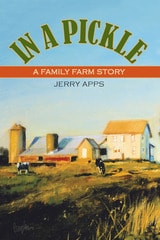
In a Pickle
A Family Farm StoryJerry Apps
University of Wisconsin Press, 2008
In an Invisible Glass Case Which Is Also a Frame
Julia Guez
Four Way Books, 2019
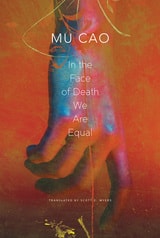
In the Face of Death We Are Equal
Mu Cao
Seagull Books, 2020
“Those who know me call me Old He, and they also know that I’ve worked in a crematorium for my entire life.” Here begins Mu Cao’s novel In the Face of Death We Are Equal, an unrelentingly realistic portrait of working-class gay men in the underbelly of Chinese society. He Donghai is days away from his sixtieth birthday and long-awaited retirement from his job as a corpse burner at a Beijing crematorium. As he approaches the momentous day, he reflects on his life and his relationship with a special group of young men who live and love on the margins of Chinese society. One of them is Ah Qing, a young migrant worker who leaves his village in Henan Province to earn a living in cities—and who has an unexpected personal connection to He. Through a disrupted and nonlinear narrative technique, and alternating between first, second, and third person, In the Face of Death We Are Equal tells the story of Ah and other young men like him.
Sometimes enraging, often humorous, but always powerful, this novel explores the economic and sexual exploitation of young men and women from China’s impoverished countryside who seek survival in the shadow of China’s economic “miracle.” Deftly translated by Scott E. Myers, it is the first title in Seagull’s new Pride List, which showcases important queer writing from around the world. Written in Mu Cao’s trademark earthy, sometimes graphic, idiom, In the Face of Death We Are Equal will be a valuable addition to queer and Chinese literature in translation.
In the Province of the Gods
Kenny Fries
University of Wisconsin Press, 2021
In the Shadow of Diagnosis
Psychiatric Power and Queer LifeRegina Kunzel
University of Chicago Press, 2024
In the mid-twentieth century, American psychiatrists proclaimed homosexuality a mental disorder, one that was treatable and amenable to cure. Drawing on a collection of previously unexamined case files from St. Elizabeths Hospital, In the Shadow of Diagnosis explores the encounter between psychiatry and queer and gender-variant people in the mid- to late-twentieth-century United States. It examines psychiatrists’ investments in understanding homosexuality as a dire psychiatric condition, a judgment that garnered them tremendous power and authority at a time that historians have characterized as psychiatry’s “golden age.” That stigmatizing diagnosis made a deep and lasting impact, too, on queer people, shaping gay life and politics in indelible ways. In the Shadow of Diagnosis helps us understand the adhesive and ongoing connection between queerness and sickness.
In the Shadow of Diagnosis
Psychiatric Power and Queer LifeRegina Kunzel
University of Chicago Press, 2024
A look at the history of psychiatry’s foundational impact on the lives of queer and gender-variant people.
In the mid-twentieth century, American psychiatrists proclaimed homosexuality a mental disorder, one that was treatable and amenable to cure. Drawing on a collection of previously unexamined case files from St. Elizabeths Hospital, In the Shadow of Diagnosis explores the encounter between psychiatry and queer and gender-variant people in the mid- to late-twentieth-century United States. It examines psychiatrists’ investments in understanding homosexuality as a dire psychiatric condition, a judgment that garnered them tremendous power and authority at a time that historians have characterized as psychiatry’s “golden age.” That stigmatizing diagnosis made a deep and lasting impact, too, on queer people, shaping gay life and politics in indelible ways. In the Shadow of Diagnosis helps us understand the adhesive and ongoing connection between queerness and sickness.
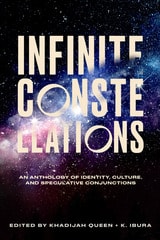
Infinite Constellations
An Anthology of Identity, Culture, and Speculative ConjunctionsEdited by Khadijah Queen and K. Ibura
University of Alabama Press, 2023
A galaxy of voices. A universe of belonging.
The innovative fictions in Infinite Constellations showcase the voices and visions of 30 remarkable writers, both new and established, from the global majority: Native American/First Nation writers, South Asian writers, East Asian writers, Black American writers, Latinx writers, and Caribbean and Middle Eastern writers. These are visions both familiar and strange, but always rooted in the mystery of human relationships, the deep honoring of memory, and the rootedness to place and the centering of culture.
The writers in this anthology mirror, instruct, bind and unbind, myth-make and myth-invert, transform and transmute, make us belly-laugh or hum our understanding, gasp or whisper gently, and remember that sometimes we need to holler and fight as we grieve. Any dangers herein, imagined or observed in poem and story, transport us: moving from latent to extant, then unleashed.
This work does not presume; it presents and blossoms, creating a constellation of appearances, a symphony of belonging.
“In collecting this work,” note editors Khadijah Queen and K. Ibura, “we felt humbled by the love threaded throughout the voices speaking to us in stories and poems that vault beyond expectation and settle in our consciousness as an expansion of what’s possible when we tend to one another with intention. We felt lifted, held aloft in these arrangements of language. We hope that as you read each story and poem, you will find the same sense of empowerment and celebration that we know has sustained us over countless generations, and in their beauty and humor and intelligence and complexity, continue to enrich us still.”
CONTRIBUTORS
George Abraham / Kenzie Allen / Shreya lla Anasuya / Thea Anderson / Wendy Chin-Tanner / Alton Melvar M. Depanas / Yohanca Delgado / Jennifer Elise Foerster / Aerik Francis / André O. Hoilette / Brian K. Hudson / K. Ibura / Pedro Iniguez / Ruth Ellen Kocher / Ra’Niqua Lee / Tonya Liburd / Kenji C. Liu / Shalewa Mackall / Lucien Darjeun Meadows / Melanie Merle / Juan J. Morales / Thirii Myo Kyaw Myint / Cindy Juyound Ok / Daniel José Older / Soham Patel / Lynn C. Pitts/ Khadijah Queen / Sheree Renée Thomas / Sarah Sophia Yanni / dg nanouk okpik / shakirah peterson
Infinity Diary
Cyril Wong
Seagull Books, 2020

Inside the Spiral
The Passions of Robert SmithsonSuzaan Boettger
University of Minnesota Press, 2022
An expansive and revelatory study of Robert Smithson’s life and the hidden influences on his iconic creations
This first biography of the major American artist Robert Smithson, famous as the creator of the Spiral Jetty, deepens understanding of his art by addressing the potent forces in his life that were shrouded by his success, including his suppressed early history as a painter; his affiliation with Christianity, astrology, and alchemy; and his sexual fluidity. Integrating extensive investigation and acuity, Suzaan Boettger uncovers Smithson’s story and, with it, symbolic meanings across the span of his painted and drawn images, sculptures, essays, and earthworks up to the Spiral Jetty and beyond, to the circumstances leading to what became his final work, Amarillo Ramp.
While Smithson is widely known for his monumental earthwork at the edge of the Great Salt Lake, Inside the Spiral delves into the arc of his artistic production, recognizing it as a response to his family’s history of loss, which prompted his birth and shaped his strange intelligence. Smithson configured his personal conflicts within painterly depictions of Christ’s passion, the rhetoric of science fiction, imagery from occult systems, and the impersonal posture of conceptual sculpture. Aiming to achieve renown, he veiled his personal passions and transmuted his professional persona, becoming an acclaimed innovator and fierce voice in the New York art scene.
Featuring copious illustrations never before published of early work that eluded Smithson’s destruction, as well as photographs of Smithson and his wife, the noted sculptor Nancy Holt, and recollections from nearly all those who knew him throughout his life, Inside the Spiral offers unprecedented insight into the hidden impulses of one of modern art’s most enigmatic figures. With great sensitivity to the experiences of loss and existential strife that defined his distinct artistic language, this biographical analysis provides an expanded view of Smithson’s iconic art pilgrimage site and the experiences and works that brought him to its peculiar blood red water.
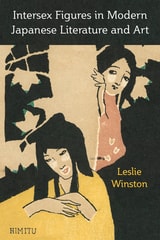
Intersex Figures in Modern Japanese Literature and Art
Leslie Winston
University of Michigan Press, 2025
Intersex Figures in Modern Japanese Literature and Art explores the history of intersex or futanari figures in modern Japanese literature and culture to examine the provocative discourses that defied a sexual regime as the modern nation-state of Japan advanced its national and imperial designs. As sexologists and medical practitioners continued reinforcing categories of “male” and “female,” “normal” and “pathological,” intersex literary figures garnered attention because the perceived subject was expected to be male or female—any variation was unintelligible. Many of the same century-old tropes and societal attitudes of needing to “cure” intersex persist. At the same time the 1991 novel Ringu by Suzuki Kōji testifies to a denial of futanari subjectivity, while the 1998 Japanese horror film (Ringu) and its 2002 American remake (The Ring) erase intersex all together.
Winston interrogates how the trope of the futanari is deployed for pragmatic or aesthetic purposes, thereby complicating the trajectory of the dominant sexological ideology of the time. Winston reads the figurative futanari in the works of Shimizu Shikin, Tanizaki Jun’ichirō, and Takabatake Kashō, and reveals how the artists’ different approaches to the futanari served their agendas and expressed views that challenged the dominant discourse on intersex.
Intimacies
Leo Bersani and Adam Phillips
University of Chicago Press, 2008
In pursuit of new forms of intimacy they take up a range of concerns across a variety of contexts. To test the hypothesis that the essence of the analytic exchange is intimate talk without sex, they compare Patrice Leconte’s film about an accountant mistaken for a psychoanalyst, Intimate Strangers, with Henry James’s classic novella The Beast in the Jungle. A discussion of the radical practice of barebacking—unprotected anal sex between gay men—delineates an intimacy that rejects the personal. Even serial killer Jeffrey Dahmer and the Bush administration’s war on terror enter the scene as the conversation turns to the way aggression thrills and gratifies the ego. Finally, in a reading of Socrates’ theory of love from Plato’s Phaedrus, Bersani and Phillips call for a new form of intimacy which they term “impersonal narcissism”: a divestiture of the ego and a recognition of one’s non-psychological potential self in others. This revolutionary way of relating to the world, they contend, could lead to a new human freedom by mitigating the horrifying violence we blithely accept as part of human nature.
Charmingly persuasive and daringly provocative, Intimacies is a rare opportunity to listen in on two brilliant thinkers as they explore new ways of thinking about the human psyche.
Intimate Matters
A History of Sexuality in America, Third EditionJohn D'Emilio and Estelle B. Freedman
University of Chicago Press, 2012
As the first full-length study of the history of sexuality in America, Intimate Matters offered trenchant insights into the sexual behavior of Americans from colonial times to the present. In this fully up-to-date edition of the classic work, John D’Emilio and Estelle B. Freedman give us an even deeper understanding of how sexuality has dramatically influenced politics and culture throughout our history and into the present.

Inventorys
Sam Creely
Omnidawn, 2025
In this work of hybrid historiography, Sam Creely modulates the English sentence to map the ways anglophone imperial self-fashioning moves in and out of social coherence, investigating how syntactic requirements reflect colonial history and how the rules of language structure thought. Through scenes including intimate encounters with dye, fabric, and garments, Creely reveals the sexual and racial grammars of empire.
Inventorys takes as its point of departure the voyage, shipwreck, and eventual excavation of the Spanish trade vessel El Nuevo Constante. Animated by the image of sixty thousand pounds of dye bleeding into the Gulf of Mexico, this six-part poetic documentation follows the wreckage of the Constante linguistically, moving among early modern lexicography, and ultimately toward enmeshed histories of catalog, fabrication, and revision.
Inventorys is the winner of the 2022 Omnidawn Poetry Open Book Contest, selected by Shane McCrae.
Is There Room for Another Horse on Your Horse Ranch?
Cyrus Cassells
Four Way Books, 2024
Is the Rectum a Grave?
and Other EssaysLeo Bersani
University of Chicago Press, 2009
Over the course of a distinguished career, critic Leo Bersani has tackled a range of issues in his writing, and this collection gathers together some of his finest work. Beginning with one of the foundations of queer theory—his famous meditation on how sex leads to a shattering of the self, “Is the Rectum a Grave?”—this volume charts the inspired connections Bersani has made between sexuality, psychoanalysis, and aesthetics.
Over the course of these essays, Bersani grapples with thinkers ranging from Plato to Descartes to Georg Simmel. Foucault and Freud recur as key figures, and although Foucault rejected psychoanalysis, Bersani contends that by considering his ideas alongside Freud’s, one gains a clearer understanding of human identity and how we relate to one another. For Bersani, art represents a crucial guide for conceiving new ways of connecting to the world, and so, in many of these essays, he stresses the importance of aesthetics, analyzing works by Genet, Caravaggio, Proust, Almodóvar, and Godard.
Documenting over two decades in the life of one of the best minds working in the humanities today, Is the Rectum a Grave? and Other Essays is a unique opportunity to explore the fruitful career of a formidable intellect.
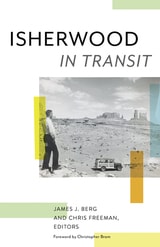
Isherwood in Transit
James J. Berg
University of Minnesota Press, 2020
New perspectives on Christopher Isherwood as a searching and transnational writer
“Perhaps I had traveled too much, left my heart in too many places,” muses the narrator of Christopher Isherwood’s novel Prater Violet (1945), which he wrote in his adopted home of Los Angeles after years of dislocation and desperation. In Isherwood in Transit, James J.Berg and Chris Freeman bring together diverse Isherwood scholars to understand the challenges this writer faced as a consequence of his travel.
Based on a conference at the Huntington Library, where Isherwood’s recently opened papers are held, Isherwood in Transit considers the writer not as an English, continental, or American writer but as a transnational one, whose identity, politics, and beliefs were constantly transformed by global connections and engagements arising from journeys to Germany, Japan, China, and Argentina; his migration to the United States; and his conversion to Vedanta Hinduism in the 1940s.
Approaching Isherwood’s rootlessness and restlessness from various perspectives, these essays show that long after he made a new home in California and became an American citizen, Christopher Isherwood remained unsettled, although his wanderings became spiritual and personal rather than geographic.
Contributors: Barrie Jean Borich, DePaul U; Jamie Carr, Niagara U; Robert L. Caserio, Penn State U, University Park; Lisa Colletta, American U of Rome; Lois Cucullu, U of Minnesota; Jaime Harker, U of Mississippi; Carola M. Kaplan, California State U, Pomona; Calvin W. Keogh, Central European U, Budapest; Victor Marsh; Wendy Moffat, Dickinson College; Xenobe Purvis; Bidhan Roy, California State U, Los Angeles; Katharine Stevenson, U of Texas at Austin; Edmund White.
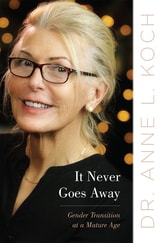
It Never Goes Away
Gender Transition at a Mature AgeAnne L. Koch, D.M.D.
Rutgers University Press, 2019
Ken Koch was one of those people. Married twice, a veteran, and a world traveler, a health scare when he was sixty-three prompted him to acknowledge the feelings that had plagued him since he was a small child. By undergoing a host of procedures, he radically changed his appearance and became Anne Koch. In the process though, Anne lost everything that Ken had accomplished. She had to remake herself from the ground up. Hoping to help other people in her age bracket who may be considering transitioning, Anne describes the step by step procedures that she underwent, and shares the cost to her personal life, in order to show seniors that although it is never too late to become the person you always knew you were, it is better to go into that new life prepared for some serious challenges. Both a fascinating memoir of a well-educated man growing up trans yet repressed in the mid-twentieth century, and a guidebook to navigating the tricky waters of gender reassignment as a senior, It Never Goes Away shows how what we see in the television world of Transparent translates in real life.