Results by title
108 books match the query 'Landscapes' and 2 start with i
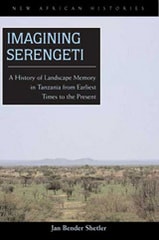
Imagining Serengeti
A History of Landscape Memory in Tanzania from Earliest Times to the PresentJan Bender Shetler
Ohio University Press, 2007
Many students come to African history with a host of stereotypes that are not always easy to dislodge. One of the most common is that of Africa as safari grounds—as the land of expansive, unpopulated game reserves untouched by civilization and preserved in their original pristine state by the tireless efforts of contemporary conservationists. With prose that is elegant in its simplicity and analysis that is forceful and compelling, Jan Bender Shetler brings the landscape memory of the Serengeti to life. She demonstrates how the social identities of western Serengeti peoples are embedded in specific spaces and in their collective memories of those spaces. Using a new methodology to analyze precolonial oral traditions, Shetler identifies core spatial images and reevaluates them in their historical context through the use of archaeological, linguistic, ethnographic, ecological, and archival evidence. Imagining Serengeti is a lively environmental history that will ensure that we never look at images of the African landscape in quite the same way.
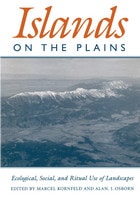
Islands On The Plains
Ecological, Social, and Ritual Use of LandscapesEdited by Marcel Kornfeld and Alan J. Osborn
University of Utah Press, 2003
Scattered throughout the Great Plains are many isolated areas of varying size and ecology, quite distinct from the surrounding grasslands. Such spaces can be uplands like the Black Hills, low hills like the Nebraska Sand Hills, or linear areas such as shallow river valleys and deeply incised canyons. While the notion of “islands” is not a new one among ecologists, its application in Plains archaeology is.
The contributors to this volume seek to illustrate the different ways that the spatial, structural, and temporal nature of islands conditioned the behavior and adaptation of past Plains peoples. This as a first step toward a more detailed analysis of habitat variation and its effects on Plains cultural dynamics and evolution. Although the emphasis is on ecology, several chapters also address social and ideological islands in the form of sacred sites and special hunting grounds.