58 books match the query 'Mass media and culture' and 3 start with i
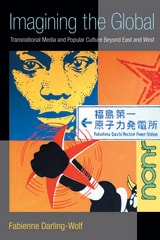
cover of Imagining the Global: Transnational Media and Popular Culture Beyond East and West

Imagining the Global

Transnational Media and Popular Culture Beyond East and West

Fabienne Darling-Wolf

University of Michigan Press, 2014

Based on a series of case studies of globally distributed media and their reception in different parts of the world, Imagining the Global reflects on what contemporary global culture can teach us about transnational cultural dynamics in the 21st century. A focused multisited cultural analysis that reflects on the symbiotic relationship between the local, the national, and the global, it also explores how individuals’ consumption of global media shapes their imagination of both faraway places and their own local lives. Chosen for their continuing influence, historical relationships, and different geopolitical positions, the case sites of France, Japan, and the United States provide opportunities to move beyond common dichotomies between East and West, or United States and “the rest.” From a theoretical point of view, Imagining the Global endeavors to answer the question of how one locale can help us understand another locale. Drawing from a wealth of primary sources—several years of fieldwork; extensive participant observation; more than 80 formal interviews with some 160 media consumers (and occasionally producers) in France, Japan, and the United States; and analyses of media in different languages—author Fabienne Darling-Wolf considers how global culture intersects with other significant identity factors, including gender, race, class, and geography. Imagining the Global investigates who gets to participate in and who gets excluded from global media representation, as well as how and why the distinction matters.
[more]
cover of Indirect Subjects: Nollywood's Local Address

Indirect Subjects

Nollywood's Local Address

Matthew H. Brown

Duke University Press, 2021
In Indirect Subjects, Matthew H. Brown analyzes the content of the prolific Nigerian film industry's mostly direct-to-video movies alongside local practices of production and circulation to show how screen media play spatial roles in global power relations. Scrutinizing the deep structural and aesthetic relationship between Nollywood, as the industry is known, and Nigerian state television, Brown tracks how several Nollywood films, in ways similar to both state television programs and colonial cinema productions, invite local spectators to experience liberal capitalism not only as a form of exploitation but as a set of expectations about the future. This mode of address, which Brown refers to as “periliberalism,” sustains global power imbalances by locating viewers within liberalism but distancing them from its processes and benefits. Locating the wellspring of this hypocrisy in the British Empire's practice of indirect rule, Brown contends that culture industries like Nollywood can sustain capitalism by isolating ordinary African people, whose labor and consumption fuel it, from its exclusive privileges.
[more]
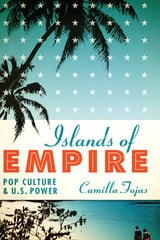
cover of Islands of Empire: Pop Culture and U.S. Power

Islands of Empire

Pop Culture and U.S. Power

By Camilla Fojas

University of Texas Press, 2014

Camilla Fojas explores a broad range of popular culture media—film, television, journalism, advertisements, travel writing, and literature—with an eye toward how the United States as an empire imagined its own military and economic projects. Impressive in its scope, Islands of Empire looks to Cuba, Guam, Hawai‘i, Puerto Rico, and the Philippines, asking how popular narratives about these island outposts expressed the attitudes of the continent throughout the twentieth century. Through deep textual readings of Bataan, Victory at Sea, They Were Expendable, and Back to Bataan (Philippines); No Man Is an Island and Max Havoc: Curse of the Dragon (Guam); Cuba, Havana, and Dirty Dancing: Havana Nights (Cuba); Blue Hawaii, Gidget Goes Hawaiian, and Paradise, Hawaiian Style (Hawai‘i); and West Side Story, Fame, and El Cantante (Puerto Rico), Fojas demonstrates how popular texts are inseparable from U.S. imperialist ideology.

Drawing on an impressive array of archival evidence to provide historical context, Islands of Empire reveals the role of popular culture in creating and maintaining U.S. imperialism. Fojas’s textual readings deftly move from location to location, exploring each island’s relationship to the United States and its complementary role in popular culture. Tracing each outpost’s varied and even contradictory political status, Fojas demonstrates that these works of popular culture mirror each location’s shifting alignment to the U.S. empire, from coveted object to possession to enemy state.

[more]