Results by title
914 books match the query 'Medieval' and 22 start with i
Idling the Engine
Linguistic sSkepticism in and around Cortázar, Kafka, and JoyceE. Joseph Sharkey
Catholic University of America Press, 2006
Illegitimacy in Renaissance Florence
Thomas Kuehn
University of Michigan Press, 2002
The Florentine catasto, a fiscal survey of households taken at several points in the fifteenth century, locates hundreds of illegitimate children and reveals a great deal about their household circumstances and parentage. Supplementing this information are notarial documents and family account books. Illegitimacy in Renaissance Florence places Florentine illegitimate children in a complete legal context, culminating in examination of several Florentine legal cases. Thomas Kuehn shows how lawyers were called on to cope with and make legal sense of the actions and prejudices of Florentines toward their illegitimate kin.
It is clear, in its simplest terms, that illegitimacy in Florence was a permanent, if not fixed, status. Most illegitimate children, especially girls, were abandoned; infanticide was undoubtedly practiced. But even those children raised by benevolent fathers and granted legitimation always remained "legitimatus" and not "legitimus." Florentines whose illegitimate paternity was admitted were overwhelmingly born of elite fathers but poor or servile mothers. In neither social nor legal terms did the illegitimate share fully in the personhood of the legitimate adult male Florentine citizen. Still, ambiguities of status could be useful for those with sufficient wealth and social standing to exploit their potential.
Illegitimacy in Renaissance Florence will appeal to social historians of Europe, medieval and early modern, especially those concerned with family life, women, and children, as well as all those interested in Florentine history. Legal historians will find it useful as well.
Thomas Kuehn is Professor of History, Clemson University.
Image on the Edge
The Margins of Medieval ArtMichael Camille
Reaktion Books, 2019
Imagination, Meditation, and Cognition in the Middle Ages
Michelle Karnes
University of Chicago Press, 2011
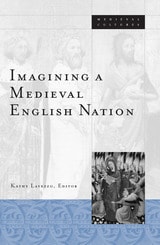
Imagining A Medieval English Nation
Kathy Lavezzo
University of Minnesota Press, 2003
The first comprehensive analysis of English national identity in the late Middle Ages
During the late Middle Ages, the increasing expansion of administrative, legal, and military systems by a central government, together with the greater involvement of the commons in national life, brought England closer than ever to political nationhood. Examining a diverse array of texts—ranging from Latin and vernacular historiography to Lollard tracts, Ricardian poetry, and chivalric treatises—this volume reveals the variety of forms “England” assumed when it was imagined in the medieval West.
These essays disrupt conventional thinking about the relationship between premodernity and modernity, challenge traditional preconceptions regarding the origins of the nation, and complicate theories about the workings of nationalism. Imagining a Medieval English Nation is not only a collection of new readings of major canonical works by leading medievalists, it is among the first book-length analyses on the subject and of critical interest. Contributors: Kathleen Davis, Bucknell U; L. O. Aranye Fradenburg, U of California, Santa Barbara; Andrew Galloway, Cornell U; Jill C. Havens, Baylor U; Peggy A. Knapp, Carnegie Mellon U; Larry Scanlon, Rutgers U; D. Vance Smith, Princeton U; Claire Sponsler, U of Iowa; Lynn Staley, Colgate U; Thorlac Turville-Petre, U of Nottingham.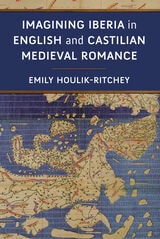
Imagining Iberia in English and Castilian Medieval Romance
Emily Houlik-Ritchey
University of Michigan Press, 2023
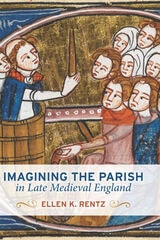
Imagining the Parish in Late Medieval England
Ellen K. Rentz
The Ohio State University Press, 2015
Imagining the Parish in Late Medieval England explores the ways in which Middle English literature engages the idea of lay spiritual community and the ideal of parochial worship. Ellen K. Rentz pairs nuanced readings of works such as Piers Plowman,Handlyng Synne, and the Prick of Conscience with careful analysis of contemporary sermons, spiritual handbooks, and liturgical texts as well as a wide range of visual sources, including wall paintings and stained glass. This new study examines how these texts and images locate the process of achieving salvation in the parish and in the work that parishioners undertook there together.
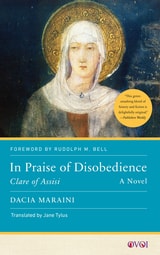
In Praise of Disobedience
Clare of Assisi, A NovelDacia Maraini
Rutgers University Press, 2023
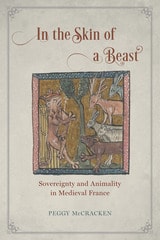
In the Skin of a Beast
Sovereignty and Animality in Medieval FrancePeggy McCracken
University of Chicago Press, 2017
Peggy McCracken discusses a range of literary texts and images from medieval France, including romances in which animal skins appear in symbolic displays of power, fictional explorations of the wolf’s desire for human domestication, and tales of women and snakes converging in a representation of territorial claims and noble status. These works reveal that the qualities traditionally used to define sovereignty—lineage and gender among them—are in fact mobile and contingent. In medieval literary texts, as McCracken demonstrates, human dominion over animals is a disputed model for sovereign relations among people: it justifies exploitation even as it mandates protection and care, and it depends on reiterations of human-animal difference that paradoxically expose the tenuous nature of human exceptionalism.
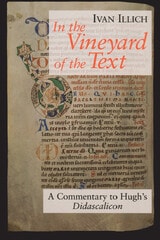
In the Vineyard of the Text
A Commentary to Hugh's DidascaliconIvan Illich
University of Chicago Press, 1993
Examining the Didascalicon of Hugh of St. Victor, Illich celebrates the culture of the book from the twelfth century to the present. Hugh's work, at once an encyclopedia and guide to the art of reading, reveals a twelfth-century revolution as sweeping as that brought about by the invention of the printing press and equal in magnitude only to the changes of the computer age—the transition from reading as a vocal activity done in the monastery to reading as a predominantly silent activity performed by and for individuals.
Innovation and Tradition in the Writings of the Venerable Bede
SCOTT DEGREGORIO
West Virginia University Press, 2006
Works prior to this book focused on Bede as not only a European, but also as an English scholar, historian, scientist, or a biographer of saints, and have used a traditional approach towards his explanation of the Bible. Bede's interpretation of his work, its continuous progress, and the reasons behind his hurried appointment to an authority almost as high as the Church Fathers are all topics examined within the text. Essays are by Roger Ray, Faith Wallis, Calvin B. Kendall, George Hardin Brown, Scott DeGregorio, Arthur G. Holder, Lawrence T. Martin, Walter Goffart, and Joyce Hill.
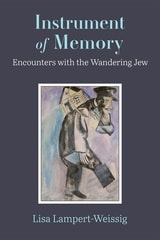
Instrument of Memory
Encounters with the Wandering JewLisa Lampert-Weissig
University of Michigan Press, 2024
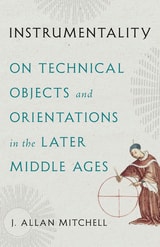
Instrumentality
On Technical Objects and Orientations in the Later Middle AgesJ. Allan Mitchell
University of Minnesota Press, 2024
From medieval to modern, exploring instrumental attitudes toward physical gadgets, diagrams, concepts, methods, and disciplines
Opening up the instrumental condition of the human for critical reflection and renewal, Instrumentality illuminates key moments in the intellectual history of the European Middle Ages. J. Allan Mitchell reveals how, in the predigital past, we can recognize many of the operative technics, analytics, and metaphorics that continue to shape human sense and cognition today.
Exploring the diverse modalities of medieval instruments, Mitchell’s case studies encompass techniques as seemingly distinct as time-keeping mechanisms, mathematical diagrams, logical syllogisms, and the literary devices of Geoffrey Chaucer and John Gower. A cultural and intellectual history, Mitchell’s work leads readers from three-dimensional objects (physical mechanisms) to two-dimensional inscriptions (maps and diagrams) and onward to overarching disciplinary norms in the early liberal and mechanical arts. Prying loose the subtle, adaptable, and generative concept of technical objects from limiting contemporary frameworks, he shows how these instruments are indispensable to the past—and the future—of the arts and culture at large.
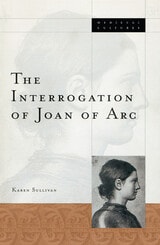
Interrogation Of Joan Of Arc
Karen Sullivan
University of Minnesota Press, 1999
A radical reassessment of the trial of Joan of Arc that gives a new sense of Joan in her time.
The transcripts of Joan of Arc’s trial for heresy at Rouen in 1431 and the minutes of her interrogation have long been recognized as our best source of information about the Maid of Orleans. Historians generally view these legal texts as a precise account of Joan’s words and, by extension, her beliefs. Focusing on the minutes recorded by clerics, however, Karen Sullivan challenges the accuracy of the transcript. In The Interrogation of Joan of Arc, she re-reads the record not as a perfect reflection of a historical personality’s words, but as a literary text resulting from the collaboration between Joan and her interrogators.
Sullivan provides an illuminating and innovative account of Joan’s trial and interrogation, placing them in historical, social, and religious context. In the fifteenth century, interrogation was a method of truth-gathering identified not with people like Joan, who was uneducated, but with clerics, like those who tried her. When these clerics questioned Joan, they did so as scholastics educated at the University of Paris, as judges and assistants to judges, and as pastors trained in hearing confessions.The Interrogation of Joan of Arc traces Joan’s conflicts with her interrogators not to differing political allegiances, but to fundamental differences between clerical and lay cultures. Sullivan demonstrates that the figure depicted in the transcripts as Joan of Arc is a complex, multifaceted persona that results largely from these cultural differences. Discerning and innovative, this study suggests a powerful new interpretive model and redefines our sense of Joan and her time.
Intersections in Turkish Literature
Essays in Honor of James Stewart-RobinsonWalter G. Andrews, Editor
University of Michigan Press, 2001
Intersections in Turkish Literature is a collection of essays on Turkish literature by former students of James Stewart-Robinson. The topics and methods cover a broad range--from a careful thematic analysis of a traditional Turkish folktale, which reveals its resemblance to well-known Western tales; to an analysis of the "saint tales" recounted by present-day Albanian Bektasi adepts; to a study of narrative rhythm in Nazim Hikhmet's rendition of an account of a fifteenth-century popular uprising.
Walter G. Andrews has assembled the writings of a number of scholars who bridge traditional chasms, inviting us to rethink our approaches to the study of Turkish and Ottoman literature. This collection forms a nucleus that clearly demonstrates the great potential now existing for study in this area, the essays displaying a variety of unusual approaches that bring together seemingly disparate materials: the Turkish story "The Pomegranate Seed" and Disney's "Snow White"; a fifteenth-century chronicle and the poetry of a modern socialist poet; Albanian dervishes in Detroit; a modern Turkish novel; Virginia Woolf; a Yale critic; traditional Japanese poetry; and Ottoman lyrics.
Intersections in Turkish Literature will provide an important stimulus to work that reaches beyond the limits of area studies, intersecting with the interests of scholars and students of literary theory, folklore studies, anthropology, French, Japanese, and Persian.
Walter G. Andrews is Affiliate Professor of Near Eastern Languages and Civilization, University of Washington.
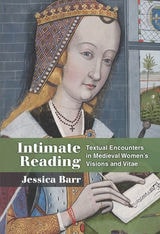
Intimate Reading
Textual Encounters in Medieval Women’s Visions and VitaeJessica Barr
University of Michigan Press, 2020
This new volume is structured around five case studies. Chapters consider the biographies of 13th-century holy women from Liège, the writings of Margery Kempe, Gertrude of Helfta, Mechthild of Magdeburg, Marguerite Porete, and Julian of Norwich. At the heart of Intimate Reading is the question of how reading works—what it means to enter imaginatively and intellectually into the words of another. The volume showcases the complexity of medieval understandings of the work of reading, deepening our perception of the written word’s capacity to signify something that lies even beyond rational comprehension.
Inventing Womanhood
Gender and Language in Later Middle English WritingTara Williams
The Ohio State University Press, 2011
Invention and Authorship in Medieval England
Robert R. Edwards
The Ohio State University Press, 2017
Authorial invention in the Middle Ages is the base of a national tradition that English writers in the Renaissance saw as stable and capable of emulating the canons of classical languages and the Italian and French vernaculars. In Invention and Authorship in Medieval England, Robert R. Edwards brings new interpretive perspectives to Walter Map, Marie de France, John Gower, Geoffrey Chaucer, Thomas Hoccleve, and John Lydgate. He offers a critical reading of key moments that define the emergence of medieval English authorship by showing how writers adapt the commonplaces of authorship to define themselves and their works externally and to construct literary meaning internally.
Isidorean Perceptions of Order
The Exeter Book Riddles and Medieval Latin EnigmataMercedes Salvador-Bello
West Virginia University Press, 2015
This book discusses the considerable influence exerted by Isidore’s Etymologiae on the compilation of early medieval enigmata. Either in the form of thematic clusters or pairs, Isidorean encyclopedic patterns are observed not only in major Latin riddle collections in verse but can also be detected in the two vernacular assemblages contained in the Exeter Book.
As with encyclopedias, the topic-centered arrangement of riddles was pursued by compilers as a strategy intended to optimize the didactic and instructional possibilities inherent in these texts and favor the readers’ assimilation of their contents. This book thus provides a thoroughgoing investigation of medieval riddling, with special attention to the Exeter Book Riddles, demonstrating that this genre constituted an important part of the school curriculum of the early Middle Ages.
Islam and Travel in the Middle Ages
Houari Touati
University of Chicago Press, 2010
In the Middle Ages, Muslim travelers embarked on a rihla, or world tour, as surveyors, emissaries, and educators. On these journeys, voyagers not only interacted with foreign cultures—touring Greek civilization, exploring the Middle East and North Africa, and seeing parts of Europe—they also established both philosophical and geographic boundaries between the faithful and the heathen. These voyages thus gave the Islamic world, which at the time extended from the Maghreb to the Indus Valley, a coherent identity.
Islam and Travel in the Middle Ages assesses both the religious and philosophical aspects of travel, as well as the economic and cultural conditions that made the rihla possible. Houari Touati tracks the compilers of the hadith who culled oral traditions linked to the prophet, the linguists and lexicologists who journeyed to the desert to learn Bedouin Arabic, the geographers who mapped the Muslim world, and the students who ventured to study with holy men and scholars. Travel, with its costs, discomforts, and dangers, emerges in this study as both a means of spiritual growth and a metaphor for progress. Touati’s book will interest a broad range of scholars in history, literature, and anthropology.
Islamic Spain, 1250 to 1500
L. P. Harvey
University of Chicago Press, 1990
"Harvey not only examines the politics of the Nasrids, but also the Islamic communities in the Christian kingdoms of the peninsula. This innovative approach breaks new ground, enables the reader to appreciate the situation of all Spanish Muslims and is fully vindicated. . . . An absorbing and thoroughly informed narrative."—Richard Hitchcock, Times Higher Education Supplement
"L. P. Harvey has produced a beautifully written account of an enthralling subject."—Peter Linehan, The Observer
Isolated Islands in Medieval Nature, Culture and Mind
Gerhard Jaritz
Central European University Press, 2011
The volume contains selected papers from an international workshop in 2005, at the Hungarian Academy in Rome. They aim at investigating the registers of fifteenth-century supplications to the Apostolic Penitentiary of the Holy See and to analyze the multiplicity of issues in which a context of the local needs of Western Christians and the central power of the Pope had been occurring.
The contributions make clear that local and individual factors and practice of Christian faith and religion must not be seen as separated from the global power of the Roman curia. The latter’s influence could become directly important for any individual in any local space, also … et usque ad ultimum terrae (Acts 1:8), in the utmost peripheries of the Christian world. The assistance by the Apostolic Penitentiary was indispensable in a large variety of cases. The occupation with such cases happened in the local and regional space as well as in the globalized centre of the Holy See.