105 books match the query 'Mind' and 4 start with i
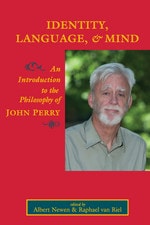
cover of Identity, Language, and Mind: An Introduction to the Philosophy of John Perry

Identity, Language, and Mind

An Introduction to the Philosophy of John Perry

Edited by Albert Newen and Raphael van Riel

CSLI, 2012
As one of the world’s most eminent living philosophers, John Perry has covered a remarkable breadth of subjects in his published work, including semantics, indexicality, self-knowledge, personal identity, and consciousness. Looking particularly at the way in which he deals with issues of self, communication, and reality, this volume is organized in seven chapters that highlight a different aspect of Perry’s work on the intersection of these subjects. A fundamental work for students and scholars, Identity, Language, and Mind explores questions that are not only essential in understanding Perry’s writings, but also contemporary philosophy as a whole.
[more]
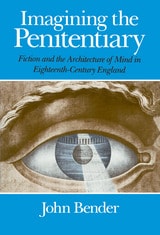
cover of Imagining the Penitentiary: Fiction and the Architecture of Mind in Eighteenth-Century England

Imagining the Penitentiary

Fiction and the Architecture of Mind in Eighteenth-Century England

John Bender

University of Chicago Press, 1987
This brilliant and insightful contribution to cultural studies investigates the role of literature—particularly the novel—and visual arts in the development of institutions. Arguing the attitudes expressed in narrative literature and art between 1719 and 1779 helped bring about the change from traditional prisons to penitentiaries, John Bender offers studies of Robinson Crusoe, Moll Flanders, The Beggar's Opera, Hogarth's Progresses, Jonathan Wild, and Amelia as well as illustrations from prison literature, art, and architecture in support of his thesis.
[more]
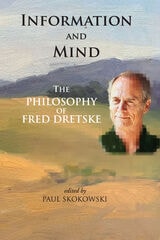
cover of Information and Mind: The Philosophy of Fred Dretske

Information and Mind

The Philosophy of Fred Dretske

Edited by Paul G. Skokowski

CSLI, 2020

Information and Mind explores questions of consciousness that Fred Dretske addressed in his philosophical career. Ranging from one of the earliest problems Dretske analyzed—the nature of seeing an object—to epistemological issues that he began working on mid-career, to matters he focused on in later years, including information, mental representation, and conscious experience, this volume investigates and engages with a spectrum of his prolific works. These papers, written by former colleagues and students from the University of Wisconsin and Stanford University, were inspired by talks given at the Center for the Explanation of Consciousness at Stanford in 2015 to celebrate Dretske’s life and work. In addition to scholarly essays, the authors also recount stories of personal interactions with Dretske that transformed their views or changed their professional trajectory. A bibliography of Dretske’s publications rounds out the volume. This generous volume includes contributions by Fred Adams, John A. Barker, John Perry, Paul Skokowski, and Dennis Stampe.
 
[more]
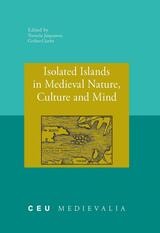
cover of Isolated Islands in Medieval Nature, Culture and Mind

Isolated Islands in Medieval Nature, Culture and Mind

Gerhard Jaritz

Central European University Press, 2011

The volume contains selected papers from an international workshop in 2005, at the Hungarian Academy in Rome. They aim at investigating the registers of fifteenth-century supplications to the Apostolic Penitentiary of the Holy See and to analyze the multiplicity of issues in which a context of the local needs of Western Christians and the central power of the Pope had been occurring.

The contributions make clear that local and individual factors and practice of Christian faith and religion must not be seen as separated from the global power of the Roman curia. The latter’s influence could become directly important for any individual in any local space, also … et usque ad ultimum terrae (Acts 1:8), in the utmost peripheries of the Christian world. The assistance by the Apostolic Penitentiary was indispensable in a large variety of cases. The occupation with such cases happened in the local and regional space as well as in the globalized centre of the Holy See.

[more]