Results by title
89 books match the query 'Mind & Body' and 4 start with i

I Surf, Therefore I Am
A Philosophy of SurfingPeter Kreeft
St. Augustine's Press, 2008
[more]
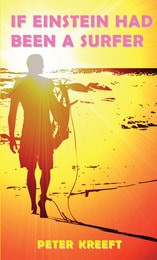
If Einstein Had Been a Surfer
A Surfer, a Scientist, and a Philosopher Discuss a "Universal Wave Theory" or "Theory of Everything"Peter Kreeft
St. Augustine's Press, 2009
(1) Science, (2) philosophy, and (3) poetry, myth, and mysticism are three modes of consciousness that are radically different today. We are usually very good at carefully distinguishing them so as not to corrupt them, reduce them, or to confuse them with each other. But almost no one tries to connect them in a synthesis in which each maintains its own identity yet each contributes to a greater whole that no one of them could attain alone – like a happy marriage. If we bring them together at all, it is only to focus in three different ways on a specific issue (like health care, or children’s literature, or gender roles). If Einstein Had Been a Surfer dares to do it for Everything, or rather for a “Theory of Everything” that only scientists today dare to talk about. But how can a “theory of the whole” be discovered by a brain that is less than a whole brain?
In this book all three dimensions of consciousness not only speak about a “theory of everything” but speak to each other in dialog. The three voices are incarnated in three characters from an upcoming novel, An Ocean Full of Angels: Evan Jellema is a theoretical physicist (and a clumsy Dutchman), ’Isa Ben Adam is a philosophical Muslim (and cantankerously clear), and Libby Rawls is a poet, mystic, and surfer (and a sassy, classy Black feminist).
Isn’t “surfer” a bit of a stretch? Not at all. Actually, the papers reported last year that an amateur scientist has in fact finally discovered, or claimed to have discovered, the “theory of everything” that Einstein failed to find and that scientists have been searching for ever since – and he is a surfer! Perhaps this is no accident, but a natural connection: the mind of the “soul surfer,” having become one with the sea, has awakened its “third eye” which alone gives the scientist the binocular vision, the synoptic perspective, that he lacks. And perhaps only a philosopher can mediate the two other modes of vision, as Aquinas mediated and synthesized the science of Albert the Great and Aristotle with the poetry and symbolism of mystics like Augustine.
This lively trialog, full of irony, intellectual surprise, and humor, is a serious call for a post-medieval synthesis. It does not claim to have arrived anywhere near the end of a journey to a “Theory of Everything,” only to have begun it. Even that modest ambition will certainly be criticized a priori as impossibly ambitious. Does that tell you anything about the book, or does it tell you something about the critic?
[more]
Incarnation, Pain, Theology
A Phenomenology of the BodyEspen Dahl
Northwestern University Press, 2024
How the phenomenology of pain allows us to rethink human incarnation
While the phenomenological tradition has carefully treated both the objective and the lived body, Espen Dahl explores a dimension of the body that does not fall neatly into either category, suggesting that philosophers should take account of the inner density of our organic, material body. By integrating the dimension of “flesh-and-blood” into the phenomenological notion of the body, Dahl argues that it is possible to reach a more adequate notion of human incarnation. The author explores the body in its subjectivity and its resistance, in activity founded on passivity, and in the ambiguous limits of its skin. The phenomenon of pain is given particular attention in this investigation, since pain is, as Dahl argues, what makes the body inescapably manifest in its otherwise hidden dimensions, including its ambiguity and vulnerability. Related to this focus, Dahl also engages with the Christian theological concerns of incarnation, pain, and hope. Phenomenologists have long drawn on this religious inheritance, particularly in what has been dubbed the French “theological turn.” In a similar manner, Incarnation, Pain, Theology: A Phenomenology of the Body draws on these theological sources while firmly holding to its philosophical commitments in methodological approach and analytic aims.
While the phenomenological tradition has carefully treated both the objective and the lived body, Espen Dahl explores a dimension of the body that does not fall neatly into either category, suggesting that philosophers should take account of the inner density of our organic, material body. By integrating the dimension of “flesh-and-blood” into the phenomenological notion of the body, Dahl argues that it is possible to reach a more adequate notion of human incarnation. The author explores the body in its subjectivity and its resistance, in activity founded on passivity, and in the ambiguous limits of its skin. The phenomenon of pain is given particular attention in this investigation, since pain is, as Dahl argues, what makes the body inescapably manifest in its otherwise hidden dimensions, including its ambiguity and vulnerability. Related to this focus, Dahl also engages with the Christian theological concerns of incarnation, pain, and hope. Phenomenologists have long drawn on this religious inheritance, particularly in what has been dubbed the French “theological turn.” In a similar manner, Incarnation, Pain, Theology: A Phenomenology of the Body draws on these theological sources while firmly holding to its philosophical commitments in methodological approach and analytic aims.
[more]
Intoxicated Ways of Knowing
The Untold Story of Intoxicants and the Biological Subject in Nineteenth-Century GermanyMatthew Perkins-McVey
University of Chicago Press, 2026
Argues that intoxication was fundamental to German physiological, psychological, and psychiatric research during the nineteenth century.
Intoxicating substances can be found lurking in every corner of modern life, and Matthew Perkins-McVey’s pathbreaking book offers the untold story of how they were implicated in shifting perceptions of embodiment found in the emerging sciences of the body and mind in late-nineteenth-century Germany. Their use in this experimental context gave rise to a dynamic conception of the subject within the scientific, psychological, philosophical, and sociological milieu of the era. The history of the modern biological subject, Perkins-McVey argues, turns on “intoxicated ways of knowing.”
Intoxicated Ways of Knowing identifies the state of intoxication as a tacit form of thinking and knowing with the body. Intoxicants force us to feel, intervening directly in our perceptional awareness, and, Perkins-McVey contends, they bring latent conceptual associations into the foreground of conscious thought, engendering new ways of knowing the world. The book unfurls how intoxicants affected nineteenth-century German science and how, ultimately, the connection between mental life and intoxication is taken up in the works of Friedrich Nietzsche, Max Weber, and Sigmund Freud, bringing the biological subject out of the lab and into the worlds of philosophy, psychoanalysis, sociology, and politics.
[more]