Results by title
56 books match the query 'Modernism (Art)' and 3 start with i
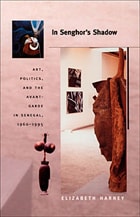
In Senghor's Shadow
Art, Politics, and the Avant-Garde in Senegal, 1960–1995Elizabeth Harney
Duke University Press, 2004
Heavily illustrated with nearly one hundred images, including some in color, In Senghor’s Shadow surveys the work of a range of Senegalese artists, including painters, muralists, sculptors, and performance-based groups—from those who worked at the height of Senghor’s patronage system to those who graduated from art school in the early 1990s. Harney reveals how, in the 1970s, avant-gardists contested Negritude beliefs by breaking out of established artistic forms. During the 1980s and 1990s, artists such as Moustapha Dimé, Germaine Anta Gaye, and Kan-Si engaged with avant-garde methods and local artistic forms to challenge both Senghor’s legacy and the broader art world’s understandings of cultural syncretism. Ultimately, Harney’s work illuminates the production and reception of modern Senegalese art within the global arena.

In Visible Touch
Modernism and MasculinityEdited by Terry Smith
University of Chicago Press, 1997
Examining such major European modernists as Cézanne, Caillebotte, Matisse, Wyndham Lewis, and Boccioni, these writings offer a history of how artists sought to shape their sexuality in their work. In turn, the essays also show how the artists were shaped by the historical shifts in the gender order and by the exchanges between sexualities occurring in their social worlds. For example, the piece on Wyndham Lewis shows how he subscribed to an exaggerated masculinism, while the essays on Boccioni and Matisse bring out the efforts by these men to understand feminine sexuality.
In the theoretical essays, Bernard Smith questions modernism itself as a style category. And Richard Shiff and W.J.T. Mitchell trace the consequences for art theory of recognizing the physical presence of modernist artworks and the agency of imagery in our encounter with contemporary art.
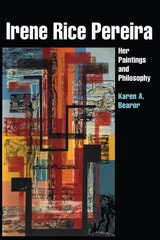
Irene Rice Pereira
Her Paintings and PhilosophyBy Karen Bearor
University of Texas Press, 1993
Artist Irene Rice Pereira was a significant figure in the New York art world of the 1930s and 1940s, who shared an interest in Jungianism with the better-known Abstract Expressionists and with various women artists and writers seeking "archetypal" imagery. Yet her artistic philosophy and innovative imagery elude easy classification with her artistic contemporaries. In consequence, her work is rarely included in studies of the period and is almost unknown to the general public. This first intellectual history of the artist and her work seeks to change that.
Karen A. Bearor thoroughly re-creates the artistic and philosophical milieu that nourished Pereira’s work. She examines the options available to Pereira as a woman artist in the first half of the twentieth century and explores how she used those options to contribute to the development of modernism in the United States. Bearor traces Pereira’s interest in the ideas of major thinkers of the period—among them, Spengler, Jung, Einstein, Cassirer, and Dewey—and shows how Pereira incorporated their ideas into her art. And she demonstrates how Pereira’s quest to understand something of the nature of ultimate reality led her from an early utopianism to a later interest in spiritualism and the occult.
This lively intellectual history amplifies our knowledge of a time of creative ferment in American art and society. It will appeal to a wide range of readers interested in the modernist period.