Results by title
149 books match the query 'Modernity' and 10 start with i

Ibsen Apocalypse
Vegard Vinge and Ida Müller’s Six-Hundred-Year Mission to Raise the Ghosts of ModernityAndrew Friedman
Northwestern University Press, 2026
Presenting a groundbreaking account of an audacious theatrical undertaking
Created by the Norwegian/German duo of Vegard Vinge and Ida Müller, the Ibsen-Saga (2006–present) is a six-hundred-year project to restage Henrik Ibsen’s entire oeuvre. Andrew Friedman presents a groundbreaking historical narrative of this project’s development and dramaturgy, through the theories and practices of modernism’s most influential and controversial artists, including Henrik Ibsen, Richard Wagner, F. T. Marinetti, Erwin Piscator, and Jackson Pollock. Vinge and Müller treat Ibsen’s plays as the urtexts of a mythical struggle between artistic vision and material limits, which they explore through analogous narratives ranging from Hamlet to World Cup soccer matches, all unified by a singular aesthetic that juxtaposes totalizing fiction and extreme reality. As Friedman shows, they mythologize Ibsen’s themes of artistic ambition to resurrect and test modernism’s fantasies of artistic autonomy, totality, creative license, and provocation.
By reading Vinge and Müller’s project through its modernist inspirations, Friedman demonstrates the material and ethical limits of modernist ideals in current theatrical practice, providing new perspectives on the legacy of these pioneering figures. Ibsen Apocalypse is a bold, cross-disciplinary reappraisal of the persistent power of modernity in contemporary performance.
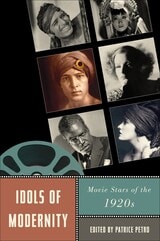
Idols of Modernity
Movie Stars of the 1920sPetro, Patrice
Rutgers University Press, 2010
Bringing together the best new work oncinemaand stardom in the 1920s, this illustrated collection showcases the range of complex social, institutional, and aesthetic issues at work in American cinema of this time. Attentive to stardom as an ensemble of texts, contexts, and social phenomena stretching beyond the cinema, major scholars provide careful analysis of the careers of both well-known and now forgotten stars of the silent and early sound era—Douglas Fairbanks, Buster Keaton, the Talmadge sisters, Rudolph Valentino, Gloria Swanson, Clara Bow, Colleen Moore, Greta Garbo, Anna May Wong, Emil Jannings, Al Jolson, Ernest Morrison, Noble Johnson, Evelyn Preer, Lincoln Perry, and Marie Dressler.

Imagined Museums
Art and Modernity in Postcolonial MoroccoKatarzyna Pieprzak
University of Minnesota Press, 2010

In Defense of Honor
Sexual Morality, Modernity, and Nation in Early-Twentieth-Century BrazilSueann Caulfield
Duke University Press, 2000
While some Brazilian elites used the issue of sexual purity to boast of their country’s moral superiority, others claimed that the veneration of such concepts as virginity actually frustrated efforts at modernization. Moreover, although individuals of all social classes invoked values they considered “traditional,” such as the confinement of women’s sexuality within marriage, these values were at odds with social practices—such as premarital sex, cohabitation, divorce, and female-headed households—that had been common throughout Brazil’s history. The persistence of these practices, together with post-World War I changes in both official and popular moral ideals, presented formidable obstacles to the Estado Novo’s renewed drive to define and enforce public morality and private family values in the late 1930s.
With sophisticated theoretical underpinnings, In Defense of Honor is written in a clear and lively manner, making it accessible to students and scholars in a variety of disciplines, including Brazilian and Latin American studies, gender studies, and legal history.
In the Name of the Mother
Italian Americans, African Americans, and Modernity from Booker T. Washington to Bruce SpringsteenSamuele F. S. Pardini
Dartmouth College Press, 2017
In the Place of Origins
Modernity and Its Mediums in Northern ThailandRosalind C. Morris
Duke University Press, 2000
Through her careful examination of the transformations of spirit mediumship wrought by the mass media, Morris takes readers into the world of the northern Thai past to discover the anticipations of future histories. In this process, she finds new objects for anthropological inquiry, including romantic love and epistolary poetry. She then turns her eye toward the relationships between commodification and prosaic form and photography and the discourses of gendered and national identity. Attending to these issues as they manifest themselves in the practices of mediums, Morris describes both the mundane activities of spirit mediums and the grand ambitions to political authority that are embodied in the increasingly spectacular forms of possession that are becoming so popular with both tourists and local culture brokers. In the Place of Origins traverses this ground with accounts of right-wing militarism and ritual revival during the 70s, and of the democracy movement of 1992, when a global mass media was galvanized by images of military repression and the spectacle of traditional ritual power in cursing. Finally, considering the claims that mediums make to magical power in the face of both AIDS and the Asian economic crisis, Morris reveals the potency of extrajudicial forms of power and violence in the late modern era.
This provocative study will interest anthropologists, historians, Asianists, and those involved in gender, performance, media, and literary studies.
Indigenous Bodies, Maya Minds
Religion and Modernity in a Transnational K'iche' CommunityC. James MacKenzie
University Press of Colorado, 2016
Indigenous Bodies, Maya Minds examines tension and conflict over ethnic and religious identity in the K’iche’ Maya community of San Andrés Xecul in the Guatemalan Highlands and considers how religious and ethnic attachments are sustained and transformed through the transnational experiences of locals who have migrated to the United States.
Author C. James MacKenzie explores the relationship among four coexisting religious communities within Highland Maya villages in contemporary Guatemala—costumbre, traditionalist religion with a shamanic substrate; “Enthusiastic Christianity,” versions of Charismaticism and Pentecostalism; an “inculturated” and Mayanized version of Catholicism; and a purified and antisyncretic Maya Spirituality—with attention to the modern and nonmodern worldviews that sustain them. He introduces a sophisticated set of theories to interpret both traditional religion and its relationship to other contemporary religious options, analyzing the relation among these various worldviews in terms of the indigenization of modernity and the various ways modernity can be apprehended as an intellectual project or an embodied experience.
Indigenous Bodies, Maya Minds investigates the way an increasingly plural religious landscape intersects with ethnic and other identities. It will be of interest to Mesoamerican and Mayan ethnographers, as well as students and scholars of cultural anthropology, indigenous cultures, globalization, and religion.
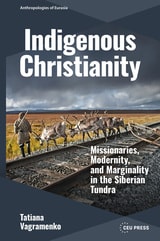
Indigenous Christianity
Missionaries, Modernity, and Marginality in the Siberian TundraTatiana Vagramenko
Central European University Press, 2026
Nenets nomads, long shaped by Russian colonialism and Soviet modernization, experienced sweeping conversions in the mid-1990s, culminating in the creation of a tundra church tied to a radical evangelical movement. Amid Putin’s tightening control—when indigenous peoples and minority faiths faced renewed surveillance and harassment—the book follows Nenets and missionaries whose encounters across the tundra sparked tensions between converts and non-converts, faith and state. Through stories of hope, loss, and resilience, it reveals how global evangelical Christianity intersects with local traditions, reshaping kinship, belonging, and modernity in the Siberian tundra.
Islam and Modernity
Transformation of an Intellectual TraditionFazlur Rahman
University of Chicago Press, 1984
"In this work, Professor Fazlur Rahman presents a positively ambitious blueprint for the transformation of the intellectual tradition of Islam: theology, ethics, philosophy and jurisprudence. Over the voices advocating a return to Islam or the reestablishment of the Sharia, the guide for action, he astutely and soberly asks: What and which Islam? More importantly, how does one get to 'normative' Islam? The author counsels, and passionately demonstrates, that for Islam to be actually what Muslims claim it to be—comprehensive in scope and efficacious for every age and place—Muslim scholars and educationists must reevaluate their methodology and hermeneutics. In spelling out the necessary and sound methodology, he is at once courageous, serious and profound."—Wadi Z. Haddad, American-Arab Affairs

Islamic Architecture on the Move
Motion and ModernityEdited by Christiane Gruber
Intellect Books, 2016
This book brings together scholars from architectural studies, design, art history, and other fields to challenge and expand concepts of Islamic architecture. Ranging from eighteenth-century Ottoman tents to manifestations of Islamic motifs in 1960s Hawaii, this richly illustrated volume raises key questions about Islamic architecture, and, more broadly, about how we can rethink our understanding of material, artistic, and cultural mobility in the modern world.