Results by title
100 books match the query 'Monographs' and 5 start with i
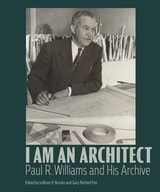
I Am an Architect
Paul R. Williams and His ArchiveLeRonn P. Brooks
J. Paul Getty Trust, The, 0
Discover the visionary legacy of the groundbreaking architect Paul R. Williams, FAIA, one of the most prolific Black architects of the 20th century.
Paul R. Williams (1894–1980), among the first Black members of the American Institute of Architects, was a defining force in shaping the city of Los Angeles and Southern California, yet his impact was undoubtedly global.
Threading together Williams’s biography, social histories of Los Angeles, and transformations in the profession, this richly researched monograph traces his remarkable career against the evolving landscape of Los Angeles and the wider architectural world.
- Presents the first research-driven monograph on preeminent architect Paul R. Williams.
- Features nearly 200 images, including many never-before published drawings, renderings, and archival materials.
- Williams’s expansive oeuvre spans everything from early residential commissions in the 1920s to civic, religious, commercial, and cultural landmarks that came to define Los Angeles’s identity at midcentury.
- Examines the intersection of race, space, and professional practice in twentieth-century American architecture.
- Highlights Williams’s commitment to designing for Black communities and advancing social change through architecture.
Step into the world of a visionary who transformed cities and challenged barriers—this volume invites you to get to know Paul R. Williams and the enduring power of architecture to shape society.
This volume is published to accompany an exhibition on view at the Fisher Museum of Art at the University of Southern California from August 18, 2026, to March 13, 2027, Los Angeles County Museum of Art from November 15, 2026, to May 31, 2027, and Getty Research Institute at the Getty Center from December 15, 2026, to March 14, 2027.
I Love My Selfie
Essay by Ilan Stavans / Auto-Portraits by ADÁL
Duke University Press, 2017
Inventing Nadar
A History of Photographic FirstsEmily Doucet
Duke University Press, 2025

Irina Nakhova
Museum on the EdgeJane A. Sharp
Rutgers University Press, 2019
Released in conjunction with Nakhova’s first museum retrospective exhibition in the United States, this book includes many full-color illustrations of her work, spanning the entirety of her forty-year career and demonstrating her facility with a variety of media. It also includes essays by a variety of world-renowned curators and art historians, each cataloging Nakhova’s artistic innovations and exploring how she deals with themes of everyday life, memory, viewer engagement, and moral responsibility. It concludes with a new interview with Nakhova herself, giving new insight into her creative process and artistic goals. Irina Nakhova: Museum on the Edge provides a vivid look at the work of a visionary artist. Published in partnership with the Zimmerli Museum.
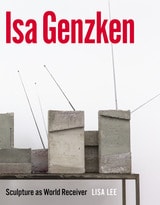
Isa Genzken
Sculpture as World ReceiverLisa Lee
University of Chicago Press, 2017
Through penetrating analyses of individual works as well as archival and interview material from the artist herself, Lee establishes four major themes in Genzken’s oeuvre: embodied perception, architecture and built space, the commodity, and the body. Contextualizing the sculptor’s engagement with fellow artists, such as Joseph Beuys and Bruce Nauman, Lee situates Genzken within a critical and historical framework that begins in politically fraught 1960s West Germany and extends to the globalized present. Here we see how Genzken tests the relevance of the utopian aspirations and formal innovations of the early twentieth century by submitting them to homage and travesty. Sure to set the standard for future studies of Genzken’s work, Isa Genzken is essential for anyone interested in contemporary art.