Results by title
491 books match the query 'Moral and ethical aspects' and 17 start with i

I Found It on the Internet
Coming of Age OnlineFrances Jacobson Harris
American Library Association, 2011

Ignoring Nature No More
The Case for Compassionate ConservationEdited by Marc Bekoff
University of Chicago Press, 2013
This collection of diverse essays is the first book devoted to compassionate conservation, a growing global movement that translates discussions and concerns about the well-being of individuals, species, populations, and ecosystems into action. Written by leading scholars in a host of disciplines, including biology, psychology, sociology, social work, economics, political science, and philosophy, as well as by locals doing fieldwork in their own countries, the essays combine the most creative aspects of the current science of animal conservation with analyses of important psychological and sociocultural issues that encourage or vex stewardship. The contributors tackle topics including the costs and benefits of conservation, behavioral biology, media coverage of animal welfare, conservation psychology, and scales of conservation from the local to the global. Taken together, the essays make a strong case for why we must replace our habits of domination and exploitation with compassionate conservation if we are to make the world a better place for nonhuman and human animals alike.
Image Ethics In The Digital Age
Larry Gross
University of Minnesota Press, 2003
Over the past quarter century, dramatic technological advances in the production, manipulation, and dissemination of images have transformed the practices of journalism, entertainment, and advertising as well as the visual environment itself. From digital retouching to wholesale deception, the media world is now beset by an unprecedented range of moral, ethical, legal, and professional challenges. Image Ethics in the Digital Age brings together leading experts in the fields of journalism, media studies, and law to address these challenges and assess their implications for personal and societal values and behavior.
Among the issues raised are the threat to journalistic integrity posed by visual editing software; the monopolization of image archives by a handful of corporations and its impact on copyright and fair use laws; the instantaneous electronic distribution of images of dubious provenance around the world; the erosion of privacy and civility under the onslaught of sensationalistic twenty-four-hour television news coverage and entertainment programming; and the increasingly widespread use of surveillance cameras in public spaces. This volume of original essays is vital reading for anyone concerned with the influence of the mass media in the digital age.
Contributors: Howard S. Becker; Derek Bousé, Eastern Mediterranean U, Cyprus; Hart Cohen, U of Western Sydney; Jessica M. Fishman; Paul Frosh, Hebrew U of Jerusalem; Faye Ginsburg, New York U; Laura Grindstaff, U of California, Davis; Dianne Hagaman; Sheldon W. Halpern, Ohio State U; Darrell Y. Hamamoto, U of California, Davis; Marguerite Moritz, U of Colorado, Boulder; David D. Perlmutter, Louisiana State U; Dona Schwartz, U of Minnesota; Matthew Soar, Concordia University; Stephen E. Weil, Smithsonian Institution’s Center for Education and Museum Studies.
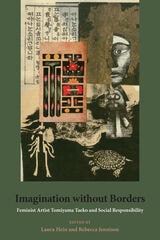
Imagination without Borders
Feminist Artist Tomiyama Taeko and Social ResponsibilityLaura Hein and Rebecca Jennison, Editors
University of Michigan Press, 2010

In The Nature Of Things
Language, Politics, and the EnvironmentJane Bennett
University of Minnesota Press, 1993
Informed by recent developments in literary criticism and social theory, In the Nature of Things addresses the presumption that nature exists independent of culture and, in particular, of language. The theoretical approaches of the contributors represent both modernist and postmodernist positions, including feminist theory, critical theory, Marxism, science fiction, theology, and botany. They demonstrate how the concept of nature is invoked and constituted in a wide range of cultural projects—from the Bible to science fiction movies, from hunting to green consumerism. Ultimately, it weeks to link the work of theorists concerned with nature and the environment to nontheorists who share similar concerns.
Contributors include R. McGreggor Cawley, Romand Coles, William E. Connolly, Jan E. Dizard, Valerie Hartouni, Cheri Lucas Jennings, Bruce H. Jennings, Timothy W. Luke, Shane Phelan, John Rodman, Michael J. Shapiro, and Wade Sikorski.
Inclusive STEM
Transforming Disciplinary Writing Instruction for a Socially Just FutureHeather M. Falconer
University Press of Colorado, 2025
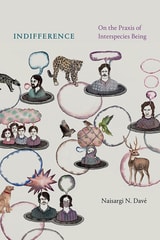
Indifference
On the Praxis of Interspecies BeingNaisargi N. Davé
Duke University Press, 2023
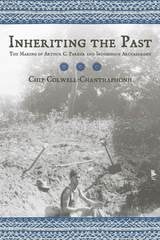
Inheriting the Past
The Making of Arthur C. Parker and Indigenous ArchaeologyChip Colwell-Chanthaphonh
University of Arizona Press, 2009
In Inheriting the Past, Chip Colwell-Chanthaphonh examines Parker’s winding career path and asks why it has taken generations for Native peoples to follow in his footsteps. Closely tracing Parker’s life through extensive archival research, Colwell-Chanthaphonh explores how Parker crafted a professional identity and negotiated dilemmas arising from questions of privilege, ownership, authorship, and public participation. How Parker, as well as the discipline more broadly, chose to address the conflict between Native American rights and the pursuit of scientific discovery ultimately helped form archaeology’s moral community.
Parker’s rise in archaeology just as the field was taking shape demonstrates that Native Americans could have found a place in the scholarly pursuit of the past years ago and altered its trajectory. Instead, it has taken more than a century to articulate the promise of an Indigenous archaeology—an archaeological practice carried out by, for, and with Native peoples. As the current generation of researchers explores new possibilities of inclusiveness, Parker’s struggles and successes serve as a singular reference point to reflect on archaeology’s history and its future.
Integrity and Agreement
Economics When Principles Also MatterLanse Minkler
University of Michigan Press, 2009
"Two impressive features of this book are its clarity of purpose and the breadth of disciplinary resources to which it appeals."
---Geoffrey Brennan, Professor of Economics, Australian National University
"Facing massive evidence that people do not act generally as self-regarding payoff maximizers, economists have become increasingly interested in issues of cooperation, altruism, identity, and morality. Lanse Minkler's contribution is particularly important because of his powerful argument that the evidence of cooperation cannot be explained adequately by a more complicated preference function. A disposition for honesty is not simply a matter of preference---it is an issue of personal integrity, identity, and commitment. This has major implications. In particular we have to reconstruct the theory of the firm from first principles. No economist committed to the pursuit of truth should ignore this volume."
---Geoffrey Hodgson, Research Professor in Business Studies, University of Hertfordshire, United Kingdom, and Editor in Chief of the Journal of Institutional Economics
"This is an interesting account of the role of integrity---preference-integrity and commitment-integrity---on economic behavior. While drawing knowledge from traditional subfields of economics, it also includes insights gleaned from psychology and philosophy, showing their effects in varied areas such as political behavior, the employment relation, religion, and human rights. In this exciting volume Lanse Minkler does an excellent job of incorporating various newer concepts of fairness and integrity into economic analysis."
---Ernst Fehr, Professor and Head of the Chair of Microeconomics and Experimental Economic Research and Director of the Institute for Empirical Research in Economics, University of Zurich
Social scientists who treat humans as rational beings driven exclusively by self-interest ignore a key factor shaping human behavior: the influence of moral principles. Starting with the elementary principle "lying is wrong," economic theorist Lanse Minkler examines the ways in which a sense of morality guides real-life decision making.
Whether one feels committed to specific or general moral principles, Minkler explains, integrity demands consistently acting on that commitment. Because truthfulness is the most basic moral principle, integrity means honesty. And honesty extends beyond truth-telling. It requires good faith when entering an agreement and then standing by one's word. From this premise, Minkler explores the implications of integrity for contracts between buyers and sellers and understandings between employers and employees. He also finds a role for integrity in an individual's religious vows, an elected official's accountability to constituents, and a community's obligation to human rights.
Integrity and Agreement reintroduces morality as a factor for economists, sociologists, psychologists, and political scientists to consider in their efforts to comprehend human behavior.
Lanse Minkler is Associate Professor of Economics at the University of Connecticut.

Integrity in Health Care Institutions
Humane Environments for Teaching, Inquiry, and HealingRuth Ellen Bulger
University of Iowa Press, 1990
The twelve essays in this stimulating volume, written by health care professionals and others working with the important issue of institutional ethics, focus on the world of academic health centers and provide rich, informed commentaries on significant problems integral to the character and work of those centers. Daniel Steiner demonstrates how the viability of independent research may be threatened by university liaisons with industry. Donald Frederickson traces the history of the National Institutes of Health response to the ethical challenges in clinical investigation and fetal research. Edmund Pellegrino recommends ways in which health-related institutions may translate their concern into action. Robert Coles examines the tensions between institutional and personal values in a very provocative way. Other directions are explored by essayists Roger Bulger, Stephen Toulmin, H. Tristram Engelhardt, Kim Dunn, Mitchell Rabkin, James Haughton, Lawrence Green, and the editors themselves.
Every essay in this wide-ranging collection reveals the implications and effects of institutional values. The end result is a clear picture of conflicts of values: ethical, social, economic, ethnic, cultural, and pedagogic. Integrity in Health Care Institutions points out the need for a deliberate attempt to sort out the values of institutions and, when they are fully and clearly displayed, to use priorities as a guide to satisfying the obligations of academic health centers to those who work within their walls; to the patients, students, scientists, and teachers they serve; and to society in general.
Physicians and nurses, hospital and university administrators, attorneys, sociologists, and everyone concerned about the moral interaction between institutions and individuals will want to read this book.
Intensive Care
Medical Ethics and the Medical ProfessionRobert Zussman
University of Chicago Press, 1992
His book is a portrait of the way careful planning is undermined by the unpredictability of illness and the persistence of self-interest, by high principle and curious compromise.
Interactive Cinema
The Ambiguous Ethics of Media ParticipationMarina Hassapopoulou
University of Minnesota Press, 2024
Connecting interactive cinema to media ethics and global citizenship
Interactive Cinema explores various cinematic practices that work to transform what is often seen as a primarily receptive activity into a participatory, multimedia experience. Surveying a multitude of unorthodox approaches throughout the history of motion pictures, Marina Hassapopoulou offers insight into a range of largely ephemeral and site-specific projects that consciously assimilate viewers into their production.
Analyzing examples of early cinema, Hollywood B movies, museum and gallery installations, virtual-reality experiments, and experimental web-based works, Hassapopoulou travels across numerous platforms, highlighting a diverse array of strategies that attempt to unsettle the allegedly passive spectatorship of traditional cinema. Through an exploration of these radically inventive approaches to the medium, many of which emerged out of sociopolitical crises and periods of historical transition, she works to expand notions of interactivity by considering it in both technological and phenomenological terms.
Deliberately revising and expanding Eurocentric scholarship to propose a much broader, transnational scope, the book emphasizes the ethical dimensions of interactive media and their links to larger considerations around community building, citizenship, and democracy. By combining cutting-edge theory with updated conventional film studies methodologies, Interactive Cinema presses at the conceptual limits of cinema and offers an essential road map to the rapidly evolving landscape of contemporary media.

Intercollegiate Athletics and the American University
A University President's PerspectiveJames J. Duderstadt
University of Michigan Press, 2003

International Surrogacy as Disruptive Industry in Southeast Asia
Whittaker, Andrea
Rutgers University Press, 2019
In International Surrogacy as Disruptive Industry in Southeast Asia, Andrea Whittaker traces the development of this industry and its movement across Southeast Asia following a sequence of governmental bans in India, Nepal, Thailand, and Cambodia. Through a case study of the industry in Thailand, the book offers a nuanced and sympathetic examination of the industry from the perspectives of the people involved in it: surrogates, intended parents, and facilitators. The industry offers intended parents the opportunity to form much desired families, but also creates vulnerabilities for all people involved. These vulnerabilities became evident in cases of trafficking, exploitation, and criminality that emerged in southeast Asia, leading to greater scrutiny on the industry as a whole. Yet the trade continues in new flexible hybrid forms, involving the circulation of reproductive gametes, embryos, surrogates, and ova donors across international borders to circumvent regulations. The book demonstrates the need for new forms of regulation to protect those involved in international surrogacy arrangements.
Interpretations of Conflict
Ethics, Pacifism, and the Just-War TraditionRichard B. Miller
University of Chicago Press, 1991
Miller's study of the ethics of war could not be more timely.
Miller brings together the opposed traditions of pacifism and
just-war theory and puts them into a much-needed dialogue
on the ethics of war.
Beginning with the duty of nonviolence as a point of
convergence between the two rival traditions, Miller provides
an opportunity for pacifists and just-war theorists to refine
their views in a dialectical exchange over a set of ethical
and social questions. From the interface of these two long-
standing and seemingly incompatible traditions emerges a
surprisingly fruitful discussion over a common set of values,
problems, and interests: the presumption against harm, the
relation of justice and order, the ethics of civil
disobedience, the problem of self-righteousness in moral
discourse about war, the ethics of nuclear deterrence, and
the need for practical reasoning about the morality of war.
Miller pays critical attention to thinkers such as Augustine
and Thomas Aquinas, as well as to modern thinkers like H.
Richard Niebuhr, Paul Ramsey, Martin Luther King, Jr., James
Douglass, the Berrigans, William O'Brien, Michael Walzer, and
James Childress. He demonstrates how pacifism and just-war
tenets can be joined around both theoretical and practical
issues.
Interpretations of Conflict is a work of massive
scholarship and careful reasoning that should interest
philosophers, theologians, and religious ethicists alike. It
enhances our moral literacy about injury, suffering, and
killing, and offers a compelling dialectical approach to
ethics in a pluralistic society.
Richard B. Miller is assistant professor of religious
studies at Indiana University.
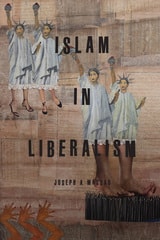
Islam in Liberalism
Joseph A. Massad
University of Chicago Press, 2014
Joseph Massad’s Islam in Liberalism explores what Islam has become in today’s world, with full attention to the multiplication of its meanings and interpretations. He seeks to understand how anxieties about tyranny, intolerance, misogyny, and homophobia, seen in the politics of the Middle East, are projected onto Islam itself. Massad shows that through this projection Europe emerges as democratic and tolerant, feminist, and pro-LGBT rights—or, in short, Islam-free. Massad documents the Christian and liberal idea that we should missionize democracy, women’s rights, sexual rights, tolerance, equality, and even therapies to cure Muslims of their un-European, un-Christian, and illiberal ways. Along the way he sheds light on a variety of controversial topics, including the meanings of democracy—and the ideological assumption that Islam is not compatible with it while Christianity is—women in Islam, sexuality and sexual freedom, and the idea of Abrahamic religions valorizing an interfaith agenda. Islam in Liberalism is an unflinching critique of Western assumptions and of the liberalism that Europe and Euro-America blindly present as a type of salvation to an assumingly unenlightened Islam.
It's Legal but It Ain't Right
Harmful Social Consequences of Legal IndustriesNikos Passas and Neva Goodwin
University of Michigan Press, 2005
--William S. Laufer, Professor, The Wharton School of Business
"This delightful and serious book involves a matter I have long felt of first importance. That is our tendency to make social truth and acceptance conform to personal or larger corporate interests. On this I have written , but gladly yield to this persuasive parallel. No one concerned with literate, informed, and relevant---as distinct from self-serving---truth should miss It's Legal but It Ain't Right."
--John Kenneth Galbraith
"This absorbing and well-written book of essays on the harmful consequences of legal industries skillfully illuminates the ways in which some corporate harms fail to be transformed into criminal law-making and enforcement, and offers cogent suggestions for better regulation in the public interest."
--Dr. Michael Levi, Professor of Criminology, Cardiff University
Many U.S. corporations and the goods they produce negatively impact our society without breaking any laws. We are all too familiar with the tobacco industry's effect on public health and health care costs for smokers and nonsmokers, as well as the role of profit in the pharmaceutical industry's research priorities. It's Legal but It Ain't Right tackles these issues, plus the ethical ambiguities of legalized gambling, the firearms trade, the fast food industry, the pesticide industry, private security companies, and more. Aiming to identify industries and goods that undermine our societal values and to hold them accountable for their actions, this collection makes a valuable contribution to the ongoing discussion of ethics in our time.
This accessible exploration of corporate legitimacy and crime will be important reading for advocates, journalists, students, and anyone interested in the dichotomy between law and legitimacy.