99 books match the query 'Motion picture producers and directors' and 4 start with i
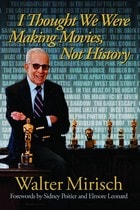
cover of I Thought We Were Making Movies, Not History

I Thought We Were Making Movies, Not History

Walter Mirisch

University of Wisconsin Press, 2008

This is a moving, star-filled account of one of Hollywood’s true golden ages as told by a man in the middle of it all. Walter Mirisch’s company has produced some of the most entertaining and enduring classics in film history, including West Side Story, Some Like It Hot, In the Heat of the Night, and The Magnificent Seven. His work has led to 87 Academy Award nominations and 28 Oscars. Richly illustrated with rare photographs from his personal collection, I Thought We Were Making Movies, Not History reveals Mirisch’s own experience of Hollywood and tells the stories of the stars—emerging and established—who appeared in his films, including Natalie Wood, John Wayne, Peter Sellers, Sidney Poitier, Steve McQueen, Marilyn Monroe, and many others.
    With hard-won insight and gentle humor, Mirisch recounts how he witnessed the end of the studio system, the development of independent production, and the rise and fall of some of Hollywood’s most gifted (and notorious) cultural icons. A producer with a passion for creative excellence, he offers insights into his innovative filmmaking process, revealing a rare ingenuity for placating the demands of auteur directors, weak-kneed studio executives, and troubled screen sirens.
    From his early start as a movie theater usher to the presentation of such masterpieces as The Apartment, Fiddler on the Roof, and The Great Escape, Mirisch tells the inspiring life story of his climb to the highest echelon of the American film industry. This book assures Mirisch’s legacy—as Elmore Leonard puts it—as “one of the good guys.”

Best Books for Special Interests, selected by the American Association of School Librarians, and Best Books for General Audiences, selected by the Public Library Association
[more]
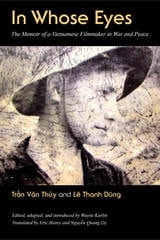
cover of In Whose Eyes: The Memoir of a Vietnamese Filmmaker in War and Peace

In Whose Eyes

The Memoir of a Vietnamese Filmmaker in War and Peace

Tran Van Thuy

University of Massachusetts Press, 2016

Tran Van Thuy is a celebrated Vietnamese filmmaker of more than twenty award-winning documentaries. A cameraman for the People's Army of Vietnam during the Vietnam War, he went on to achieve international fame as the director of films that address the human costs of the war and its aftermath.

Thuy's memoir, when published in Vietnam in 2013, immediately sold out. In this translation, English-language readers are now able to learn in rich detail about the life and work of this preeminent artist. Written in a gentle and charming style, the memoir is filled with reflections on war, peace, history, freedom of expression, and filmmaking. Thuy also offers a firsthand account of the war in Vietnam and its aftermath from a Vietnamese perspective, adding a dimension rarely encountered in English-language literature.
[more]
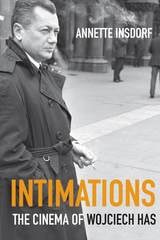
cover of Intimations: The Cinema of Wojciech Has

Intimations

The Cinema of Wojciech Has

Annette Insdorf

Northwestern University Press, 2017

In this first study in English of a master of Polish cinema, Annette Insdorf explores Has’s thirteen feature films with the same deep insight of her groundbreaking book on Krzysztof Kieslowski, Double Lives, Second Chances (Northwestern, 2013).
 
Wojciech Has’s films are still less known outside of his native Poland than those of his countrymen Andrzej Wajda, Krzysztof Zanussi, and Krzysztof Kieslowski. Yet thanks to his singular vision, many critics rank Has among the masters of world cinema. Some of his movies have developed a cult following, notably The Saragossa Manuscript, the favorite film of the Grateful Dead’s Jerry Garcia, which has been praised by directors such as Luis Buñuel, Francis Ford Coppola, and Roman Polanski.
 
Has’s films reveal the inner lives of his characters, which he portrays by giving free rein to his own wildly creative imagination. In addition toThe Saragossa Manuscript, his diverse and innovative filmography includes The Hourglass Sanatorium, a vividly surreal depiction of Hassidic life in Poland between the world wars; The Noose, a stark poetic drama about a lucid alcoholic who knows he will not be able to kick the habit; and How to Be Loved, in which an actress remembers her wartime past.
 
Has made disparate but formally striking movies infused with European strains of existentialism and the avant-garde. With many of his films being restored and rereleased, new generations of film lovers are discovering his artistic genius. Intimations: The Cinema of Wojciech Has is the definitive guide in English to his work.
 
[more]
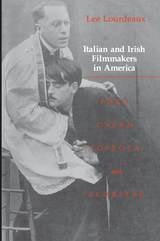
cover of Italian Irish Filmmakers

Italian Irish Filmmakers

Lee Lourdeaux

Temple University Press, 1993

"This penetrating study examines how these filmmakers confronted their cultural heritage and used it as a counterpoint to their depiction of mainstream America." --American Cinematographer In this unique film history, Lee Lourdeaux traces the impact of Irish and Italian cultures on four major American directors and their work. Defining the core values and tensions within each culture, and especially focusing on the influence of American Catholicism, he presents John Ford, Frank Capra, Francis Coppola, and Martin Scorsese as ethnic Americans and film artists. Lourdeaux shows each filmmaker on set with writers and actors, learning to bypass stereotypes in order to develop a shrewd reciprocal assimilation between his ethnic background and Anglo America. Beginning with D. W. Griffith's depiction of Irish and Italian immigrants, the author discusses Hollywood's stereotypical portrayals of ethnic priests, cops, politicians, and gangsters, as well as their surface acculturation in the movies of the 1920s. By the decade's end, John Ford was using all-American stories to embody the basic myths and tensions of Irish-American life. In his later westerns and foreign films, he tried to understand both Irish political strife and the key figures of Irish liturgy. Frank Capra pitted Italian family values against the Anglo success ethic, turning out social comedies about oppressed little people. Several decades later, Martin Scorsese and Francis Coppola were highly critical of their religio-ethnic heritage, though they gradually discovered that to outline its weaknesses, like the blind pursuit of success, was to fashion a critical mirror of mainstream America. Lourdeaux discusses a number of recent films by Coppola and by Scorsese that have not yet been analyzed in any book. And, in the chapter on Scorsese, a personal interview with the director reveals how his ethnic childhood shaped his work in film. Examining the conflicts within American culture, Lourdeaux shows how the filmmakers themselves had to confront the self-destructive aspects of their ethnic background, not only to accommodate WASP audiences but to better understand their own heritage. He also observes that ethnicity is a strong draw at the box office, as in The Godfather, because it creates a sense of the Other who can both be admired and at the same time ridiculed. Illustrated with scenes of the movies discussed, this fascinating film history tells how four of America's most famous filmmakers assimilated their ethnic backgrounds on set and on screen. "Mr. Lourdeaux walks a tricky path in analyzing the films of each [director]: avoiding the trap of excessively detailing their lives and many films, while steering clear of ethnic stereotyping. Those interested in ethnic influences on outstanding persons or in the production of films by four of the best will find the book enjoyable." --The Baltimore Sun "This is an invaluable book because it arouses critical awareness of the ethnicity underlying many Hollywood movies that might otherwise appear merely to represent American archetypes." --Journal of American Studies "A valuable addition to the literature on ethnic identity in film. The insights Lourdeaux offers into major figures like Griffith, Ford, Capra, Coppola, and Scorsese contribute significantly to our understanding of their films." --Virginia Wright Wexman, University of Illinois at Chicago "For a number of years now, church historians have been giving us an account of American Catholicism that is much richer and more varied than the older institutional accounts of the Catholic Church ever let on. In this comprehensive and insightful study, Lee Lourdeaux shows us how much the ethnic movies of directors like Ford and Capra, Coppola and Scorsese have to teach us as well about Irish- and Italian-Catholic mores and instincts." --John B. Breslin, S.J., Director "A wonderfully sensitive, intelligent study of the complex issue of how the Catholic imagination works in the creative personalities of those raised in the Catholic heritage." --Andrew M. Greeley
[more]