Results by title
120 books match the query 'Multicultural Education' and 7 start with i
Imagining Literacy
Rhizomes of Knowledge in American Culture and LiteratureBy Ramona Fernandez
University of Texas Press, 2001
Defining the "common knowledge" a "literate" person should possess has provoked intense debate ever since the publication of E. D. Hirsch's controversial book Cultural Literacy: What Every American Needs to Know. Yet the basic concept of "common knowledge," Ramona Fernandez argues, is a Eurocentric model ill-suited to a society composed of many distinct cultures and many local knowledges.
In this book, Fernandez decodes the ideological assumptions that underlie prevailing models of cultural literacy as she offers new ways of imagining and modeling mixed cultural and non-print literacies. In particular, she challenges the biases inherent in the "encyclopedias" of knowledge promulgated by E. D. Hirsch and others, by Disney World's EPCOT Center, and by the Smithsonian Institution. In contrast to these, she places the writings of Zora Neale Hurston, Maxine Hong Kingston, Gloria Anzaldúa, and Leslie Marmon Silko, whose works model a cultural literacy that weaves connections across many local knowledges and many ways of knowing.
Implementing Collaborative Writing Tasks in Multilingual Classrooms
Mimi Li and Neomy Storch
University of Michigan Press, 2025
With clear visuals and concrete examples of different types of collaborative writing tasks—including multimodal writing and collaborative reading for writing tasks—the book invites readers to consider the kind of decisions that need to be taken when implementing collaborative writing (e.g., group size, how to allocate students) and when assessing collaborative writing. In connecting frontier pedagogical knowledge to practice, Implementing Collaborative Writing Tasks in Multilingual Classrooms will help educators to implement collaborative writing activities in their various contexts.
Throughout the book, readers will find:
- Research-informed, pedagogy-oriented lessons on why and how to implement and assess collaborative writing in multilingual classrooms.
- Cutting-edge pedagogical knowledge that distinguishes the different modes of implementing collaborative writing (e.g., face-to-face, via computer-mediated communication, and a hybrid approach).
- Key practical suggestions for teachers.
- Tips on how to incorporate artificial intelligence in collaborative writing activities.
- Recommendations for further research that can be helpful for practitioners, teacher educators, or graduate students.

In Search of Identity
The Japanese Overseas Scholar in America and JapanJohn Bennett
University of Minnesota Press, 1958
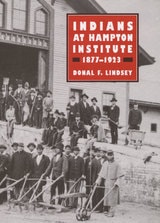
Indians at Hampton Institute, 1877-1923
Donal F. Lindsey
University of Illinois Press, 1995
Founded in 1868, Hampton Institute educated almost 1400 members of sixty-five Native American peoples. Donal F. Lindsey examines the interactions among Indigenous people, Blacks, and whites at the nation’s premier industrial school for racial minorities.
Lindsey's analysis traces the rise and decline of the program for Indigenous Americans while analyzing the program’s impact on the campaign for Native education. Lindsey also examines how the two marginalized races at Hampton viewed each other and white society. Though integration prevailed in much of student life, it resulted in even greater accommodation to a racist society. The weaknesses and strengths attributed to one race were used with “tender violence” to remake the other, in a program in which the powerful and the powerless remained so regardless of segregation or integration.
Intercultural Skills in Action
An International Student's Guide to College and University Life in the U.S.Darren LaScotte and Bethany Peters
University of Michigan Press, 2021
Although traditional ESL/EFL textbooks have primarily introduced cultural topics at a knowledge level only, this textbook is designed to create meaningful opportunities for students to reflect on and practice intercultural skills in ways that are relatable in their daily lives and that can lead to a more satisfying U.S. academic experience.
Each unit opens with a discovery activity that serves as a springboard for the unit and introduces the topic in an engaging way. Chapters feature academic content that builds expands knowledge of intercultural skills, plus opportunities for students to pause and reflect on how to apply what they are learning to their own intercultural experiences. The activities ask students to respond with short written reflections and practice oral skills through discussion in pairs and small groups. Each unit closes with an activity that requires students to use higher-order thinking skills to create, evaluate, and/or analyze cultural information gathered from college and university settings in the form of surveys, interviews, observations, or internet research and then report on what they have learned.
The intended audiences for this book are international students studying in Intensive English Programs, in university bridge or pathway programs, or at colleges and universities in the United States. It may also be used by new-student orientation programs or by student services offices that provide intercultural training for students, staff, and faculty who work with international students.
Interrogating Privilege
Reflections of a Second Language EducatorStephanie Vandrick
University of Michigan Press, 2013
Interrogating Privilege is a welcome combination of personal essays and academic research, blending theory, analysis, and narrative to explore the function and consequences of privilege in second language education.
While teachers’ focus on the learning process and class goals are quite important, there is not enough attention paid to the types of privilege—or lack thereof—that individuals bring to the classroom. Through chapters that can either stand alone or be read together, with topics such as gender, age, and colonialism (the author is the daughter of missionary parents) in second language teaching, this book seeks to address the experiences of teachers, scholars, and students as “whole persons” and to observe the workings of identity and privilege in the educational setting.
Intersectionality and Higher Education
Identity and Inequality on College CampusesW. Carson Byrd
Rutgers University Press, 2019