Results by title
132 books match the query 'Myth' and 6 start with i
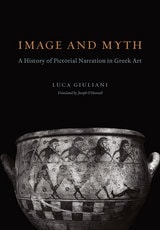
Image and Myth
A History of Pictorial Narration in Greek ArtLuca Giuliani
University of Chicago Press, 2013
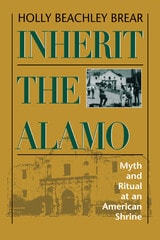
Inherit the Alamo
Myth and Ritual at an American ShrineBy Holly Beachley Brear
University of Texas Press, 1994
Long overshadowed by the towering buildings of downtown San Antonio, the modest little Alamo still evokes tremendous feeling among Texans and, indeed, many other Americans. For Anglo Texans, the Alamo is the "Cradle of Texas Liberty" and a symbolic confirmation of Manifest Destiny. For Hispanic Texans, however, the Alamo has increasingly become a stolen symbol, its origin as a Spanish mission forgotten, its famous defeat used to exclude Hispanics from an honorable place in Texas history.
In this important new book, Holly Beachley Brear explores in fascinating detail what the Alamo means to the numerous groups that lay claim to its heritage. She shows how Alamo myths often diverge from the historical facts—and why. She decodes the agendas of various groups, including the Daughters of the Republic of Texas (who maintain the Alamo buildings and grounds), the Order of the Alamo, the Texas Cavaliers, and LULAC. And she probes attempts by individuals and groups to rewrite the Alamo myth to include more positive roles for themselves, as she explains the value in laying claim to the Alamo's past.
With new perspectives on all the sacred icons of the Alamo and the Fiesta that celebrates (one version of) its history each year, Inherit the Alamo is guaranteed to challenge stereotypes and offer new understanding of the Alamo's ongoing role in shaping Texas and American history and mythology. It will be of interest to a wide popular and scholarly audience.
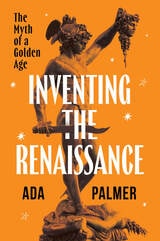
Inventing the Renaissance
The Myth of a Golden AgeAda Palmer
University of Chicago Press, 2025
WINNER OF THE HUGO AWARD
A New Yorker Best Book of 2025
An irreverent new take on the Renaissance, which reveals it as anything but Europe’s golden age.
From the darkness of a plagued and war-torn Middle Ages, the Renaissance (we’re told) heralds the dawning of a new world—a halcyon age of art, prosperity, and rebirth. Hogwash! or so says award-winning novelist and historian Ada Palmer. In Inventing the Renaissance, Palmer turns her witty and irreverent eye on the fantasies we’ve told ourselves about Europe’s not-so-golden age, myths she sets right with sharp clarity.
Palmer’s Renaissance is altogether desperate. Troubled by centuries of conflict, she argues, Europe looked to a long-lost Roman Empire (even its education practices) to save it from unending war. Later historians met their own political challenges with a similarly nostalgic vision, only now they looked to the Renaissance and told a partial story. To right this wrong, Palmer offers fifteen provocative portraits of Renaissance men and women (some famous, some obscure) whose lives reveal a far more diverse, fragile, and wild Renaissance than its glowing reputation suggests.
Inventing the Renaissance
The Myth of a Golden AgeAda Palmer
University of Chicago Press, 2025
WINNER OF THE HUGO AWARD
A New Yorker Best Book of 2025
An irreverent new take on the Renaissance, which reveals it as anything but Europe’s golden age.
From the darkness of a plagued and war-torn Middle Ages, the Renaissance (we’re told) heralds the dawning of a new world—a halcyon age of art, prosperity, and rebirth. Hogwash! or so says award-winning novelist and historian Ada Palmer. In Inventing the Renaissance, Palmer turns her witty and irreverent eye on the fantasies we’ve told ourselves about Europe’s not-so-golden age, myths she sets right with sharp clarity.
Palmer’s Renaissance is altogether desperate. Troubled by centuries of conflict, she argues, Europe looked to a long-lost Roman Empire (even its education practices) to save it from unending war. Later historians met their own political challenges with a similarly nostalgic vision, only now they looked to the Renaissance and told a partial story. To right this wrong, Palmer offers fifteen provocative portraits of Renaissance men and women (some famous, some obscure) whose lives reveal a far more diverse, fragile, and wild Renaissance than its glowing reputation suggests.
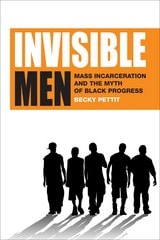
Invisible Men
Mass Incarceration and the Myth of Black ProgressBecky Pettit
Russell Sage Foundation, 2012
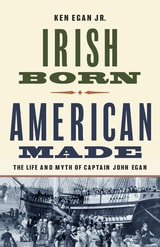
Irish Born, American Made
The Life and Myth of Captain John EganKen Egan Jr.
University of Wisconsin Press, 2026
Born to poverty in the Irish county of Tipperary, John Egan participated in some of the most dramatic events of the nineteenth century, including mass migration to the United States during a catastrophic famine, the “opening” of Japan via gunboat diplomacy, Sherman’s March to the Sea, and homesteading in the Upper Midwest. In Irish Born, American Made, his great-grandson examines the processes by which a scorned British subject became a proud American citizen.
Although Egan’s life was filled with epic drama, the author does not shy away from unsavory truths, such as his ancestor’s doubts about the virtues of abolition or his enthusiastic participation in settling land appropriated from Indigenous peoples. Equally, Egan recognizes the real hardships his ancestor faced in assimilating to American society, from the prejudices of the ascendant Know-Nothing movement to the condescending caricatures of Irish soldiers by his Union compatriots during and after the Civil War. The result is both a moving reminder of the hardships of immigration and a timely reckoning with the imperfections of our forebears.