Results by title
76 books match the query 'Narrative' and 4 start with i
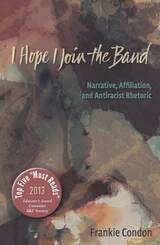
I Hope I Join the Band
Narrative, Affiliation, and Antiraciset RhetoricFrankie Condon
Utah State University Press, 2012
"Both from the Right and from the Left, we are stymied in talking well with one another about race and racism, by intransigent beliefs in our own goodness as well as by our conviction that such talk is useless. . . . White antiracist epistemology needs to begin not with our beliefs, but with our individual and collective awakening to that which we do not know."
Drawing on scholarship across disciplines ranging from writing and rhetoric studies to critical race theory to philosophy, I Hope I Join the Band examines the limits and the possibilities for performative engagement in antiracist activism. Focusing particularly on the challenges posed by raced-white identity to performativity, and moving between narrative and theoretical engagement, thebook names and argues for critical shifts in the understandings and rhetorical practices that attend antiracist activism.
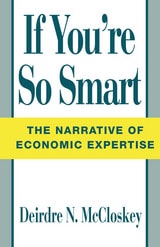
If You're So Smart
The Narrative of Economic ExpertiseDeirdre Nansen McCloskey
University of Chicago Press, 1990
"Writing with delicious wit and great seriousness."—Publishers Weekly. "
"McCloskey is more interesting on an uninspired day than most of her peers can manage at their very best."—Peter Passell, New York Times
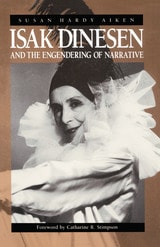
Isak Dinesen and the Engendering of Narrative
Susan Hardy Aiken
University of Chicago Press, 1990
In a series of readings that range across Dinesen's career, Aiken demonstrates that Dinesen persistently asserted the inseparability of gender and the engendering of narrative. She argues that Dinesen's texts anticipate in remarkable ways some of the most radical insights of contemporary literary theories, particularly those of French feminist criticism. Aiken also offers a major rereading of Out of Africa that both addresses its distinctiveness as a colonialist text and places it within Dinesen's larger oeuvre.
In Aiken's account, Dinesen's work emerges as a compelling inquiry into sexual difference and the ways it informs culture, subjectivity, and the language that is their medium. This important book will at last give Isak Dinesen's work the prominence it deserves in literary studies.
Italian Signs, American Streets
The Evolution of Italian American NarrativeFred L. Gardaphé
Duke University Press, 1996
Gardaphé draws on Vico’s concept of history, as well as the work of Gramsci, to establish a culture-specific approach to reading Italian American literature. He begins his historical reading with narratives informed by oral traditions, primarily autobiography and autobiographical fiction written by immigrants. From these earliest social–realist narratives, Gardaphé traces the evolution of this literature through tales of “the godfather” and the mafia; the “reinvention of ethnicity” in works by Helen Barolini, Tina DeRosa, and Carole Maso; the move beyond ethnicity in fiction by Don DeLillo and Gilbert Sorrentino; to the short fiction of Mary Caponegro, which points to a new direction in Italian American writing.
The result is both an ethnography of Italian American narrative and a model for reading the signs that mark the “self-fashioning” inherent in literary and cultural production. Italian Signs, American Streets promises to become a landmark in the understanding of literature and culture produced by Italian Americans. It will be of interest not only to students, critics, and scholars of this ethnic experience, but also to those concerned with American literature in general and the place of immigrant and ethnic literatures within that wide framework.