Results by title
99 books match the query 'National' and 4 start with i
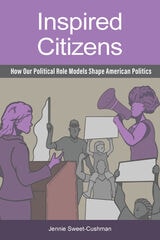
Inspired Citizens
How Our Political Role Models Shape American PoliticsJennie Sweet-Cushman
Temple University Press, 2024
Sweet-Cushman develops Inspired Citizenship Theory to show that political role models can have motivating effects on one’s political citizenship and may, in some case, insulate those who have been traditionally marginalized in American politics. Moreover, she asserts that citizens who have political role models possess very different political behaviors and attitudes than those who do not.
Inspired Citizens also considers the often-conflicting pressures and messages political role models project to citizens. Sweet-Cushman posits that role models inspire political action most effectively when they fulfill highly individualized expectations for role model identity, spurring deeper connection and a desire to emulate.
Inspired Citizens strengthens our understanding of what we should (and should not) look to political figures for in guiding democratic behaviors and inspiring productive citizenship.
Insuring Inequality
Administrative Leadership in Social Security, 1935-54Jerry R. Cates
University of Michigan Press, 1983
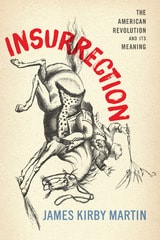
Insurrection
The American Revolution and Its MeaningJames Kirby Martin
Westholme Publishing, 2019
The Revolutionary generation believed they were living in dangerous, turbulent times. Their uprising against British imperial authority beginning in the 1760s represented an attempt to preserve their liberties in the face of what they perceived as a conspiracy from above, ultimately brought on by a tyrannical king and Parliament. The actual number of insurgents—we call them rebels or patriots—represented no more than 20 to 25 percent of the populace. Approximately the same number of persons refused to renounce their loyalty to the British Crown; and thousands of them joined British arms to crush the patriot insurrection. Not committed to supporting either side were large numbers of neutrals whose allegiance varied with their proximity to competing military forces. Once independence was secured, however, a great shift occurred. Some key Revolutionary leaders began to worry that the common people, if given too much political authority, would produce agitation from below that could destroy the delicate fabric of the newly established republic. Reckoning with this social and political disorder resulted in a series of constitutional settlements. What emerged was a more democratic system of government operating, at least theoretically, in the name of a sovereign people who had replaced the king and Parliament.
In Insurrection: The American Revolution and Its Meaning, award-winning historian James Kirby Martin discusses the causes, course, and consequences of the War for Independence. While interpretations of the Revolution and its short- and long-term meaning abound, Martin emphasizes that the insurrection against British monarchism led to more profound changes in human institutions and ideals than many of the Revolutionary leaders actually envisioned or wanted. Once unleashed, the genie of greater freedom and liberty for all could not be forced back into the bottle, no matter how much some persons would have desired.

Iranian Cinema and Globalization
National, Transnational, and Islamic DimensionsShahab Esfandiary
Intellect Books, 2012
Despite critical acclaim and a recent surge of popularity with Western audiences, Iranian cinema has been the subject of lamentably few academic studies—and those have by and large been limited to the films and filmmakers most visible on the international film circuit. Iranian Cinema and Globalization seeks to broaden readers’ exposure to other dimensions of Iranian cinema, including the works of the many prolific filmmakers whose films have received little outside attention despite being widely popular within Iran. Combining theories of globalization and national cinema with in-depth, interdisciplinary analyses of individual films, this volume expands the current literature on Iranian cinema with insights into the social, and religious political contexts involved.