Results by title
344 books match the query 'Nationalism' and 24 start with i

Identity and the Failure of America
From Thomas Jefferson to the War on TerrorJohn Michael
University of Minnesota Press, 2008
From Thomas Jefferson to John Rawls, justice has been at the center of America’s self-image and national creed. At the same time, for many of its peoples-from African slaves and European immigrants to women and the poor-the American experience has been defined by injustice: oppression, disenfranchisement, violence, and prejudice.
In Identity and the Failure of America, John Michael explores the contradictions between a mythic national identity promising justice to all and the realities of a divided, hierarchical, and frequently iniquitous history and social order. Through a series of insightful readings, Michael analyzes such cultural moments as the epic dramatization of the tension between individual ambition and communal complicity in Moby-Dick, attempts to effect social change through sympathy in the novels of Lydia Marie Child and Harriet Beecher Stowe, Ralph Waldo Emerson’s antislavery activism and Frederick Douglass’s long fight for racial equity, and the divisive figures of John Brown and Nat Turner in American letters and memory.
Focusing on exemplary instances when the nature of the United States as an essentially conflicted nation turned to force, Michael ultimately posits the development of a more cosmopolitan American identity, one that is more fully and justly imagined in response to the nation’s ethical failings at home and abroad.
John Michael is professor of English and of visual and cultural studies at the University of Rochester. He is the author of Anxious Intellects: Academic Professionals, Public Intellectuals, and Enlightenment Values and Emerson and Skepticism: The Cipher of the World.
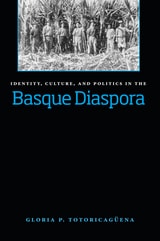
Identity, Culture, And Politics In The Basque Diaspora
Gloria Pilar Totoricagüena
University of Nevada Press, 2015
Totoricagüena offers a superb quantitative study of an aspect of Basque culture that has been largely ignored by scholars—the diaspora. In doing so, she enlarges the understanding of cultural identity in general—how it is defined and preserved, how it evolves over time, and how both the politics of distant places and the most intimate family habits can shape an individual’s sense of self. Identity, Culture, and Politics in the Basque Diaspora is a major contribution to the knowledge of Basques and their persistent political and cultural traditions.
Ideologies and National Identities
The Case of Twentieth-Century Southeastern EuropeMark Mazower
Central European University Press, 2004

Illiberal Vanguard
Populist Elitism in the United States and RussiaAlexandar Mihailovic
University of Wisconsin Press, 2023
Mihailovic investigates notable right-wing actors like Steve Bannon and Alexander Dugin and targets of right-wing ire such as globalization, LGBTQ+ activism, and mobilizations to remove controversial statues (that honor Confederate generals and Soviet leaders, for instance), but the argument extends beyond the specifics. How and why are radical right-wing movements developing along such similar trajectories in two nominally oppositional countries? How do religious sectarianism, the construction of whiteness, and institutionalized homophobia support each other in this transnational, informal, but powerful allegiance? Despite their appeals to populism and flamboyant theatrics, Mihailovic argues, much of the answer can be found in the mutual desire to justify and organize an illiberal vanguard of elite intellectuals, one that supports and advocates for a new authoritarianism.
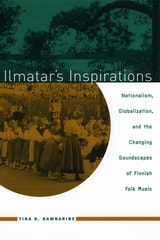
Ilmatar's Inspirations
Nationalism, Globalization, and the Changing Soundscapes of Finnish Folk MusicTina K. Ramnarine
University of Chicago Press, 2003
Kalevala (the Finnish national epic). In Ilmatar's Inspirations, Tina K. Ramnarine explores creative processes and the critical role that music has played in Finnish nationalism by focusing on Finnish "new folk music" in the shifting spaces between the national imagination and the global marketplace.
Through extensive interviews and observations of performances, Ramnarine reveals how new folk musicians think and talk about past and present folk music practices, the role of folk music in the representation of national identity, and the interactions of Finnish folk musicians with performers from around the globe. She focuses especially on two internationally successful groups—JPP, a group that plays fiddle dance music, and Värttinä, an ensemble that highlights women's vocal traditions. Analyzing the multilayered processes—musical, institutional, political, and commercial—that have shaped and are shaped by new folk music in Finland, Ramnarine gives us an entirely new understanding of the connections between music, place, and identity.

Imagined Empires
Tracing Imperial Nationalism in Eastern and Southeastern EuropeDimitris Stamatopoulos
Central European University Press, 2021
The Balkans offer classic examples of how empires imagine they can transform themselves into national states (Ottomanism) and how nation-states project themselves into future empires (as with the Greek “Great Idea” and the Serbian “Načertaniye”). By examining the interaction between these two aspirations this volume sheds light on the ideological prerequisites for the emergence of Balkan nationalisms.
With a balance between historical and literary contributions, the focus is on the ideological hybridity of the new national identities and on the effects of “imperial nationalisms” on the emerging Balkan nationalisms. The authors of the twelve essays reveal the relation between empire and nation-state, proceeding from the observation that many of the new nation-states acquired some imperial features and behaved as empires. This original and stimulating approach reveals the imperialistic nature of so-called ethnic or cultural nationalism.

Imagined States
Nationalism, Utopia, and Longing in Oral Culturesedited by Luisa Del Giudice & Gerald Porter
Utah State University Press, 2003

Imagining China
Rhetorics of Nationalism in an Age of GlobalizationStephen J. Hartnett
Michigan State University Press, 2017
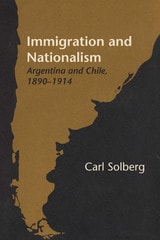
Immigration and Nationalism
Argentina and Chile, 1890–1914By Carl Solberg
University of Texas Press, 1970
“Dirtier than the dogs of Constantinople.” “Waves of human scum thrown upon our beaches by other countries.” Such was the vitriolic abuse directed against immigrant groups in Chile and Argentina early in the twentieth century. Yet only twenty-five years earlier, immigrants had encountered a warm welcome. This dramatic change in attitudes during the quarter century preceding World War I is the subject of Carl Solberg’s study. He examines in detail the responses of native-born writers and politicians to immigration, pointing out both the similarities and the significant differences between the situations in Argentina and Chile.
As attitudes toward immigration became increasingly nationalistic, the European was no longer pictured as a thrifty, industrious farmer or as an intellectual of superior taste and learning. Instead, the newcomer commonly was regarded as a subversive element, out to destroy traditional creole social and cultural values. Cultural phenomena as diverse as the emergence of the tango and the supposed corruption of the Spanish language were attributed to the demoralizing effects of immigration.
Drawing his material primarily from writers of the pre–World War I period, Solberg documents the rise of certain forms of nationalism in Argentina and Chile by examining the contemporary press, journals, literature, and drama. The conclusions that emerge from this study also have obvious application to the situation in other countries struggling with the problems of assimilating minority groups.

Imperial Material
National Symbols in the US Colonial EmpireAlvita Akiboh
University of Chicago Press, 2023
In Imperial Material, Alvita Akiboh reveals how US national identity has been created, challenged, and transformed through embodiments of empire found in US territories, from the US dollar bill to the fifty-star flag. These symbolic objects encode the relationships between territories—including the Philippines, the Hawaiian Islands, Puerto Rico, and Guam—and the empire with which they have been entangled. Akiboh shows how such items became objects of local power, their original intent transmogrified. For even if imperial territories were not always front and center for federal lawmakers and administrators, their inhabitants remained continuously aware of the imperial United States, whose presence announced itself on every bit of currency, every stamp, and the local flag.

Imperial Rule
Alfred J. Rieber
Central European University Press, 2004

Imperialist Imagination
German Colonialism and Its LegacySara Friedrichsmeyer, Sara Lennox, and Susanne Zantop, Editors
University of Michigan Press, 1998
In Search of a Nation
Histories of Authority & Dissidence in TanzaniaGregory H. Maddox
Ohio University Press, 2005

In the House of the Hangman
The Agonies of German Defeat, 1943-1949Jeffrey K. Olick
University of Chicago Press, 2005
In the House of the Hangman chronicles this delicate process, exploring key debates about the Nazi past and German future during the later years of World War II and its aftermath. What did British and American leaders think had given rise to National Socialism, and how did these beliefs shape their intentions for occupation? What rhetorical and symbolic tools did Germans develop for handling the insidious legacy of Nazism? Considering these and other questions, Jeffrey K. Olick explores the processes of accommodation and rejection that Allied plans for a new German state inspired among the German intelligentsia. He also examines heated struggles over the value of Germany's institutional and political heritage. Along the way, he demonstrates how the moral and political vocabulary for coming to terms with National Socialism in Germany has been of enduring significance—as a crucible not only of German identity but also of contemporary thinking about memory and social justice more generally.
Given the current war in Iraq, the issues contested during Germany's abjection and reinvention—how to treat a defeated enemy, how to place episodes within wider historical trajectories, how to distinguish varieties of victimhood—are as urgent today as they were sixty years ago, and In the House of the Hangman offers readers an invaluable historical perspective on these critical questions.

In the Name of Women's Rights
The Rise of FemonationalismSara R. Farris
Duke University Press, 2017

Indian Nation
Native American Literature and Nineteenth-Century NationalismsCheryl Walker
Duke University Press, 1997
Walker examines the rhetoric and writings of nineteenth-century Native Americans, including William Apess, Black Hawk, George Copway, John Rollin Ridge, and Sarah Winnemucca. Demonstrating with unique detail how these authors worked to transform venerable myths and icons of American identity, Indian Nation chronicles Native American participation in the forming of an American nationalism in both published texts and speeches that were delivered throughout the United States. Pottawattomie Chief Simon Pokagon’s "The Red Man’s Rebuke," an important document of Indian oratory, is published here in its entirety for the first time since 1893.
By looking at this writing through the lens of the best theoretical work on nationality, postcoloniality, and the subaltern, Walker creates a new and encompassing picture of the relationship between Native Americans and whites. She shows that, contrary to previous studies, America in the nineteenth century was intercultural in significant ways.

Intellectuals and the Articulation of the Nation
Ronald Grigor Suny and Michael D. Kennedy, Editors
University of Michigan Press, 1999
What kinds of intellectual practices are influential in the making and remaking of nations? How do literary texts shape nation-making? When are intellectuals most and least relevant to developing the nation? How do liberal, socialist, and nationalist intellectuals shape national ideologies? One of the principal debates in the study of nations concerns the relative significance of elites, specifically intellectuals, in inventing the nation. Intellectuals and the Articulation of the Nation delimits the capacities of intellectuals for shaping nations, as well as the ways in which the development of nations shapes intellectual practices. The introductory chapter presents the principal debates around nation-making and the identity and practices of intellectuals. Contributors from anthropology, history, literature, political science and sociology then explore the capacities and limits of intellectuals in the formation and restructuring of national identities in general, and in Eastern Europe and the former Soviet Union in particular. Each essay is followed by a brief intellectual autobiography in which the author's own relationship to nations is explored. The editors conclude the volume by developing a general theory of national intellectual practice. The principal focus of this book—the mutual articulation of intellectuals and nations—is a key subject for students and scholars of history, cultural studies, political science, anthropology, and sociology.
Internationalism and Its Betrayal
Micheline R. IshayForeword by Craig Calhoun
University of Minnesota Press, 1995
Internationalism and Its Betrayal was first published in 1995. Minnesota Archive Editions uses digital technology to make long-unavailable books once again accessible, and are published unaltered from the original University of Minnesota Press editions.
A new world order, proclaimed Western leaders after the cold war, could extend liberal democracy and human rights around the globe. Yet the specter of nationalism once again haunts the world, threatening to extinguish the spirit of internationalism.
Although internationalism is typically understood to be diametrically opposed to nationalism, Micheline Ishay argues to the contrary, maintaining that internationalism often incorporates an individualist element that manifests itself as nationalism during critical periods such as war. For example, the new liberal internationalism invoked after the cold war is now revealing its limits-as reflected by the UN's inability to interfere promptly to stop ethnic and nationalist conflicts in Bosnia, Rwanda, and elsewhere.
Internationalism and Its Betrayal explores the tensions and contradictions between ideas of nationalism and internationalism, focusing on the major political thinkers from the early modern period into the nineteenth century. Ishay examines the writings of Vico, Grotius, Rousseau, Kant, Paine, Robespierre, Burke, Fichte, de Maistre, and Hegel. She speaks to an audience of individuals interested in the spread of democracy, students of human rights and international relations, historians of the French Revolution, and political theorists.

Interrogating Integration
Sport, Celebrity, and Scandal in the Making of New GermanyKate Zambon
University of Michigan Press, 2025
Using touchstones of public memory, including events surrounding men’s World Cup soccer and the record-breaking success of a book blaming Muslims for Germany’s decline, Zambon examines persistent problems in European conceptions of race, where racializing projects take place under an “ideology of racelessness” and the atrocities of historical and transnational racisms are used to deny current local forms of racism.

Is It Nation Time?
Contemporary Essays on Black Power and Black NationalismEdited by Eddie S. Glaude Jr.
University of Chicago Press, 2002
Is It Nation Time? gathers new and classic essays on the Black Power movement and its legacy by renowned thinkers who deal rigorously and unsentimentally with such issues as the commodification of blackness, the piety of cultural recovery, and class tensions within the movement. For anyone who wants to understand the roots of the complex political and cultural desires of contemporary black America, this will be an essential collection.
Contributors:
Eddie S. Glaude Jr.
Farah Jasmine Griffin
Phillip Brian Harper
Gerald Horne
Robin D. G. Kelley
Wahneema Lubiano
Adolph Reed Jr.
Jeffrey Stout
Will Walker
S. Craig Watkins
Cornel West
E. Francis White
Islam, Nationalism and Democracy
a Political Biography of Mohammad NatsirAudrey R. Kahin
National University of Singapore Press, 2012

Islamic Modernism, Nationalism, and Fundamentalism
Episode and DiscourseMansoor Moaddel
University of Chicago Press, 2005
An ambitious comparative historical analysis of ideological production in the Islamic world from the mid-1800s to the present, Mansoor Moaddel's Islamic Modernism, Nationalism, and Fundamentalism provides a unique perspective for understanding the social conditions of these discourses. Moaddel characterizes these movements in terms of a sequence of cultural episodes characterized by ideological debates and religious disputations, each ending with a revolution or military coup. Understanding how the leaders of these movements formulated their discourses is, for Moaddel, the key to understanding Middle Eastern history. This premise allows him to unlock for readers the historical process that started with Islamic modernism and ended with fundamentalism.
It Will Be Fun and Terrifying
Nationalism and Protest in Post-Soviet RussiaFabrizio Fenghi
University of Wisconsin Press, 2021
To illuminate the role of these right-wing ideas in contemporary Russian society, Fabrizio Fenghi examines the public pronouncements and aesthetics of this influential movement. He analyzes a diverse range of media, including novels, art exhibitions, performances, seminars, punk rock concerts, and even protest actions. His interviews with key figures reveal an attempt to create an alternative intellectual class, or a “counter-intelligensia.” This volume shows how certain forms of art can transform into political action through the creation of new languages, institutions, and modes of collective participation.
Italian Workers of the World
Labor Migration and the Formation of Multiethnic StatesEdited by Donna R. Gabaccia and Fraser M. Ottanelli
University of Illinois Press, 2001
In Italian Workers of the World, a distinguished roster of contributors examines how the reception of immigrants in their new countries shaped their sense of national identity and shaped the multiethnic states where they settled. Argentina and Brazil welcomed Italian migrants as a civilizing influence, and these immigrant workers played an instrumental part in establishing and leading movements committed to labor internationalism. In the United States, by contrast, the American Federation of Labor's hostility to socialism, internationalism, and unskilled laborers fueled distrust and xenophobia that steered Italian immigrants into ethnically mixed unions like radical Industrial Workers of the World. Essays also focus on specific topics ranging from the work of republican Garibaldians in South America to antifascist currents among Italian migrants in France and the United States, and from a 1912 textile strike in Lawrence, Massachusetts, to Mussolini's invasion of Ethiopia.
Contributors: Antonio Bechelloni, Fernando J. Devoto, Pietro Rinaldo Fanesi, Donna R. Gabaccia, Mirta Zaida Lobato, Fraser M. Ottanelli, Carina Frid de Silberstein, Michael Miller Topp, Angelo Trento, Nadia Venturini, and Elisabetta Vezzosi