Results by title
129 books match the query 'Natural resources' and 6 start with i

In Our Backyard
Keeyask and the Legacy of Hydroelectric DevelopmentAimée Craft
University of Manitoba Press, 2022
Indian Water in the New West
Thomas R. McGuire
University of Arizona Press, 1993
Indians, Fire, and the Land in the Pacific Northwest
Robert Boyd
Oregon State University Press, 2021
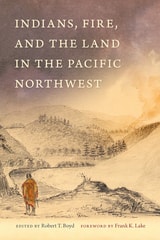
Instead of discovering a land blanketed by dense forests, early explorers of the Pacific Northwest encountered a varied landscape including open woods, meadows, and prairies. Far from a pristine wilderness, much of the Northwest was actively managed and shaped by the hands of its Native American inhabitants. Their primary tool was fire.
This volume takes an interdisciplinary approach to one of the most important issues concerning Native Americans and their relationship to the land. Over more than 10,000 years, Native Americans in the Northwest learned the intricacies of their local environments and how to use fire to create desired effects, mostly in the quest for food.
Drawing on historical journals, Native American informants, and ethnobotanical and forestry studies, this book’s contributors describe local patterns of fire use in eight ecoregions, representing all parts of the Native Northwest, from southwest Oregon to British Columbia and from Puget Sound to the Northern Rockies. Their essays provide glimpses into a unique understanding of the environment, one that draws on traditional ecological knowledge. Together, these writings also offer historical perspective on the contemporary debate over “prescribed burning” and management of public lands.
This updated edition includes a foreword by Frank K. Lake and a new epilogue by editor Robert T. Boyd. Contributors include Stephen Arno, Stephen Barrett, Theresa Ferguson, David French, Eugene Hunn, Leslie Johnson, Jeff LaLande, Estella Leopold, Henry Lewis, Helen H. Norton, Reg Pullen, William Robbins, John Ross, Nancy Turner, and Richard White.
Invasion of Indian Country in the Twentieth Century
American Capitalism and Tribal Natural ResourcesDonald Fixico
University Press of Colorado, 1998
In The Invasion of Indian Country in the 20th Century, Donald Fixico details the course of this struggle, providing a wealth of information on the resources possessed by individual tribes and the way in which they were systematically defrauded and stripped of these resources. Fixico contends that federal policies originally devised to protect Indian interests ironically worked against the Indian nations as the tribes employed new tactics with the Council of Energy Resources Tribes, using the law in courts and applying aggressive business leadership to combat the capitalist invasion by mainstream America.
Fixico's analysis of this war being waged throughout the century and today serves as an indispensable reference tool for anyone interested in Native American history and current government policy with regard to Indian lands.
Invasion of Indian Country in the Twentieth Century
American Capitalism and Tribal Natural Resources, Second EditionDonald Fixico
University Press of Colorado, 2012

It's All for Sale
The Control of Global ResourcesJames Ridgeway
Duke University Press, 2004
Revealing the surprisingly small number of companies that control many of the basic commodities we use in everyday life, It’s All for Sale confirms in specific detail that globalization has been accompanied by an extraordinary concentration of ownership. At the same time, it is about much more than what company has cornered the market in corn or diamonds. Corporations and captains of industry, wars and swindles, oppressors and the oppressed, empires and colonies, military might and commercial power, economic boom and bust—all these come alive in Ridgeway’s canny and arresting reporting about the global scramble for power and profit. It’s All for Sale is an invaluable source for researchers, activists, and all those concerned with globalization, corporate power, and the exploitation of individuals and the environment.