Results by title
65 books match the query 'Netherlands' and 2 start with i
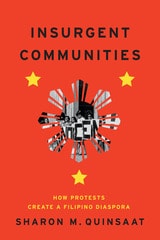
Insurgent Communities
How Protests Create a Filipino DiasporaSharon M. Quinsaat
University of Chicago Press, 2024
Sociologist Sharon M. Quinsaat sheds new light on the formation of diasporic connections through transnational protests.
When people migrate and settle in other countries, do they automatically form a diaspora? In Insurgent Communities, Sharon M. Quinsaat explains the dynamic process through which a diaspora is strategically constructed. Quinsaat looks to Filipinos in the United States and the Netherlands—examining their resistance against the dictatorship of Ferdinand Marcos, their mobilization for migrants’ rights, and the construction of a collective memory of the Marcos regime—to argue that diasporas emerge through political activism. Social movements provide an essential space for addressing migrants’ diverse experiences and relationships with their homeland and its history. A significant contribution to the interdisciplinary field of migration and social movements studies, Insurgent Communities illuminates how people develop collective identities in times of social upheaval.
When people migrate and settle in other countries, do they automatically form a diaspora? In Insurgent Communities, Sharon M. Quinsaat explains the dynamic process through which a diaspora is strategically constructed. Quinsaat looks to Filipinos in the United States and the Netherlands—examining their resistance against the dictatorship of Ferdinand Marcos, their mobilization for migrants’ rights, and the construction of a collective memory of the Marcos regime—to argue that diasporas emerge through political activism. Social movements provide an essential space for addressing migrants’ diverse experiences and relationships with their homeland and its history. A significant contribution to the interdisciplinary field of migration and social movements studies, Insurgent Communities illuminates how people develop collective identities in times of social upheaval.
[more]
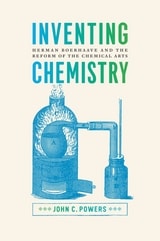
Inventing Chemistry
Herman Boerhaave and the Reform of the Chemical ArtsJohn C. Powers
University of Chicago Press, 2012
In Inventing Chemistry, historian John C. Powers turns his attention to Herman Boerhaave (1668–1738), a Dutch medical and chemical professor whose work reached a wide, educated audience and became the template for chemical knowledge in the eighteenth century. The primary focus of this study is Boerhaave’s educational philosophy, and Powers traces its development from Boerhaave’s early days as a student in Leiden through his publication of the Elementa chemiae in 1732. Powers reveals how Boerhaave restructured and reinterpreted various practices from diverse chemical traditions (including craft chemistry, Paracelsian medical chemistry, and alchemy), shaping them into a chemical course that conformed to the pedagogical and philosophical norms of Leiden University’s medical faculty. In doing so, Boerhaave gave his chemistry a coherent organizational structure and philosophical foundation and thus transformed an artisanal practice into an academic discipline. Inventing Chemistry is essential reading for historians of chemistry, medicine, and academic life.
[more]