Results by title
94 books match the query 'New' and 7 start with i
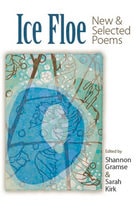
Ice Floe
New & Selected PoemsEdited by Shannon Gramse and Sarah Kirk
University of Alaska Press, 2010
Ice Floe, the celebrated and award-winning journal of circumpolar poetry, is here reborn as an annual book series. This first volume features the best of the journal's first seven years, along with evocative new poetry from Alaska, Canada, Iceland, Norway, Sweden, Finland, and Russia. All work is presented in both its original language and in English translation. With contributors including former Alaska poet laureate John Haines, Gunnar Harding, Robert Bly, Lennart Sjögren, and dozens of other established and emerging poets, this wonderful collection of voices from the northern latitudes is a great read for all lovers of poetry and international literature.

Images of Kin
NEW AND SELECTED POEMSMichael S. Harper
University of Illinois Press, 1977
"It is Mr. Harper's achievement to have projected his most difficult and complex insights and feelings through the epical manner, yet at the same time carried us along to identify with him." -- New York Times Book Review
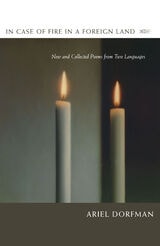
In Case of Fire in a Foreign Land
New and Collected Poems from Two LanguagesAriel Dorfman
Duke University Press, 2002
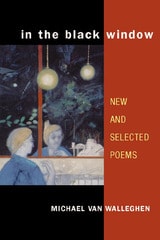
In the Black Window
NEW AND SELECTED POEMSMichael Van Walleghen
University of Illinois Press, 2004
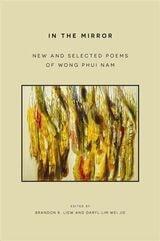
In the Mirror
New and Selected Poems of Wong Phui NamWong Phui Nam
National University of Singapore Press, 2025
The poetry of Wong Phui Nam is foundational to Malaysian literature in English. While his early work is often cited in this regard, this edited collection of his poetry and critical essays makes it clear that his lifelong trajectory as a poet and critic is of deep interest. In the Mirror by Wong Phui Nam is a critical exploration of Malaysia's fractured post-colonial identity and literary landscapes.
Like many of his English-speaking peers at the University of Malaya, by the 1960s, Wong became disillusioned with the stark contradictions of writing in a colonial language while striving to build or maintain a national literary tradition. In 1969, when Malaysia's national cultural policy firmly emphasized the primacy of the Bahasa Malaysian language over English, Wong proclaimed, "I no longer wanted to write, at least not in a language I was told was a colonial leftover."
Over the years, however, he returned to poetry in English, often publishing privately. He came to believe that English was the language “most capable of representing our predicament,” given the spiritual and cultural vacuums left by colonialism's great ruptures in the region, and the ongoing neocolonial structure of the state and economy. His work challenges the reader to confront the realities of cultural displacement and the complexities of a multi-ethnic society grappling with its past and future.
This collection includes both recent works as well as some of his earlier achievements, starting with How the Hills are Distant, and also includes a foreword linking Wong's work with contemporary literary work in the region. An afterword by Wong's contemporary, Singaporean literary pioneer Edwin Thumboo, completes the volume.
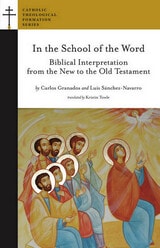
In the School of the Word
Biblical Interpretation from the New to the Old TestamentCarlos Granados
Saint Paul Seminary Press, 2021
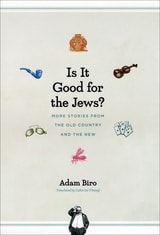
Is It Good for the Jews?
More Stories from the Old Country and the NewAdam Biro
University of Chicago Press, 2009
“Jewish stories,” writes Adam Biro, “resemble every people’s stories.” Yet at the same time there is no better way to understand the soul, history, millennial suffering, or, crucially, the joys of the Jewish people than through such tales—“There’s nothing,” writes Biro, “more revelatory of the Jewish being.”
With Is It Good for the Jews? Biro offers a sequel to his acclaimed collection of stories Two Jews on a Train. Through twenty-nine tales—some new, some old, but all finely wrought and rich in humor—Biro spins stories of characters coping with the vicissitudes and reverses of daily life, while simultaneously painting a poignant portrait of a world of unassimilated Jewish life that has largely been lost to the years. From rabbis competing to see who is the most humble, to the father who uses suicide threats to pressure his children into visiting, to three men berated by the Almighty himself for playing poker, Biro populates his stories with memorable characters and absurd—yet familiar—situations, all related with a dry wit and spry prose style redolent of the long tradition of Jewish storytelling.
A collection simultaneously of foibles and fables, adversity and affection, Is It Good for the Jews? reminds us that if in the beginning was the word, then we can surely be forgiven for expecting a punch line to follow one of these days.