Results by title
117 books match the query 'Opera' and 8 start with i
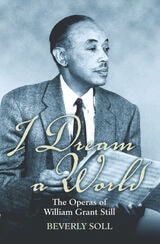
I Dream a World
The Operas of William Grant StillBeverly Soll
University of Arkansas Press, 2005
I masnadieri
Melodramma tragico in Four Parts by Andrea MaffeiGiuseppe Verdi Edited by Roberta Montemorra Marvin
University of Chicago Press, 2000
The critical edition is the first publication of I masnadieri in full score. Based on the composer's autograph and on important secondary sources such as the performing parts mentioned above, this edition provides scholars and performers alike with unequaled means for interpretation and study of one of Verdi's less well known works. The detailed critical commentary discusses problems and ambiguities in the sources, while a wide-ranging introduction to the score traces the opera's genesis, sources, and performance history and practices.
Il Turco in Italia
Dramma buffo in Two Acts by Felice RomaniGioachino Rossini
University of Chicago Press, 1988
Il corsaro
Melodramma tragico in Three Acts, Libretto by Francesco Maria PiaveGiuseppe Verdi Edited by Elizabeth Hudson
University of Chicago Press, 1998
The full score of Il corsaro, published here for the first time, as well as recent revivals based on pre-publication proofs of this critical edition, reveal the work to be far more rewarding than even Verdi himself would later admit. Showing the gradual consolidation of Verdi's mature style through his contacts with French opera, Il corsaro well repays the renewed attention it is receiving.
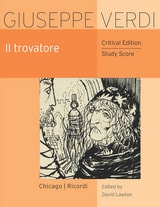
Il trovatore
Critical Edition Study ScoreGiuseppe Verdi
University of Chicago Press, 2016
Based on Verdi’s autograph score and an examination of important secondary sources, including contemporary manuscript copies and performing parts, this edition of Il trovatore identifies and resolves numerous ambiguities of harmony, melodic detail, text, and phrasing that have marred previous scores. Scholars and performers alike will find a wealth of information in the critical apparatus to inform their research and interpretations. The introduction to the score outlines the work’s genesis, sources, and performance history, while the critical commentary discusses all editorial decisions.
Il trovatore
Dramma in Four Parts by Salvadore CammaranoGiuseppe Verdi
University of Chicago Press, 1993
The lengthy introduction to the score discusses the work's genesis, sources, and performance history as well as issues of instrumental and vocal performance practice, production and staging, and problems of notation. As an added feature of the introduction is an original study by Carlos Matteo Mossa of the creation of the libretto, based on the original draft and numerous other autograph documents.
Il viaggio a Reims, ossia L'albergo del giglio d'oro
Dramma giocoso in one act by Luigi BalochiGioachino Rossini
University of Chicago Press, 2000
Rossini permitted only four performances of Viaggio, later reusing half the score for Le Comte Ory. The manuscript sources were presumed lost until part of the autograph was recovered in the 1970s at the Rome Conservatory, while other sources were found in Paris (including original performing parts) and Vienna. The identification of a missing chorus completed the restoration of this magnificent work to the repertory.
Along with the reconstructed score, the critical edition provides historical information about the libretto's relationship to French politics of the era and details on the first production.
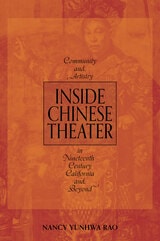
Inside Chinese Theater
Community and Artistry in Nineteenth-Century California and BeyondNancy Yunhwa Rao
University of Illinois Press, 2025
In the mid-nineteenth century, Chinese opera theater arrived as one of the significant performing art forms in California. Nancy Yunhwa Rao excavates and contextualizes the important history of Chinese Opera Theater, bringing to light the ways it became woven into the financial, political, social, and family life in California and beyond.
Chinese opera theater found brick-and-mortar homes with San Francisco theaters like the Hing Chuen Yuen and the Donn Qui Yuen. But troupes had already followed Chinese immigrants to mining and railroad towns, and across the American West. As Chinese theater became part of California and San Francisco culture, popular Chinese actors advocated for their art alongside appeals for civil rights. Rao draws on personal diaries, newspapers and artifacts to place Chinese theater within the everyday lives of San Francisco. She also examines the costumes, singing, staging, and storytelling that impacted mainstream reception and influenced how Chinese communities saw themselves.
Illustrated with seventy photographs, Inside Chinese Theater is an expert and eloquent journey into the early decades of Chinese opera in America.