Results by title
179 books match the query 'Past' and 4 start with i
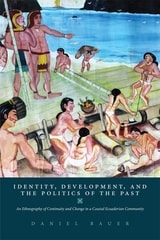
Identity, Development, and the Politics of the Past
An Ethnography of Continuity and Change in a Coastal Ecuadorian CommunityBauer
University Press of Colorado, 2018
Residents in the coastal community of Salango pushed for formal recognition of Indigenous identity while highlighting their pre-Hispanic roots in order to make claims about cultural continuity and ancestrality. Bauer considers the extent to which the politics of identity is embedded in the process of community-based development, paying close attention to how local conceptions of identity and residents’ ideas about their own identity and the identities of others fit within the broader context of Ecuadorian and Latin American notions of mestizaje. He emphasizes ethnogenesis and the fluid nature of identity as residents reference prehistory and the archaeological record as anchor points for claims to an Indigenous ethnic identity.
Identity, Development, and the Politics of the Past moves beyond existing studies that center on questions of authenticity and instead focuses on the ways people make claims to identity. This book makes a significant contribution to the growing body of literature on the Ecuadorian coast and directs scholars who focus on Ecuador to expand their focus beyond the highland and Amazonian regions. It will be of interest to students and scholars of Latin American studies, anthropology, ethnology, economic development, and ethnic identity.
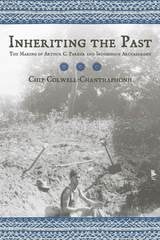
Inheriting the Past
The Making of Arthur C. Parker and Indigenous ArchaeologyChip Colwell-Chanthaphonh
University of Arizona Press, 2009
In Inheriting the Past, Chip Colwell-Chanthaphonh examines Parker’s winding career path and asks why it has taken generations for Native peoples to follow in his footsteps. Closely tracing Parker’s life through extensive archival research, Colwell-Chanthaphonh explores how Parker crafted a professional identity and negotiated dilemmas arising from questions of privilege, ownership, authorship, and public participation. How Parker, as well as the discipline more broadly, chose to address the conflict between Native American rights and the pursuit of scientific discovery ultimately helped form archaeology’s moral community.
Parker’s rise in archaeology just as the field was taking shape demonstrates that Native Americans could have found a place in the scholarly pursuit of the past years ago and altered its trajectory. Instead, it has taken more than a century to articulate the promise of an Indigenous archaeology—an archaeological practice carried out by, for, and with Native peoples. As the current generation of researchers explores new possibilities of inclusiveness, Parker’s struggles and successes serve as a singular reference point to reflect on archaeology’s history and its future.
Interpretations
Reading the Present in Light of the PastJude P. Dougherty
Catholic University of America Press, 2018
The first part of Interpretations is an attempt to understand modernity’s break with the past, the repudiation of Scholasticism and the classical tradition. Dougherty does this by referencing the dominant preoccupations of the Middle Ages, of the Renaissance, of the Reformation, of eighteenth-century British empiricism, and of nineteenth-century German philosophy, drawing upon the readings of Remi Brague, Pierre Manent, and others. What unifies these reflections is the role of religion (both in Christianity and Islam) in society and its impact on the culture, as well as looking at what is called “modernity” where this role becomes reduced or absent.
The second part of the volume examines selected addresses by Pope Emeritus Benedict XVI from a philosophical point of view. Benedict, like others through the course of history, has recognized the role of religion in producing cultural unity. These essays are an appreciation primarily of the subtlety of the former pontiff’s thought.
The third part of Interpretations collects essays and addresses on the practice and nature of philosophy that Dean Dougherty has given throughout his career at The Catholic University of America, and reflects the trajectory of his career and the development of his thought.

Italian Locations
Reinhabiting the Past in Postwar CinemaNoa Steimatsky
University of Minnesota Press, 2008
Fascism and the Second World War left Italy indelibly changed, and cinema was arguably the art that most rigorously confronted the devastated nation. In this examination of four Italian filmmakers, Noa Steimatsky brilliantly maps their forceful negotiation of Italy’s identity and posits that the cinematic forms they employ constitute an imaginary reinhabiting of Italy-one that is inextricably linked with the political, physical, and symbolic predicament of reconstruction.
A dynamic intersection of pictorial and photographic, architectural and literary discourses inform Steimatsky’s revisionist interrogation of exemplary works from the 1940s to the mid–1960s. From the earliest documentary work of Michelangelo Antonioni on the River Po to Pier Paolo Pasolini’s re-siting of the Gospel in the arid, peripheral landscape of the Italian south, and from Roberto Rossellini’s tracing of a neorealist project in ruinous Berlin to Luchino Visconti’s wrought grandeur visited upon a humble Sicilian fishing village, Italian Locations probes the historical experience of displacement, anachronism, and a thoroughly contemporary anxiety in the cinematic arena.
For Steimatsky, Antonioni’s modernist achievement, informed by his native landscape, Rossellini’s neorealist image of Italy as a nation of ruins, Visconti’s reaching back to the nineteenth century and even more archaic pasts, and Pasolini’s ambivalence about modernity-all partake in a search for a politically and culturally redeemed Italy.
Noa Steimatsky is associate professor of the history of art and film studies at Yale University.