Results by title
57 books match the query 'Peasants' and 3 start with i
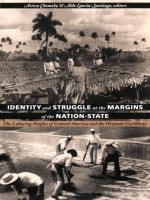
Identity and Struggle at the Margins of the Nation-State
The Laboring Peoples of Central America and the Hispanic CaribbeanAviva Chomsky and Aldo Lauria-Santiago, eds.
Duke University Press, 1998
Responding to the fact that the more common, elite-centered “national” histories distort or erase the importance of gender, race, ethnicity, popular consciousness, and identity, contributors to this volume correct this imbalance by moving these previously overlooked issues to the center of historical research and analysis. In so doing, they describe how these marginalized working peoples of the Hispanic Caribbean Basin managed to remain centered on not only class-based issues but on a sense of community, a desire for dignity, and a struggle for access to resources. Individual essays include discussions of plantation justice in Guatemala, highland Indians in Nicaragua, the effects of foreign corporations in Costa Rica, coffee production in El Salvador, banana workers in Honduras, sexuality and working-class feminism in Puerto Rico, the Cuban sugar industry, agrarian reform in the Dominican Republic, and finally, potential directions for future research and historiography on Central America and the Caribbean.
This collection will have a wide audience among Caribbeanists and Central Americanists, as well as students of gender studies, and labor, social, Latin American, and agrarian history.
Contributors. Patricia Alvarenga, Barry Carr, Julie A. Charlip, Aviva Chomsky, Dario Euraque, Eileen Findlay, Cindy Forster, Jeffrey L. Gould, Lowell Gudmundson, Aldo A. Lauria Santiago, Francisco Scarano, Richard Turits

In the Shadows of State and Capital
The United Fruit Company, Popular Struggle, and Agrarian Restructuring in Ecuador, 1900-1995Steve Striffler
Duke University Press, 2002
In the Shadows of State and Capital tells the story of how Ecuadorian peasants gained, and then lost, control of the banana industry. Providing an ethnographic history of the emergence of subcontracting within Latin American agriculture and of the central role played by class conflict in this process, Steve Striffler looks at the quintessential form of twentieth-century U.S. imperialism in the region—the banana industry and, in particular, the United Fruit Company (Chiquita). He argues that, even within this highly stratified industry, popular struggle has contributed greatly to processes of capitalist transformation and historical change.
Striffler traces the entrance of United Fruit into Ecuador during the 1930s, its worker-induced departure in the 1960s, the troubled process through which contract farming emerged during the last half of the twentieth century, and the continuing struggles of those involved. To explore the influence of both peasant activism and state power on the withdrawal of multinational corporations from banana production, Striffler draws on state and popular archives, United Fruit documents, and extensive oral testimony from workers, peasants, political activists, plantation owners, United Fruit administrators, and state bureaucrats. Through an innovative melding of history and anthropology, he demonstrates that, although peasant-workers helped dismantle the foreign-owned plantation, they were unable to determine the broad contours through which the subsequent system of production—contract farming—emerged and transformed agrarian landscapes throughout Latin America.
By revealing the banana industry’s impact on processes of state formation in Latin America, In the Shadows of State and Capital will interest historians, anthropologists, and political scientists, as well as scholars of globalization and agrarian studies.
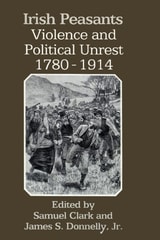
Irish Peasants
Violence and Political Unrest, 1780–1914Samuel Clark
University of Wisconsin Press, 1983
"The strength of this volume cannot be conveyed by an itemisation of its contents; for what it provides is an incisive commentary on the newly-recognised landmarks of Irish agrarian history in the modern period. . . . The importance, even indispensability, of this achievement is compounded by exemplary editing."—Roy Foster, London Times Literary Supplement
"As a whole, the volume demonstrates the wealth, complexity, and sophistication of Irish rural studies. The book is essential reading for anyone involved in modern Irish history. It will also serve as an excellent introduction to this rich field for scholars of other peasant communities and all interested in problems of economic and political developments."—American Historical Review
"A milestone in the evolution of Irish social history. There is a remarkable consistency of style and standard in the essays. . . . This is truly history from the grassroots."—Timothy P. O'Neill, Studia Hibernica