Results by title
117 books match the query 'Philippines' and 5 start with i

Imperial Imaginings
The Dean C. Worcester Photographic Collection of the PhilippinesCarla M Sinopoli
University of Michigan Press, 2021
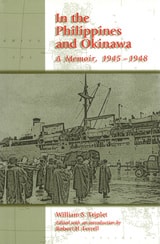
In the Philippines and Okinawa
A Memoir, 1945-1948William S. Triplet & Edited by Robert H. Ferrell
University of Missouri Press, 2001
In the Philippines and Okinawa, the third volume of Colonel William S. Triplet's memoirs, tells of Triplet's experiences during the American occupations in the early years after World War II. Continuing the story from the preceding books of his memoirs, A Youth in the Meuse-Argonne and A Colonel in the Armored Divisions, Triplet takes us to the Philippines, where his duties included rounding up isolated groups of Japanese holdouts, men who refused to believe or admit that their nation had lost the war, and holding them until the time came to transport them back to Japan.
Triplet also had to reorganize his battalions and companies to raise morale, which had plummeted with the end of the war and the seemingly dull tasks of occupation. When he took over his assignment of commanding a regiment in a division, he was dismayed to discover the unmilitary habits of almost everyone, regardless of rank. A strict disciplinarian himself, Colonel Triplet, who had served in both world wars, at one time commanding a four-thousand-man combat group, brought his regiment of garrison troops back into shape in a short time.
Okinawa presented the new challenge of bringing order to an island that had seen the deaths of one hundred thousand civilians. Virtually every building on the island had been leveled, and tens of thousands of Japanese defenders had been killed. Triplet was also obliged to oversee the temporary burial of thirteen thousand U.S. servicemen, both soldiers and sailors.
In the Philippines and Okinawa portrays the ever-changing, very human, and frequently dangerous occupation of two East Asian regions that are still important to American foreign policy. Any reader interested in military history or American history will find this memoir engaging.
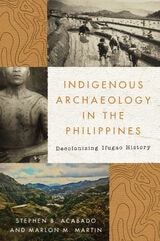
Indigenous Archaeology in the Philippines
Decolonizing Ifugao HistoryStephen B. Acabado and Marlon M. Martin
University of Arizona Press, 2022
Indigenous Archaeology in the Philippines highlights how collaborative archaeology and knowledge co-production among the Ifugao, an Indigenous group in the Philippines, contested (and continue to contest) enduring colonial tropes. Stephen B. Acabado and Marlon M. Martin explain how the Ifugao made decisions that benefited them, including formulating strategies by which they took part in the colonial enterprise, exploiting the colonial economic opportunities to strengthen their sociopolitical organization, and co-opting the new economic system. The archaeological record shows that the Ifugao successfully resisted the Spanish conquest and later accommodated American empire building.
This book illustrates how descendant communities can take control of their history and heritage through active collaboration with archaeologists. Drawing on the Philippine Cordilleran experiences, the authors demonstrate how changing historical narratives help empower peoples who are traditionally ignored in national histories.
Insurgent Communities
How Protests Create a Filipino DiasporaSharon M. Quinsaat
University of Chicago Press, 2024
When people migrate and settle in other countries, do they automatically form a diaspora? In Insurgent Communities, Sharon M. Quinsaat explains the dynamic process through which a diaspora is strategically constructed. Quinsaat looks to Filipinos in the United States and the Netherlands—examining their resistance against the dictatorship of Ferdinand Marcos, their mobilization for migrants’ rights, and the construction of a collective memory of the Marcos regime—to argue that diasporas emerge through political activism. Social movements provide an essential space for addressing migrants’ diverse experiences and relationships with their homeland and its history. A significant contribution to the interdisciplinary field of migration and social movements studies, Insurgent Communities illuminates how people develop collective identities in times of social upheaval.
Investing in the Homeland
Migration, Social Ties, and Foreign FirmsBenjamin A.T. Graham
University of Michigan Press, 2019
Graham’s analysis draws on new data from face-to-face interviews with the managers of over 450 foreign firms operating in two developing countries: Georgia and the Philippines. Diaspora-owned and diaspora-managed firms are better connected than other foreign firms and they use social ties to resolve disputes and influence government policy. At the same time, Graham shows that diaspora-affiliated firms are no more socially responsible than their purely foreign peers—at root, they are profit-seeking enterprises, not development NGOs. Graham identifies implications for policymakers seeking to capture the development potential of diaspora investment and for managers of multinational firms who want to harness diasporans as a source of sustained competitive advantage.