Results by title
572 books match the query 'Photography' and 31 start with i

I Am Alaskan
Brian Adams
University of Alaska Press, 2013
In this full-color tribute, Adams entices us to reconsider our ideas of this unique and compelling land and its equally individual residents. He captures subjects on urban streets and in rural villages, revealing what daily life in Alaska is really like. The portraits focus on moments both ordinary and extraordinary, serious and playful, while capturing Alaskans at their most natural. Subjects range from Alaska Native villagers to rarely seen portraits of famous Alaskans, including Sarah Palin, Vic Fischer, and Lance Mackey. Through photographs, Adams also explores his own half-Iñupiat, half–American Alaska identity in the process, revealing how he came to define himself and the state in which he lives. Frame by frame, Adams powerfully and honestly shows what it means to be an Alaskan.
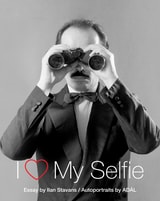
I Love My Selfie
Essay by Ilan Stavans / Auto-Portraits by ADÁL
Duke University Press, 2017
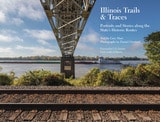
Illinois Trails & Traces
Portraits and Stories along the State’s Historic RoutesText by Gary Marx and photographs by Daniel Overturf, with a foreword by Dick Durbin
Southern Illinois University Press, 2022
FINALIST, 2023 Society of Midland Authors Award in Adult Nonfiction!
Exploring Illinois history through the paths we travel
Illinois Trails & Traces partners the deft writing of Gary Marx with vivid photography by Daniel Overturf to illuminate ever evolving patterns of travel and settlement. Taking the reader on a journey down early buffalo traces and Native American trails, this book shows how these paths evolved into wagon roads and paved highways. Marx and Overturf explore historic routes ranging from Route 66 to the Underground Railroad, all the way back to post-Ice Age animal migration trails followed by Paleo-Indian people. The authors also examine how rivers, canals, and railroads spurred the rapid rise of Illinois as a modern state.
Marx and Overturf bring history into the present by including over forty photographic portraits and written profiles of individuals who live along these routes today. Many of the people you will meet on these pages work to preserve and honor the history of these passages. Others profiled here embody the spirit of the old roads and provide a vivid link between past and present. Through this journey, we discover that we’ve all been traveling the same road all along.
Illuminating the Particular
Photographs of Milwaukee's Polish South SideChristel T. Maass
Wisconsin Historical Society Press, 2003
While Kwasniewski's camera captured the sights and sounds of Milwaukee at the turn of the century from the perspective of a single ethnic group in a single neighborhood, his photographs resonate far beyond Milwaukee's Polish South Side. They illuminate the particulars of American life during the early decades of the twentieth century. "What we see, reflected in the distant mirror," says John Gurda, "is ourselves."

Illuminations
Women Writing on Photography From the 1850s to the PresentLiz Heron and Val Williams, eds.
Duke University Press, 1996
Extraordinarily wide-ranging in its scope, this collection chronicles the role of women in photography as critics, historians, and practitioners. Readers will find Julia Margaret Cameron’s bold description of her photographic method, Rosalind Krauss’s exploration of what the camera means for Surrealism, Margaret Bourke-White and Carol Squiers with differing perspectives on Life magazine, as well as essays by Eudora Welty, Susan Sontag, Lucy Lippard, Berenice Abbott, Dorthea Lange, and many others. Illuminations begins with a short piece on the daguerreotype by Elizabeth Barrett Browning then moves through the avant-garde influence of Dada, Bauhaus, and surrealism, to fashion and portrait photography, continuing with documentary and reportage, the emergence of feminist analysis, and postmodern and postcolonial criticism. Encompassing many varied points of view, this volume offers pieces on individual photographers such as Diane Arbus, Ansel Adams, Barbara Kruger, Edward Weston, and Cindy Sherman along with theoretical work by contemporary writers including Jane Gallop, Coco Fusco, and Laura Mulvey.
An historic anthology, Illuminations shows that women have been writing about photography from its beginnings and have intervened in the key debates of the past century and a half. It will welcomed by those interested in photography, gender studies, and women and the arts.
Contributors. Berenice Abbott, Dawn Ades, Susan H. Aiken, Jan Avgikos, Elizabeth Barrett Browning, Margaret Bourke-White, Deborah Bright, Susan Butler, Julia Margaret Cameron, Cynthia Chris, Louise Dahl-Wolfe, Gen Doy, Olive Edis, Ute Eskildsen, Andrea Fisher, Gisèle Freund, Coco Fusco, Jane Gallop, Nan Goldin, Jewelle Gomez, Jan Zita Grover, Judith Mara Gutman, Maria Morris Hambourg, Liz Heron, Alice Hughes, Karen Knorr, Rosalind Krauss, Annette Kuhn, Dorothea Lange, Therese Lichtenstein, Lucy Lippard, Catherine Lord, Mary Warner Marien, Elizabeth McCausland, Roberta McGrath, Lee Miller, Tina Modotti, Lucia Moholy, Laura Mulvey, Carole Naggar, Nancy Newhall, Amy Rule, Lauren Sedofsky, Ingrid Sischy, Abigail Solomon-Godeau, Susan Sontag, Jo Spence, Carol Squiers, Varvara Stepanova, Anne Tucker, Eudora Welty, Dorothy Wilding, Val Wiliams, Anne-Marie Willis, Madame Yevonde
Image Ethics In The Digital Age
Larry Gross
University of Minnesota Press, 2003
Over the past quarter century, dramatic technological advances in the production, manipulation, and dissemination of images have transformed the practices of journalism, entertainment, and advertising as well as the visual environment itself. From digital retouching to wholesale deception, the media world is now beset by an unprecedented range of moral, ethical, legal, and professional challenges. Image Ethics in the Digital Age brings together leading experts in the fields of journalism, media studies, and law to address these challenges and assess their implications for personal and societal values and behavior.
Among the issues raised are the threat to journalistic integrity posed by visual editing software; the monopolization of image archives by a handful of corporations and its impact on copyright and fair use laws; the instantaneous electronic distribution of images of dubious provenance around the world; the erosion of privacy and civility under the onslaught of sensationalistic twenty-four-hour television news coverage and entertainment programming; and the increasingly widespread use of surveillance cameras in public spaces. This volume of original essays is vital reading for anyone concerned with the influence of the mass media in the digital age.
Contributors: Howard S. Becker; Derek Bousé, Eastern Mediterranean U, Cyprus; Hart Cohen, U of Western Sydney; Jessica M. Fishman; Paul Frosh, Hebrew U of Jerusalem; Faye Ginsburg, New York U; Laura Grindstaff, U of California, Davis; Dianne Hagaman; Sheldon W. Halpern, Ohio State U; Darrell Y. Hamamoto, U of California, Davis; Marguerite Moritz, U of Colorado, Boulder; David D. Perlmutter, Louisiana State U; Dona Schwartz, U of Minnesota; Matthew Soar, Concordia University; Stephen E. Weil, Smithsonian Institution’s Center for Education and Museum Studies.
Image Matters
Archive, Photography, and the African Diaspora in EuropeTina M. Campt
Duke University Press, 2012
Images in Spite of All
Four Photographs from AuschwitzGeorges Didi-Huberman
University of Chicago Press, 2008
Available today because they were smuggled out of the camp and into the hands of Polish resistance fighters, the photographs show a group of naked women being herded into the gas chambers and the cremation of corpses that have just been pulled out. Georges Didi-Huberman’s relentless consideration of these harrowing scenes demonstrates how Holocaust testimony can shift from texts and imaginations to irrefutable images that attempt to speak the unspeakable. Including a powerful response to those who have criticized his interest in these images as voyeuristic, Didi-Huberman’s eloquent reflections constitute an invaluable contribution to debates over the representability of the Holocaust and the status of archival photographs in an image-saturated world.
Images of History
19th and Early 20th Century Latin American Photographs as DocumentsRobert M. Levine
Duke University Press, 1990
Levine has woven together an account of the development of photographic equipment and processes, with the artists and entrepreneurs who actually took the pictures, and places the emergence of photography firmly in the historical context of Latin American societies.
Treating the photographs themselves—some 225 in all—Levine develops criteria for questions we can ask of the photographs in an attempt to extract emotional, psychological, and personal information, as well as the more obvious material evidence. This is an often subjective process, one that can lead to differing results, and observers may well come to conclusions departing radically from those of the author. But this may well be one of the most important functions of an innovative work, the creation of controversy that stimulates forward motion in a discipline.
Imaging Animal Industry
American Meatpacking in Photography and Visual CultureEmily Kathryn Morgan
University of Iowa Press, 2024
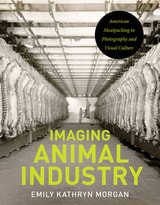
Drawing on archival collections across the American Midwest, this book relates a history of the meatpacking industry’s use of images in the early to mid-twentieth century. In the process, it reveals the key role that images, particularly photographs, have played in assisting with the rise of industrial meat production.
Improbable Libraries
A Visual Journey to the World's Most Unusual LibrariesAlex Johnson
University of Chicago Press, 2015
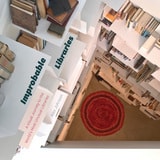
Public libraries are a cornerstone of modern civilization, yet like the books in them, libraries face an uncertain future in an increasingly digital world. Undaunted, librarians around the globe are thinking up astonishing ways of reaching those in reading need, whether by bike in Chicago, boat in Laos, or donkey in Colombia. Improbable Libraries showcases a wide range of unforgettable, never-before-seen images and interviews with librarians who are overcoming geographic, economic, and political difficulties to bring the written word to an eager audience. Alex Johnson charts the changing face of library architecture, as temporary pop-ups rub shoulders with monumental brick-and-mortar structures, and many libraries expand their mission to function as true community centers. To take just one example: the open-air Garden Library in Tel Aviv, located in a park near the city’s main bus station, supports asylum seekers and migrant workers with a stock of 3,500 volumes in sixteen different languages.
Beautifully illustrated with two hundred and fifty color photographs, Improbable Libraries offers a breathtaking tour of the places that bring us together and provide education, entertainment, culture, and so much more. From the rise of the egalitarian Little Free Library movement to the growth in luxury hotel libraries, the communal book revolution means you’ll never be far from the perfect next read.
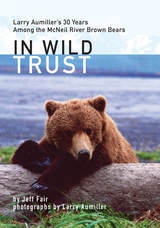
In Wild Trust
Larry Aumiller's Thirty Years Among the McNeil River Brown BearsJeff Fair
University of Alaska Press, 2017
This book celebrates Aumiller’s achievement, telling the story of his decades with the bears alongside his own remarkable photographs. As both professional wildlife managers and ordinary citizens alike continue to struggle to bridge the gap between humans and the wild creatures we’ve driven out, In Wild Trust is an inspiring account of what we can achieve.

In a Rugged Land
Ansel Adams, Dorothea Lange, and the Three Mormon Towns Collaboration, 1953–1954James Swensen
University of Utah Press, 2018
In a Rugged Land examines the history and content of the two photographers’ forgotten collaboration Three Mormon Towns. Looking at Adams’s and Lange’s photographs, extant letters, and personal memories, the book provides a window into an important moment in their careers and seeks to understand why a project that once held such promise ended in disillusionment and is now little more than a footnote in their illustrative biographies. Swensen’s in-depth research and interpretation help make sense of what they did and place them alongside others who were also exploring the particular qualities of the Mormon village at that time.
Winner of the Joan Paterson Kerr Book Award for best illustrated book on the history of the American West from the Western History Association.
Winner of the Best Book Award from the Utah State Historical Society.
Winner of the 15 Bytes Book Award for Art Book.
Honorable mention for Best Book from the Mormon History Association.
Interview with Tom Williams at Access Utah

In the Arms of Saguaros
Iconography of the Giant CactusWilliam L. Bird Jr.
University of Arizona Press, 2023
In the Arms of the Saguaros shows how, from the botanical explorers of the nineteenth century to the tourism boosters in our own time, saguaros and their images have fulfilled attention-getting needs and expectations. Through text and lavish images, this work explores the saguaro’s growth into a western icon from the early days of the American railroad to the years bracketing World War II, when Sun Belt boosterism hit its zenith and proponents of tourism succeed in moving the saguaro to the center of the promotional frame.
This book explores how the growth of tourism brought the saguaro to ever-larger audiences through the proliferation of western-themed imagery on the American roadside. The history of the saguaro’s popular and highly imaginative range points to the current moment in which the saguaro touches us as a global icon in art, fashion, and entertainment.

In the Spirit of Wetlands
Reviving Habitat in the Illinois River WatershedText by Clare Howard. Photographs by David Zalaznik
University of Illinois Press, 2022
An inspiring document of passion and advocacy, In the Spirit of Wetlands reveals the transformative power of restoration.
In the Street
Chalk Drawings and Messages, New York City, 1938-1948Helen Levitt
Duke University Press, 1987
So wrote James Agee in 1939. He shared this fascination with children’s street drawings and messages with his friend Helen Levitt. Here now are over one hundred of her photographs, made in the years between 1938 and 1948. Most of these pictures have never before been published. They have been selected and arranged by the photographer and carefully reproduced.
Robert Coles has written especially for this book an essay on the imaginative live of children and of a time when “. . . children still had some visual independence, some keen-eyed interest in laying pictorial claim to the world around them. . . . I have not seen scenes such as Helen Levitt offers in my wanderings through America’s city streets twenty and thirty and forty years after these were taken. They offer, then, a look backward—though they are also timeless in certain aspects. For children will never really stop being tempted by their imaginative faculties to show and tell—to let others see what they find themselves conceiving in thought and fantasy and dream.”

In/visible War
The Culture of War in Twenty-first-Century AmericaJon Simons and John Louis Lucaites
Rutgers University Press, 2017
Yet, the normalization of twenty-first century war also renders it highly visible. War is made visible through popular, commercial, mediated culture. The spectacle of war occupies the contemporary public sphere in the forms of celebrations at athletic events and in films, video games, and other media, coming together as MIME, the Military-Industrial-Media-Entertainment Network.

InDEBTed to Intervene
Critical Lessons in Debt, Communication, Art, and Theoretical PracticeOliver Vodeb and Nikola Janovic Kolenc
Intellect Books, 2013
Inadvertent Images
A History of Photographic ApparitionsPeter Geimer
University of Chicago Press, 2018

Indianapolis
The Bass Photo Company CollectionSusan Sutton
Indiana Historical Society Press, 2008
Instafame
Graffiti and Street Art in the Instagram EraLachlan MacDowall
Intellect Books, 2019

Instante/revelacion
Moments in Mexican PhotographyJulieta Pestarino
J. Paul Getty Trust, The, 2026
Presenting nearly 150 pictures made between 1920 and 2017, Instante/revelación highlights the work of thirteen renowned photographers who feature prominently in the history of the medium in Mexico, including Lola and Manuel Álvarez Bravo, Graciela Iturbide, and Pablo Ortiz Monasterio.
Through a dynamic selection of images, the publication explores some of the intertwined sociocultural forces that shape life and art in Mexico. Among the photographs are stunning presentations of landscapes, architecture, and flora and fauna from across the country; depictions of daily life; and portraits of esteemed Mexican artists and writers such as Diego Rivera, Frida Kahlo, and Octavio Paz. An illustrated essay examines the significant role photobooks and periodicals played in disseminating these images.
The photographers featured in this volume are linked by friendship, influence, and collaboration. Their works, when viewed together as a collective narrative, reveal the spirit of fruitful exchange that characterizes this exciting chapter in Mexico's photographic history.
This volume is published to accompany an exhibition on view at the J. Paul Getty Museum at the Getty Center from September 1, 2026, to January 3, 2027.

Intimate
An American Family Photo AlbumPaisley Rekdal
Tupelo Press, 2012
Into the Universe of Technical Images
Vilém Flusser
University of Minnesota Press, 2010
Flusser charts how communication evolved from direct interaction with the world to mediation through various technologies. The invention of writing marked one significant shift; the invention of photography marked another, heralding the current age of the technical image. The automation of the processing of technical images carries both promise and threat: the promise of freeing humans to play and invent and the threat for networks of automation to proceed independently of humans.
Inventing Nadar
A History of Photographic FirstsEmily Doucet
Duke University Press, 2025

Iowa's Wild Places
Carl Kurtz
University of Iowa Press, 1996
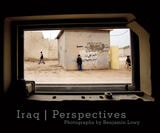
Iraq | Perspectives
Benjamin Lowy
Duke University Press, 2011
The Center for Documentary Studies / Honickman First Book Prize in Photography
Benjamin Lowy’s powerful and arresting color photographs, taken over a six-year period through Humvee windows and military-issue night vision goggles, capture the desolation of a war-ravaged Iraq as well as the tension and anxiety of both U.S. soldiers and Iraqi civilians. To photograph on the streets unprotected was impossible for Lowy, so he made images that illuminate this difficulty by shooting photographs through the windows and goggles meant to help him, and soldiers, to see. In doing so he provides us with a new way of looking at the war—an entirely different framework for regarding and thinking about the everyday activities of Iraqis in a devastated landscape and the movements of soldiers on patrol, as well as the alarm and apprehension of nighttime raids.
“Iraq was a land of blast walls and barbed wire fences. I made my first image of a concrete blast wall through the window of my armored car. These pictures show a fragment of Iraqi daily life taken by a transient passenger in a Humvee; yet they are a window to a world where work, play, tension, grief, survival, and everything in between are as familiar as the events of our own lives. . . . [In] the ‘Nightvision’ images . . . as soldiers weave through the houses and bedrooms of civilians during nighttime military raids, they encounter the faces of their suspects as well as bystanders, many of whom are parents protecting their children. . . . I hope that these images provide the viewer with momentary illumination of the fear and desperation that is war.”—Benjamin Lowy

Irina Baronova and the Ballets Russes de Monte Carlo
Victoria Tennant
University of Chicago Press, 2014
Drawing on letters, correspondence, oral histories, and interviews, Baronova’s daughter, the actress Victoria Tennant, warmly recounts Baronova’s dramatic life, from her earliest aspirations to her grueling time on tour to her later years in Australia as a pioneer of the art. She begins with the Baronov family’s flight from Russia during the Revolution, which led them to Romania and later Paris, where at the age of thirteen, Baronova became a star, chosen by the legendary George Balanchine to join the Ballets Russes, where she danced the lead in Swan Lake. Tennant provides an intimate account of Baronova’s life as a dancer and rare behind-the-scenes stories of life on the road with the stars of the company. Spectacular photographs, a mix of archival images and family snapshots, offer many rare views of rehearsals, costumes, set designs, and the dancers themselves both at their most dazzling and in their most everyday.
The story of Irina Baronova is also the story of the rise of ballet in America thanks to the Ballets Russes, who brought the magisterial beauty and star power of dance to big cities and small towns alike. Irina Baronova and the Ballet Russes de Monte Carlo offers a unique perspective on this history, sure to be treasured by dance patrons and aspiring stars.

It Was Always About the Work
A Photojournalist's MemoirMelvin Grier
Ohio University Press, 2023
Over the last six decades, Melvin Grier’s work has vividly portrayed community, humanity, irony, fear, war, elegance, art, and, most notably, the unexpected. It Was Always About the Work includes nearly one hundred black-and-white and color photographs, including photographs from Grier’s most famous exhibitions and news stories. Whether covering local events, Cincinnati life, impoverished villages overseas, young future Marines on their way to their first post, or high fashion, Grier's photos are unmistakable and evocative.
Starting with his early years as a boy growing up in Cincinnati, this book tells the story of a young man who won his first photo contest while in the Air Force. He came home determined to make a career as a photographer, and, despite his lack of formal training and experience, he secured a job as a photographer for the Cincinnati Post. After the closure of the Cincinnati Post in 2007, Grier continued his career as an independent artist, featuring work in exhibitions such as “White People: A Retrospective” and “Clothes Encounters.” In collaboration with one of his journalist partners, reporter Molly Kavanaugh, Grier shares why it was always about the work.
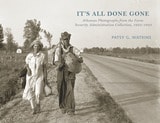
It's All Done Gone
Arkansas Photographs from the Farm Security Administration Collection, 1935-1943Patsy Watkins
University of Arkansas Press, 2018
Of the roughly one thousand FSA photographs taken in Arkansas, approximately two hundred have been selected for inclusion in this volume. Portraying workers picking cotton for five cents an hour, families evicted from homes for their connection with the Southern Tenant Farmers Union, and the effects of flood and drought that cruelly exacerbated the impact of economic disaster, these remarkable black-and-white images from Ben Shahn, Arthur Rothstein, Dorothea Lange, Walker Evans, Russell Lee, and other acclaimed photographers illustrate the extreme hardships that so many Arkansans endured throughout this era.
These powerful photographs continue to resonate, providing a glimpse of life in Arkansas that will captivate readers as they connect to a shared past.

Iznik Ceramics at the Benaki Museum
John Carswell, Mina Moraitou, and Melanie Gibson
Gingko, 2023
The Benaki Museum of Islamic Art in Athens has a substantial collection of Iznik ceramics, intricate works created in the city of Iznik in Asia Minor that are decorated with vibrant colors and designs. Although well known to many who visit the museum, this collection—which includes tableware, tiles, and sherds—has never before been published in its entirety.
Archaeologist, scholar, and curator John Carswell first began studying and cataloging these objects in the 1980s. This project has since been revived and guided to fruition by the curator of the Benaki Museum of Islamic Art, Mina Moraitou, who has also contributed a chapter on the Museum’s founder Antonis Benakis and the formation of its Iznik collection. The catalog brings together these admired and sought-after ceramics, featuring over three hundred illustrations of pieces from the Museum’s collection.