Results by title
314 books match the query 'Plants' and 8 start with i
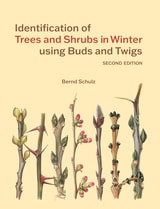
Identification of Trees & Shrubs in Winter Using Buds and Twigs, Second Edition
Bernd Schulz
Royal Botanic Gardens, Kew, 2025
An updated edition of Bernd Schulz’s unrivaled practical guide to identifying trees and shrubs in winter.
This second edition of the essential reference book for plant identification in winter is updated with new illustrations and fully revised text.
To many plant lovers winter seems like lost time, but a glance at the twigs of trees and shrubs shows that this does not need to be the case. In contrast to other life forms, trees and shrubs do not die above ground but enclose their shoots for the next year in buds, presenting many characters which hardly change over time. Using these bud and twig characters, deciduous trees and shrubs can be classified reliably in winter, which is particularly important during planting time.
Comprehensive and easy to use, Identification of Trees & Shrubs in Winter using Buds and Twigs contains over seven hundred species identifiable via their winter buds and twigs. The illustrated identification keys are easy to use, and a summary set of keys is provided as an appendix. Detailed descriptions are accompanied with 1,900 illustrations.
[more]
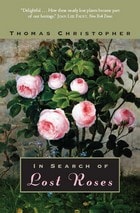
In Search of Lost Roses
Thomas Christopher
University of Chicago Press, 2002
Once upon a time—before the 1860s—people loved old roses like "Pearl of Gold," "Marchionesse of Lorne," or "Autumn Damask." Then along came the hybrid tea roses, which were easier to arrange, more dramatic, and longer-blooming, and the old roses were all but forgotten. Now the lovely, subtle-hued, richly perfumed old roses are making a comeback, thanks to the efforts of a stubborn band of eccentric characters who rescued them from back alleys, ramshackle cottages, and overgrown graveyards across the country. Thomas Christopher tells us the fascinating stories of the old roses—how they were created and made their way to America—and the unforgettable people who "rustle" them from abandoned lots and secret gardens today, revelling in the mystery of an "unknown yellow."
[more]
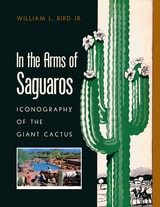
In the Arms of Saguaros
Iconography of the Giant CactusWilliam L. Bird Jr.
University of Arizona Press, 2023
An essential—and monumental—member of the Sonoran Desert ecosystem, the saguaro cactus has become the quintessential icon of the American West.
In the Arms of the Saguaros shows how, from the botanical explorers of the nineteenth century to the tourism boosters in our own time, saguaros and their images have fulfilled attention-getting needs and expectations. Through text and lavish images, this work explores the saguaro’s growth into a western icon from the early days of the American railroad to the years bracketing World War II, when Sun Belt boosterism hit its zenith and proponents of tourism succeed in moving the saguaro to the center of the promotional frame.
This book explores how the growth of tourism brought the saguaro to ever-larger audiences through the proliferation of western-themed imagery on the American roadside. The history of the saguaro’s popular and highly imaginative range points to the current moment in which the saguaro touches us as a global icon in art, fashion, and entertainment.
[more]
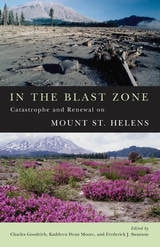
In the Blast Zone
Catastrophe and Renewal on Mt. St. HelensCharles Goodrich
Oregon State University Press, 2008
As it erupted in 1980, Mount St. Helens captured the attention of the region, nation, and world, and it continues to fascinate us today: a constant reminder that we live in volcano country. In lucid prose and poetry by some of America's leading writers and scientists, In the Blast Zone explores this story of destruction and renewal in all its human, geological, and ecological dimensions. Most popular accounts of the momentous eruption have focused on the devastation it caused. More recent scientific work on Mount St. Helens tells a story of unexpectedly rapid and varied ecological and geological change.
In the Blast Zone is the first book to present a cross-pollination of literary and scientific perspectives on the mountain's history of cataclysm and renewal. Most of the contributors to this volume camped together on Mount St. Helens for four days, hiking, observing, and sharing ideas. They asked the question: What can this radically altered landscape tell us about nature and how to live our lives? In the Blast Zone collects some of their answers. While introducing ecological and geological insights, it also tells compelling stories about how science and literature inform our lives and our relationship to nature.
These writings will startle readers with new recognition of the matchless gifts of Mount St. Helens: the gifts of beauty, of illumination, of hope. The Contributors Gary Braasch, John Calderazzo, Christine Colasurdo, Charlie Crisafulli, John Daniel, Jerry Franklin, Charles Goodrich, Robin Kimmerer, Ursula K. LeGuin, Tim McNulty, Kathleen Dean Moore, Nalini Nadkarni, Robert Michael Pyle, Scott Russell Sanders, James Sedell, Gary Snyder, Kim Stafford, Frederick J. Swanson, Tony Vogt, Ann Zwinger, Susan Zwinger
[more]
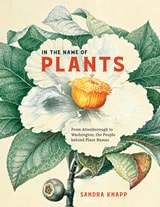
In the Name of Plants
From Attenborough to Washington, the People behind Plant NamesSandra Knapp
University of Chicago Press, 2022
A vividly illustrated meeting with thirty plants and their inspiring namesakes
Shakespeare famously asserted that “a rose by any other name would smell as sweet,” and that’s as true for common garden roses as it is for the Megacorax, a genus of evening primroses. Though it may not sound like it, the Megacorax was actually christened in honor of famed American botanist Peter Raven, its name a play on the Latin words for “great raven.”
In this lush and lively book, celebrated botanist Sandra Knapp explores the people whose names have been immortalized in plant genera, presenting little-known stories about both the featured plants and their eponyms alongside photographs and botanical drawings from the collections of London’s Natural History Museum. Readers will see familiar plants in a new light after learning the tales of heroism, inspiration, and notoriety that led to their naming. Take, for example, nineteenth-century American botanist Alice Eastwood, after whom the yellow aster—Eastwoodia elegans—is named. Eastwood was a pioneering plant collector who also singlehandedly saved irreplaceable specimens from the California Academy of Sciences during the 1906 San Francisco earthquake. Or more recently, the fern genus Gaga, named for the pop star and actress Lady Gaga, whose verdant heart-shaped ensemble at the 2010 Grammy Awards bore a striking resemblance to a giant fern gametophyte. Knapp’s subjects range from Charles Darwin’s grandfather, Erasmus Darwin (Darwinia), and legendary French botanist Pierre Magnol—who lends his name to the magnolia tree—to US founding figures like George Washington (Washingtonia) and Benjamin Franklin (Franklinia). Including granular details on the taxonomy and habitats for thirty plants alongside its vibrant illustrations, this book is sure to entertain and enlighten any plant fan.
[more]
International Code of Nomenclature for algae, fungi, and plants (Madrid Code)
Editorial Committee of the Madrid Code
University of Chicago Press, 2025
The latest, updated edition of the essential, authoritative reference for botanical, mycological, and phycological names.
The International Code of Nomenclature for algae, fungi, and plants, known as “the Code,” is the set of internationally agreed rules and recommendations that govern the naming of these organisms. Scientific naming has deep historical roots. Indeed, the system of naming organisms is one of the first truly global scientific standards. This essential reference originates in Alphonse de Candolle’s 1867 Lois de la nomenclature botanique. This 2025 edition of the Code, the Madrid Code, reflects the decisions made at the Twentieth International Botanical Congress, which met in Madrid, Spain, in July 2024. The congress debated 447 proposals to amend the Code and accepted important new rules, including a mechanism for voluntary registration of plant and algal names, clarifications for naming fossil taxa, the option to reject a new name if it is derogatory to a group of people, and the replacement of an epithet that was considered particularly offensive (revising to afra, afrorum, and afrum).
The International Code of Nomenclature for algae, fungi, and plants, known as “the Code,” is the set of internationally agreed rules and recommendations that govern the naming of these organisms. Scientific naming has deep historical roots. Indeed, the system of naming organisms is one of the first truly global scientific standards. This essential reference originates in Alphonse de Candolle’s 1867 Lois de la nomenclature botanique. This 2025 edition of the Code, the Madrid Code, reflects the decisions made at the Twentieth International Botanical Congress, which met in Madrid, Spain, in July 2024. The congress debated 447 proposals to amend the Code and accepted important new rules, including a mechanism for voluntary registration of plant and algal names, clarifications for naming fossil taxa, the option to reject a new name if it is derogatory to a group of people, and the replacement of an epithet that was considered particularly offensive (revising to afra, afrorum, and afrum).
[more]
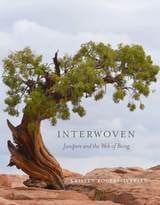
Interwoven
Junipers and the Web of BeingKristen Rogers-Iversen
University of Utah Press, 2017
Copublished with the Utah State Historical Society. Affiliated with the Utah Division of State History, Utah Department of Heritage & Arts.
Throughout prehistory and history, junipers have influenced ecosystems, cultures, mythologies, economics, politics, and environmental controversies. In terms of their effects on human lives the juniper may be the most significant tree in the interior West. Interwoven explores these interconnecting aspects of junipers. Ghost beads, biotic communities, gin, tree masticators, Puebloan diapers, charcoal, folklore, historic explorers, spiral grain, tree life cycles, spirituality, packrat middens, climate changes, wildfire, ranching, wilderness, and land management policies are among the many different threads the book follows. These and other topics shed light on a fascinating organism, but the book is more than a compilation of facts. At once a scientific, experiential, historical, and metaphorical walk among junipers and their interrelationships, Interwoven may change readers’ experiences with these trees and the natural world.
Finalist for the Utah State Historical Society Best Book Award.
Finalist for the 2019 ASLE Book Award for excellence in ecocriticism and environmental creative writing.
Named a “notable book” by the prize committee of the 2018 Sigurd F. Olson Nature Writing Award.
[more]
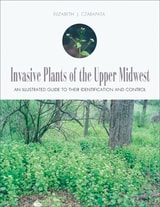
Invasive Plants of the Upper Midwest
An Illustrated Guide to Their Identification and ControlElizabeth J. Czarapata
University of Wisconsin Press, 2005
Invasive Plants of the Upper Midwest is an informative, colorful, comprehensive guide to invasive species that are currently endangering native habitats in the region. It will be an essential resource for land managers, nature lovers, property owners, farmers, landscapers, educators, botanists, foresters, and gardeners.
Invasive plants are a growing threat to ecosystems everywhere. Often originating in distant climes, they spread to woodlands, wetlands, prairies, roadsides, and backyards that lack the biological controls which kept these plant populations in check in their homelands.
Invasive Plants of the Upper Midwest includes more than 250 color photos that will help anyone identify problem trees, shrubs, vines, grasses, sedges, and herbaceous plants (including aquatic invaders). The text offers further details of plant identification; manual, mechanical, biological, and chemical control techniques; information and advice about herbicides; and suggestions for related ecological restoration and community education efforts. Also included are literature references, a glossary, a matrix of existing and potential invasive species in the Upper Midwest, an index with both scientific and common plant names, advice on state agencies to contact with invasive plant questions, and other helpful resources.
The information in this book has been carefully reviewed by staffs of the Wisconsin Department of Natural Resources Bureau of Endangered Resources and the University of Wisconsin-Madison Arboretum and other invasive plant experts.
[more]