Results by title
557 books match the query 'Poems' and 22 start with i
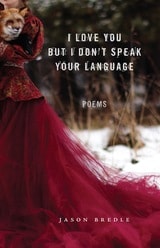
I Love You But I Don't Speak Your Language
PoemsJason Bredle
University of Massachusetts Press, 2026
Poems that question the world with tenderness and restless introspection
In I Love You But I Don’t Speak Your Language, brushes with the profound may lead to brushes with the mundane, or vice versa. Cause and effect become unreasoned and transcendent, at times lifting the arbitrary into the sublime or the sublime into happenstance. Intuitive leaps pull us through oscillations between humor, introspection, and the surreal. These poems don’t follow a straight path; instead, they capture the way thoughts shift, contradict, and collide.
Inspired by the poet’s dreams, as well as travels throughout central Europe, the West Indies, and Central and South America, the poems are alive in voice and detail, yet the speaker’s connections, and more so, disconnections, turn toward isolationism, solitude, and loneliness. At times, the collection leans into restless emotion: “I want to cry / when I think of how / I’ll look back at this moment someday / and cry.” Other moments pull the reader to “a far away place / of limitless palm trees and sunsets.” This is poetry that doesn’t try to fit into a traditional form. It questions, observes, and rethinks the world around it. Some moments might seem absurd, others deeply reflective, but all of them work together to create a book that is both thought-provoking and unpredictable.
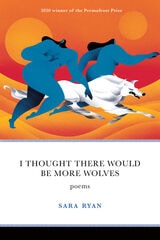
I Thought There Would Be More Wolves
PoemsSara Ryan
University of Alaska Press, 2021
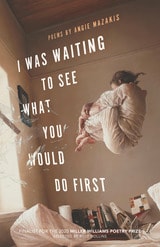
I Was Waiting to See What You Would Do First
PoemsAngie Mazakis
University of Arkansas Press, 2020
Like nesting dolls, the poems in I Was Waiting to See What You Would Do First contain scenes within scenes, inviting the reader over and over again to sharpen focus on minute details that, though small, reveal much about human perception and imagination.
Angie Mazakis handles these layers of revelation with great tenderness. Her poems wander in the way that a curious mind wanders, so that even though they often end very far from where they started, they are anchored in the familiar, referring to experiences we all share: a moment of distraction in a coffee shop imagining a conversation with someone across the room, or a narrative built around the expressions of the cartoon people on the airplane seatback safety guide.
I Was Waiting to See What You Would Do First is a testament to the notion that whether through a cosmic or microscopic lens, “You just see one moment; you just see now.”
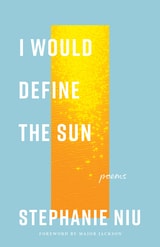
I Would Define the Sun
PoemsStephanie Niu; Foreword by Major Jackson
Vanderbilt University Press, 2025
Finalist for the Kate Tufts Discovery Award, 2026
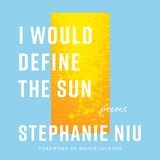
Stephanie Niu’s I Would Define the Sun, awarded the 2024 Vanderbilt University Literary Prize, is a collection of poems that declare the impossibility of defining something as immense as the sun while striving toward that impossible act. In an era of planetary collapse, filled with bushfires, bleached coral, and burnout, Niu explores what love can do even through estrangement, even through being together at the end of the world. Recycling and folding language through duplexes, sestinas, and echoing couplets, this collection moves across great distances to include Christmas Island, Chinese-American immigration, and the precarity and abundance of the sea through formal and lyric poetry. Refitting the world into a size “made for [her] hands, [her] human tongue,” Niu propels readers into continuous motion as she searches for home.
I Would Define the Sun
PoemsStephanie Niu; Foreword by Major Jackson
Vanderbilt University Press, 2025
Finalist for the Kate Tufts Discovery Award, 2026
Stephanie Niu’s I Would Define the Sun, awarded the 2024 Vanderbilt University Literary Prize, is a collection of poems that declare the impossibility of defining something as immense as the sun while striving toward that impossible act. In an era of planetary collapse, filled with bushfires, bleached coral, and burnout, Niu explores what love can do even through estrangement, even through being together at the end of the world. Recycling and folding language through duplexes, sestinas, and echoing couplets, this collection moves across great distances to include Christmas Island, Chinese-American immigration, and the precarity and abundance of the sea through formal and lyric poetry. Refitting the world into a size “made for [her] hands, [her] human tongue,” Niu propels readers into continuous motion as she searches for home.
Iep Jaltok
Poems from a Marshallese DaughterKathy Jetnil-Kijiner
University of Arizona Press, 2017
As the seas rise, the fight intensifies to save the Pacific Ocean’s Marshall Islands from being devoured by the waters around them. At the same time, activists are raising their poetic voices against decades of colonialism, environmental destruction, and social injustice.
Marshallese poet and activist Kathy Jetnil-Kijiner’s writing highlights the traumas of colonialism, racism, forced migration, the legacy of American nuclear testing, and the impending threats of climate change. Bearing witness at the front lines of various activist movements inspires her work and has propelled her poetry onto international stages, where she has performed in front of audiences ranging from elementary school students to more than a hundred world leaders at the United Nations Climate Summit.
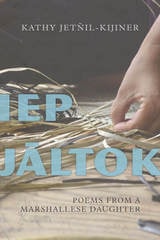
The poet connects us to Marshallese daily life and tradition, likening her poetry to a basket and its essential materials. Her cultural roots and her family provides the thick fiber, the structure of the basket. Her diasporic upbringing is the material which wraps around the fiber, an essential layer to the structure of her experiences. And her passion for justice and change, the passion which brings her to the front lines of activist movements—is the stitching that binds these two experiences together.
Iep Jāltok will make history as the first published book of poetry written by a Marshallese author, and it ushers in an important new voice for justice.
Illiterate Heart
PoemsMeena Alexander
Northwestern University Press, 2002
Recipient, 2008 Guggenheim Fellowship
Meena Alexander's poetry emerges as a consciousness moving between the worlds of memory and the present, enhanced by multiple languages. Her experience of exile is translated into the intimate exploration of her connections to both India and America. In one poem the thirteenth-century Persian poet Rumi visits with her while she speaks on the phone in her New York apartment, and in another she evokes fellow-poet Allen Ginsberg in the India she herself has left behind. Drawing on the fascinating images and languages of her dual life, Alexander deftly weaves together contradictory geographies, thoughts, and feelings.
In Broken Latin
PoemsAnnette Spaulding-Convy
University of Arkansas Press, 2012
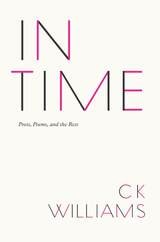
In Time
Poets, Poems, and the RestC. K. Williams
University of Chicago Press, 2012
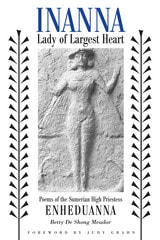
Inanna, Lady of Largest Heart
Poems of the Sumerian High Priestess EnheduannaBy Betty De Shong Meador
University of Texas Press, 2001
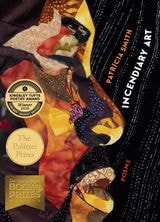
Incendiary Art
PoemsPatricia Smith
Northwestern University Press, 2017
From National Book Award winner Patricia Smith
One of the most magnetic and esteemed poets in today’s literary landscape, Patricia Smith fearlessly confronts the tyranny against the black male body and the tenacious grief of mothers in her compelling new collection, Incendiary Art. She writes an exhaustive lament for mothers of the "dark magicians," and revisits the devastating murder of Emmett Till. These dynamic sequences serve as a backdrop for present-day racial calamities and calls for resistance. Smith embraces elaborate and eloquent language— "her gorgeous fallen son a horrid hidden / rot. Her tiny hand starts crushing roses—one by one / by one she wrecks the casket’s spray. It’s how she / mourns—a mother, still, despite the roar of thorns"— as she sharpens her unerring focus on incidents of national mayhem and mourning. Smith envisions, reenvisions, and ultimately reinvents the role of witness with an incendiary fusion of forms, including prose poems, ghazals, sestinas, and sonnets. With poems impossible to turn away from, one of America’s most electrifying writers reveals what is frightening, and what is revelatory, about history.
Winner, 2017 Los Angeles Times Book Prize
Finalist, 2018 Pulitzer Prize for Poetry
Winner, NAACP Image Award for Outstanding Literary Work in the Poetry category
Winner, 2018 Kingsley Tufts Poetry Award
Winner, 2018 BCALA Best Poetry Award
Winner, Abel Meeropol Award for Social Justice
Finalist, Neustadt International Prize for Literature
Winner, 2021 Ruth Lilly Poetry Prize
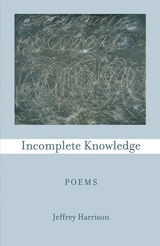
Incomplete Knowledge
PoemsJeffrey Harrison
Four Way Books, 2006
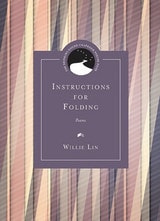
Instructions for Folding
PoemsWillie Lin
Northwestern University Press, 2015
In one of the poems in Instructions for Folding, Willie Lin writes, “it seemed you were away but not beyond language.” And accordingly, the voice in these poems is sometimes fervid, sometimes wry, moved to speech by the specific desire to speak to someone. The poems often progress associatively, following a kind of lyric logic of involution, disruption, and juxtaposition. They rehearse the work of learning the heft and shape of memories. They revel in failures and take pleasure in mourning. They bristle with narrative suggestiveness, weaving an austere music against a scrim of love, loneliness, secrets, and elation.
.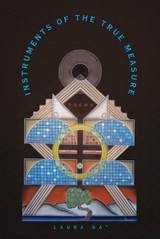
Instruments of the True Measure
PoemsLaura Da'
University of Arizona Press, 2018
Surveying and geography underpin the collection, but even as Da’ investigates these signifiers of measurement, she pushes the reader to interrogate their function within the stark atrocities of American history. Da’ laments this harsh dichotomy, observing that America’s mathematical point of beginning is located in the heart of her tribe’s homeland: “I do not have the Shawnee words to describe this place; the notation that is available to me is 40°38´32.61´´ N 80°31´9.76´´ W.”
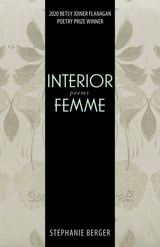
Interior Femme
PoemsStephanie Berger
University of Nevada Press, 2022
The poems offer layered perspectives fused with multiple versions of female representation, as if to underscore the burden of responsibility, inherited shame, and awesome power that comes with the position women have occupied throughout history. Berger reveals a woman critically wounded—representing the totality of the Western feminine imaginary. Lyrically complex, sometimes surreal, and often ekphrastic in style and content, Interior Femme simultaneously offers heartbreak, laughter, comfort, and empowerment.
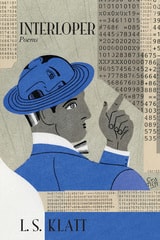
Interloper
PoemsL. S. Klatt
University of Massachusetts Press, 2009
The poems in Interloper unsettle frontiers between disparate worlds so that the imagination is given room to roam: pears become guitars, racks of ribs are presented as steamboats, and helicopters transmute into diesel seraphs. The poetry aspires acrobatically in the manner of prayers and pilots, but adventure throughout the book is viewed as precarious and the will to conquest leads to apocalypse and ruin. The interloper wanders through crime scenes and crash sites as he glosses the landscape—at home and not at home with the America of yesterday and tomorrow. In symbols that scat and ricochet, the interloper scores a new song, one that composes—and decomposes—on the page.
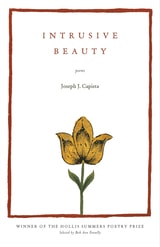
Intrusive Beauty
PoemsJoseph J. Capista
Ohio University Press, 2019
Winner of the 2018 Hollis Summers Poetry Prize
Joseph J. Capista’s Intrusive Beauty reckons with reluctant ecstasy and the improbable forms that beauty assumes. In this powerful debut, Capista traverses earth and ether to yield poems that elucidate the space between one’s life and one’s livelihood. While its landscapes range from back-alley Baltimore to the Bitterroot Valley, this book remains close to unbidden beauty and its capacity to sway one’s vision of the world. Whether a young father who won’t lower the volume on the radio or a Victorian farm boy tasked with scaring birds from seed-sown furrows, the inhabitants of Intrusive Beauty are witness to the startling ease with which one’s assorted lives come in time to comprise a singular life. Mortality, love, duty, desire, an acute longing for transcendence: here, old themes resound anew as they’re uttered in a multiplicity of forms and means, holding fast always to the heart.
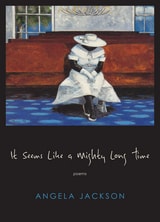
It Seems Like a Mighty Long Time
PoemsAngela Jackson
Northwestern University Press, 2015
2015 PEN Open Book Award Finalist
Angela Jackson’s latest collection of poetry borrows its title from a lyric in Barbara Lewis’s 1963 hit single “Hello Stranger,” recorded at Chess Records in Chicago. Like the song, Jackson’s poems are a melodic ode to the African American experience, informed by both individual lives and community history, from the arrival of the first African slave in Virginia in 1619 to post-Obama America.
It Seems Like a Mighty Long Time reflects the maturity of Jackson’s poetic vision. The Great Migration, the American South, and Chicago all serve as signposts, but it is the complexity of individual lives—both her own and those who have gone before, walk beside, and come after—that invigorate this collection. Upon surveying so vast a landscape, Jackson finds that sorrow meets delight, and joy lifts up anger and despair. And for all this time, love is the agent, the wise and just rule and guide.
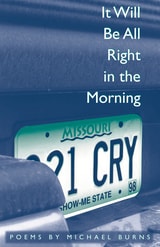
It Will Be All Right in the Morning
PoemsMichael Burns
University of Arkansas Press, 1998
In his plain-spoken lyrics and dramatic monologues, Michael Burns digs at the marrow. His poems—in formal and free verse—are quick, incisive, and always capable of revealing the dark whimsies of fate and the pain of our own actions and inactions.
These poems travel to Casqui mounds in the Arkansas Delta, traffic-clogged urban streets, a wasteland in Oklahoma, and Faulkner’s Rowan Oak. They assume the voices of others so convincingly that we find ourselves face to face with hunters, philanderers, husbands, a Union general, a Snopes, and even a version of God.
Gathering the images of each place, crafting lines in clear, unpretentious language, Burns comes across new knowledge, confronting the ever-present mysteries and the ways the mind loves to lie to itself.
It Will Return
PoemsJulia Hartwig
Northwestern University Press, 2010
In It Will Return, her most recent volume of poems, Julia Hartwig is in dialogue with other great artists—Keats, Rimbaud, Milosz, Beethoven, Ravel, Van Gogh—considering the implications of greatness. Alongside this expansive perspective, we find attention to the smallest details, composing quotidian moments that open out into unexpected meaning. For Hartwig, close attention to the material world is a kind of spiritual undertaking. Like her Nobel Prize–winning contemporary Wislawa Szymborska, she writes poems that appear simple but are somehow all the more capable of yielding profound insights.
It Will Return reflects Hartwig’s firsthand involvement in Polish history and culture, and its poems are sensitive to the calamities of Poland’s tumultuous twentieth century. But It Will Return is a human collection before it is a national one, and these political motifs form the backdrop for more universal dramas.
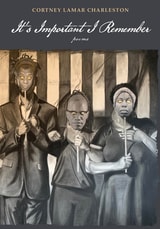
It's Important I Remember
PoemsCortney Lamar Charleston
Northwestern University Press, 2026
An incantation of strength and solace for persisting in twenty-first-century America
“History doesn’t repeat, it rhymes.” In his sweeping third collection, Charleston brings a poet’s ear for echo and rhythm to bear on American history and life after 2016. For Charleston, these rhymes cut two ways: the long tradition of American racism and fascism, and the steady pulse of Black persistence. The collection’s titular invocation frames each poem, at times an oratory to rally a crowd, in other moments a private prayer whispered as the speaker gathers himself to face another day. Charleston insists that should we cede memory of our national biography—whether to repression or indifference—we will witness the country’s dissolution into something unrecognizable to many, yet all too familiar to its most marginalized people. But with each reiteration and riff, he also invokes a tenuous hope—that if we summon an American history of Black resistance, we might still make a more perfect union.
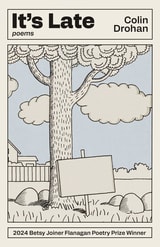
It’s Late
PoemsColin Drohan
University of Nevada Press, 2026
It’s Late approaches the world with openness and affection, prioritizing wonder about plants, animals, and other people, as well as individual and communal pasts, presents, and futures as a guiding force. The voices behind these poems dwell in a state of perpetual curiosity. Colin Drohan’s writing is full of awe but he also asks difficult questions about the world we inhabit and its present ecological crises, often discovering humor as a mechanism for real hope. It's Late imagines readers as close friends and confidants, written with a conversational quality that welcomes the absurdity of our daily lives.