Results by title
3785 books match the query 'Poetry' and 144 start with i
I Always Carry My Bones
Felicia Zamora
University of Iowa Press, 2021
I Am My Own Path
Selected Writings of Julia de BurgosEdited and with an introduction by Vanessa Pérez-Rosario
University of Texas Press, 2023
2026 Silver Medal for the Victor Villaseñor Best Latino Focused Nonfiction Book Award – Spanish, Conference on Latin American History (CLAH)
A definitive, bilingual selection of poetry, essays, and letters by one of Puerto Rico’s most beloved poets.
Julia de Burgos (1914–1953) is best known for her poetry, but she is also an important cultural figure famous for her commitment to social justice, feminist ideas, and the independence of Puerto Rico. Admirers cultivated her legacy to bring to light the real Julia de Burgos, the woman behind the public figure, which this remarkable collection further illuminates by supplying a complex portrait using her own powerful and imaginative words.
Beginning with a critical introduction to Burgos's life and work, Vanessa Pérez-Rosario then presents a selection of poems, essays, and letters, that offer a glimpse into this formidable talent and intellect. Burgos left Puerto Rico, spending the 1940s in both New York City and Havana, where she cultivated a new kind of identity refracted through her pathbreaking work as a poet and journalist. Both poetry and prose are alive with politically charged insights into the struggle of national liberation, literary creation, and being a woman in a patriarchal society. I Am My Own Path is essential reading for anyone interested in Puerto Rican literature and culture as well as a foundational text of Latinx literature and culture in the United States.
I Follow in the Dust She Raises
Linda Martin
University of Alaska Press, 2015
I Live in the Country & other dirty poems
Arielle Greenberg
Four Way Books, 2020
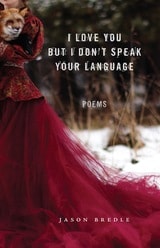
I Love You But I Don't Speak Your Language
PoemsJason Bredle
University of Massachusetts Press, 2026
Poems that question the world with tenderness and restless introspection
In I Love You But I Don’t Speak Your Language, brushes with the profound may lead to brushes with the mundane, or vice versa. Cause and effect become unreasoned and transcendent, at times lifting the arbitrary into the sublime or the sublime into happenstance. Intuitive leaps pull us through oscillations between humor, introspection, and the surreal. These poems don’t follow a straight path; instead, they capture the way thoughts shift, contradict, and collide.
Inspired by the poet’s dreams, as well as travels throughout central Europe, the West Indies, and Central and South America, the poems are alive in voice and detail, yet the speaker’s connections, and more so, disconnections, turn toward isolationism, solitude, and loneliness. At times, the collection leans into restless emotion: “I want to cry / when I think of how / I’ll look back at this moment someday / and cry.” Other moments pull the reader to “a far away place / of limitless palm trees and sunsets.” This is poetry that doesn’t try to fit into a traditional form. It questions, observes, and rethinks the world around it. Some moments might seem absurd, others deeply reflective, but all of them work together to create a book that is both thought-provoking and unpredictable.
I Made You to Find Me
The Coming of Age of the Woman Poet and the Politics of Poetic AddressJane Hedley
The Ohio State University Press, 2009

I Make Jokes When I'm Devastated
Luisa Muradyan
Bridwell Press, 2024
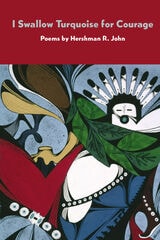
I Swallow Turquoise for Courage
Hershman R. John
University of Arizona Press, 2007
With their recurring images of sheep, coyotes, and crows—and an ever-present Navajo grandmother—these poems carry echoes of an ancient time that seems to exist in parallel with our own. The people who live in them bear, as if woven strand by strand into their souls, the culture and traditions of the Glittering World. Although these poems are lush with imagery of sunbaked lands, they are never sentimental. Throughout this collection, the poet’s voice is confident, assured, and engaged with life in a messy world. It is a world in which animated spirits dwell comfortably with modern machinery, where the spiritual resides with the all-too-human. This is a welcoming universe. It invites us to enter, to linger, to savor, and to learn.

I The Song
Jill M Soens
University of Utah Press, 1999
Built on early transcriptions of Native American “songs” and arranged by subject, these poems are informed by additional context that enables readers to appreciate more fully their imagery, their cultural basis, and the moment that produced them. They let us look at our continent through the eyes of a wide range of people: poets, hunters, farmers, holy men and women, and children. This poetry achieved its vividness, clarity, and intense emotional powers partly because the singers made their poems for active use as well as beauty, and also because they made them for singing or chanting rather than isolated reading.
Most striking, classical North American Indian poetry brings us flashes of timeless vision and absolute perception: a gull’s wing red over the dawn; snow-capped peaks in the moonlight; a death song. Flowing beneath them is a powerful current: the urge to achieve a selfless attention to the universe and a determination to see and delight in the universe on its own terms.
I Think Again of Those Ancient Chinese Poets
Tom Sexton
University of Alaska Press, 2010
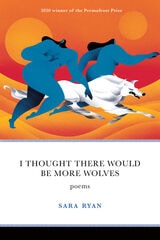
I Thought There Would Be More Wolves
PoemsSara Ryan
University of Alaska Press, 2021

I Was Thinking of Beauty
Sydney Lea
Four Way Books, 2013
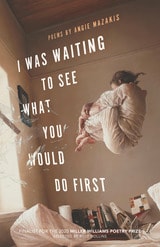
I Was Waiting to See What You Would Do First
PoemsAngie Mazakis
University of Arkansas Press, 2020
Like nesting dolls, the poems in I Was Waiting to See What You Would Do First contain scenes within scenes, inviting the reader over and over again to sharpen focus on minute details that, though small, reveal much about human perception and imagination.
Angie Mazakis handles these layers of revelation with great tenderness. Her poems wander in the way that a curious mind wanders, so that even though they often end very far from where they started, they are anchored in the familiar, referring to experiences we all share: a moment of distraction in a coffee shop imagining a conversation with someone across the room, or a narrative built around the expressions of the cartoon people on the airplane seatback safety guide.
I Was Waiting to See What You Would Do First is a testament to the notion that whether through a cosmic or microscopic lens, “You just see one moment; you just see now.”

I Will Not Name It Except To Say
Lee Sharkey
Tupelo Press, 2021
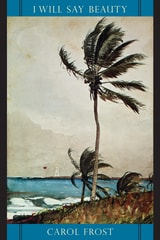
I Will Say Beauty
Carol Frost
Northwestern University Press, 2003
"I will say beauty," Carol Frost boldly says in one of her new lyrical poems, beauty being for her and all of us elusive-in and out of nature. The phrase is meant as a cri de coeur, and the poems are arranged to offer a fresh way to look at--and exist within--nature. For Frost, beauty is a far cry from the decorous and social.
Frost sets many of these poems in Florida's Cedar Keys, amidst the nesting areas of birds, cottonmouth snakes, wetlands, and tidal rhythms. The reader undertakes a journey through a tropical summer, where strange scents and sounds are signs of the transient beauties the imagination may possess for a moment. Drawing brilliantly from nature and from art, from the rhythms of life and the furies of emotion, Frost rejects standard responses and dares to ask: how do we perceive the world? When is beauty not enough? Can we imagine Paradise? And, when nature ordains that death must come, and we weaken, how do we die?
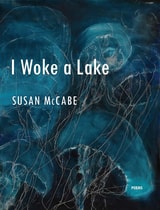
I Woke a Lake
Susan McCabe
University Press of Colorado, 2025
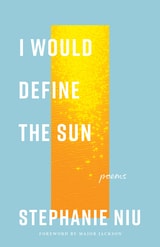
I Would Define the Sun
PoemsStephanie Niu; Foreword by Major Jackson
Vanderbilt University Press, 2025
Finalist for the Kate Tufts Discovery Award, 2026
Stephanie Niu’s I Would Define the Sun, awarded the 2024 Vanderbilt University Literary Prize, is a collection of poems that declare the impossibility of defining something as immense as the sun while striving toward that impossible act. In an era of planetary collapse, filled with bushfires, bleached coral, and burnout, Niu explores what love can do even through estrangement, even through being together at the end of the world. Recycling and folding language through duplexes, sestinas, and echoing couplets, this collection moves across great distances to include Christmas Island, Chinese-American immigration, and the precarity and abundance of the sea through formal and lyric poetry. Refitting the world into a size “made for [her] hands, [her] human tongue,” Niu propels readers into continuous motion as she searches for home.
I Would Define the Sun
PoemsStephanie Niu; Foreword by Major Jackson
Vanderbilt University Press, 2025
Finalist for the Kate Tufts Discovery Award, 2026
Stephanie Niu’s I Would Define the Sun, awarded the 2024 Vanderbilt University Literary Prize, is a collection of poems that declare the impossibility of defining something as immense as the sun while striving toward that impossible act. In an era of planetary collapse, filled with bushfires, bleached coral, and burnout, Niu explores what love can do even through estrangement, even through being together at the end of the world. Recycling and folding language through duplexes, sestinas, and echoing couplets, this collection moves across great distances to include Christmas Island, Chinese-American immigration, and the precarity and abundance of the sea through formal and lyric poetry. Refitting the world into a size “made for [her] hands, [her] human tongue,” Niu propels readers into continuous motion as she searches for home.
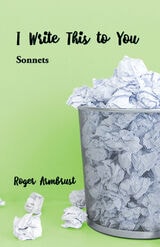
I Write This to You
SonnetsRoger Armbrust
Parkhurst Brothers, Inc., 2022
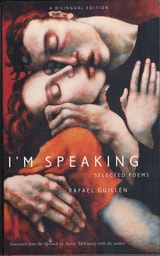
I'm Speaking
Selected PoemsRafael Guillen
Northwestern University Press, 2001
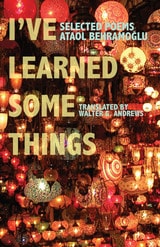
I've Learned Some Things
By Ataol Behramoğlu
University of Texas Press, 2008
I've Learned Some Things allows English-language readers the rare opportunity to experience the work of Ataol Behramoğlu, one of Turkey's most celebrated poets. The sixty-six poems in this collection span the author's extraordinary career and are stunning examples of the intense emotional quality of his work. Behramoğlu celebrates the rich fabric of everyday life by exploring both personal and social struggles, sometimes employing a whimsical tone.
Walter G. Andrews's skillful translation conveys the vibrancy of Behramoğlu's work to an English-language audience, and this bilingual edition allows Turkish-language readers to follow the original text.
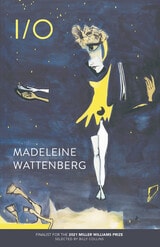
I/O
Madeleine Wattenberg
University of Arkansas Press, 2021
Finalist for the 2021 Miller Williams Poetry Prize.
Madeleine Wattenberg’s debut collection I/O, finalist for the 2021 Miller Williams Poetry Prize, alternates between epistolary poems to the mythical figure Io and lyrical interrogations of science, myth, and the historical record. Wattenberg casts Io—the priestess of Hera who was turned into a heifer—as a woman struggling to navigate the terrain between choice and coercion. Accompanying the letters to Io are poems whose explorations range from laboratories to airships in their pursuit of answers. Here the poetic imagination emerges as its own laboratory, drawing inspiration as much from ancient myth as from science and steampunk as it refuses to be constrained by a final conclusion.
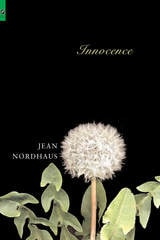
INNOCENCE
JEAN NORDHAUS
The Ohio State University Press, 2006
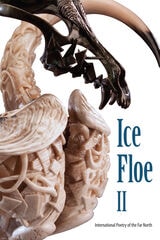
Ice Floe II
International Poetry of the Far NorthEdited by Shannon Gramse and Sarah Kirk
University of Alaska Press, 2011
The long-awaited second volume of the newly revived Ice Floe series, Ice Floe II features new and exciting works of poetry from a vibrant and diverse group of writers from Alaska, Canada, Russia, Sweden, Iceland, and beyond. All work is presented here in both its original language and in English translation. With contributors that include former Alaska poet laureate Tom Sexton, Riina Katajavuori, Yuri Vaella, Gunnar Randversson, and dozens of other established and emerging poets, this wonderful collection of voices from the northern latitudes will be a great read for all lovers of poetry and international literature.
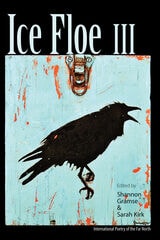
Ice Floe III
Edited by Shannon Gramse and Sarah Kirk
University of Alaska Press, 2012
The third volume of the revived Ice Floe series, Ice Floe III features new and exciting works of poetry by authors from Alaska, Canada, Iceland, the Faroe Islands, Norway, Sweden, Finland, and Russia. All work is presented in both its original language and in English translation. The contributors—Nancy Lord, Tom Sexton, Eira Stenberg, and Riina Katajavuori, among others—include established and emerging poets. This dynamic and vibrant collection of voices from the northern latitudes will be a great read for all poetry enthusiasts and devoted readers of international literature.
Ice Floe
New & Selected PoemsEdited by Shannon Gramse and Sarah Kirk
University of Alaska Press, 2010
Ice Floe, the celebrated and award-winning journal of circumpolar poetry, is here reborn as an annual book series. This first volume features the best of the journal's first seven years, along with evocative new poetry from Alaska, Canada, Iceland, Norway, Sweden, Finland, and Russia. All work is presented in both its original language and in English translation. With contributors including former Alaska poet laureate John Haines, Gunnar Harding, Robert Bly, Lennart Sjögren, and dozens of other established and emerging poets, this wonderful collection of voices from the northern latitudes is a great read for all lovers of poetry and international literature.

Ice Hours
Marion Starling Boyer
Michigan State University Press, 2023
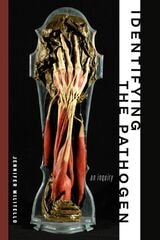
Identifying the Pathogen
Jennifer Militello
Tupelo Press, 2026
Composed as a lab notebook recording various surgeries, autopsies, and experiments, Identifying the Pathogen tells the story of a scientist on an obsessive quest to document an ailment that resists classification. The book considers the body in response to the COVID-19 pandemic, woven through with the story of Anna Morandi Manzolini—an eighteenth-century Italian anatomist and artist who struggled to support a husband suffering from depression—as well as several essays detailing accounts of a ruptured appendix, a splintered cello, and an ill-fated rock climbing excursion.

Ideogram
History of a Poetic MethodBy Laszlo K. Géfin
University of Texas Press, 1982
The ideogram changed the course of modern American poetry, and Ideogram is the first history of this important poetic tradition.
In modern poetry the ideogram is an idea presented to the reader by means of the juxtaposition of concrete particulars, usually without connective words or phrases. The poem is therefore presented in precise images, usually very tersely, and free from conventional form and meter. The idea of presenting a concept in this manner derives in part from Ernest Fenollosa's essay "The Chinese Character as a Medium for Poetry," the Chinese written character itself being a juxtaposition of pictographs to form a new meaning.
Ezra Pound's search for an alternative to traditional forms of verse composition resulted in his use of the ideogrammic method which, Laszlo K. Géfin asserts, became the major mode of presentation in twentieth-century American poetry. Two generations of avant-garde, experimental poets since Pound have turned to it for inspiration, evolving their own methods from its principles.
Géfin begins by tracing the development of Pound's poetics from the pre-Imagist stage through Imagism and Vorticism to the formulation of the ideogrammic method. He then examines the Objectivist poetics of Louis Zukofsky, Charles Reznikoff, and George Oppen; the contributions to the ideogrammic tradition of William Carlos Williams; and the Projectivist theories of Charles Olson, Robert Duncan, and Robert Creeley. He concludes with an exploration of Allen Ginsberg's theory of the ellipse and Gary Snyder's "riprap" method. Throughout, Géfin maintains that the ideogrammic mode is the literary representation of the twentieth-century post-logical—even post-humanist—world view.
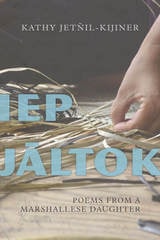
Iep Jaltok
Poems from a Marshallese DaughterKathy Jetnil-Kijiner
University of Arizona Press, 2017
As the seas rise, the fight intensifies to save the Pacific Ocean’s Marshall Islands from being devoured by the waters around them. At the same time, activists are raising their poetic voices against decades of colonialism, environmental destruction, and social injustice.
Marshallese poet and activist Kathy Jetnil-Kijiner’s writing highlights the traumas of colonialism, racism, forced migration, the legacy of American nuclear testing, and the impending threats of climate change. Bearing witness at the front lines of various activist movements inspires her work and has propelled her poetry onto international stages, where she has performed in front of audiences ranging from elementary school students to more than a hundred world leaders at the United Nations Climate Summit.
The poet connects us to Marshallese daily life and tradition, likening her poetry to a basket and its essential materials. Her cultural roots and her family provides the thick fiber, the structure of the basket. Her diasporic upbringing is the material which wraps around the fiber, an essential layer to the structure of her experiences. And her passion for justice and change, the passion which brings her to the front lines of activist movements—is the stitching that binds these two experiences together.
Iep Jāltok will make history as the first published book of poetry written by a Marshallese author, and it ushers in an important new voice for justice.
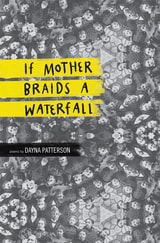
If Mother Braids a Waterfall
Dayna Patterson
Signature Books, 2020
Dayna Patterson has produced a book obsessed with motherhood and daughterhood, ancestry, and transition—of home, family, faith, and the narratives woven to uphold the Self. In her debut collection of poetry and lyric essay, Patterson grapples with a patriarchal and polygamous heritage. After learning about her mother’s bisexuality, Patterson befriends doubt while simultaneously feeling the urge to unearth a feminist theology, one that envisions God the Mother taking pride in her place at the banquet table.
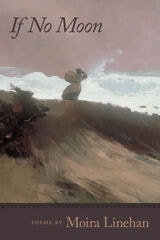
If No Moon
Moira Linehan
Southern Illinois University Press, 2007
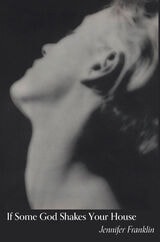
If Some God Shakes Your House
Jennifer Franklin
Four Way Books, 2023
Jennifer Franklin reimagines an Antigone for our times in her third collection, If Some God Shakes Your House, where filial devotion and ossified roles of gendered labor become the engine of her defiance. Franklin’s Antigone is ferocious, feeling, and unafraid of the consequences of speaking the truth to power about the political atrocities she has witnessed and personal traumas she has withstood. With a sensitivity that equally elevates the quotidian and the classical, and an attention that moves from the ancient ruins of Pompeii to the right of bodily autonomy and agency stripped away by our own Supreme Court, Franklin reveals the high stakes of our moment where “the one who does the judging judges things all wrong.” Franklin’s Antigone has embraced the sacrifice of self for something greater—a dual devotion to her disabled daughter and to her art. “For twenty years, I have been disappearing,” she writes in the book’s final poem, yet she continues to sing.
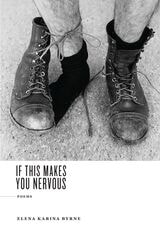
If This Makes You Nervous
Elena Karina Byrne
Omnidawn, 2021
Elena Karina Byrne’s fourth collection of poems offers what she describes as an homage to her art-immersed upbringing with poems that challenge perception as they create a dialogue between the speaker and sixty-six artists. Lyrical narratives unfold with psychological urgency and candor as they re-encounter each artist’s unique oeuvre. The poems are as political as they are personal, mapping out the author’s emotional, spatial, and gender orientations within the confines of our visual culture.
Longing and loss prevail in If This Makes You Nervous, always leading the reader on winding paths that return to the bodily while balancing beauty and terror and what is seen and what remains invisible. If This Makes You Nervous is a devotional look at shifting identity that begins in a preteen’s memory, moves through history’s collective body, and ends with what is “connected and accounted for” in the imagination’s relativistic measure of time.
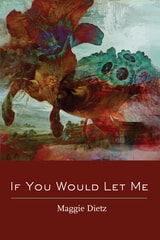
If You Would Let Me
Maggie Dietz
Four Way Books, 2026
If You Would Let Me uses the myth of Persephone and Demeter to explore, in an utterly contemporary idiom, the hellish descents and unequivocal love of a mother and an adolescent child. The old story is reimagined in new terms—a present-day Persephone’s cycles of psychic affliction giving rise to botched facial piercings, social media ghostings, and squalls of physical fury—and revoiced in poems that sing Demeter’s rage, the depths of maternal grief, the seasons of erasure and renewal. In an electric transposition of classic lore onto modern descriptive modes, Dietz casts the imperiling pubescence and anxiety of middle school as canonically significant and dangerously chimerical: “Persephone and her friends brought / Waxed paper cups of ice cream / To the meadow by the river,” where “Their laughter made ripples a heron / Mistook for alewives underwater” while “Under some of their shirts” grew “The first hiccups of puffy nipples.” Throughout these teenage transformations and the distances they grow, Dietz remains as constant as a lodestar, offering unwavering light for her child to see by in order to return. “You must know what I mean even if / You do not know you know: Child, // When you called my name I heard you / Though your cries could find no wind.” Formally meticulous and sonically intricate, these poems hear as much as they make themselves heard, harnessing ancient energies to create a picture of our recycled world—a story for our own times, one not only familiar but perennially, timelessly true.
If the House
Molly Spencer
University of Wisconsin Press, 2019
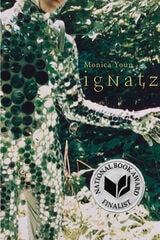
Ignatz
Monica Youn
Four Way Books, 2010
Ignatz takes the form of a cycle of love poems—in radical variations—based on Ignatz Mouse, the rodent anti-hero and love-object of George Herriman’s classic comic strip Krazy Kat. For decades, Krazy Kat rang the changes on a quirky theme of unrequited love: cat loves mouse; mouse hates cat; mouse hits cat with brick; cat mistakes brick for love; and so on, day after day. The backgrounds of the strip were in constant inexplicable flux: a desiccated specimen of Arizona flora morphs in the next panel into a crescent moon, then into a snowcapped butte, while the characters chatted obliviously on, caught up in their own obsessive round.
Moving through pacy, overflowing sentences, enigmatic aphoristic observations, and pointed imagistic vignettes, Youn’s second collection vividly captures the way the world reorients around an object of desire: the certainty that your lover “will appear in the west, backlit by orange isinglass,” the ability to intuit a lover’s presence from the way “unseen flutes / keep whistling the curving phrases of your body.” Youn skillfully draws on the repeating narrative motifs and haunting landscapes of Krazy Kat as she tests and surpasses the limits of lyric to explore the cyclical elements of romanticized love. Youn speaks to and with her poetic forbears, whether St. John Perse, whose phrase “robed in the loveliest robe of the year” (T.S. Eliot’s translation) recurs in several love songs to Ignatz, or Geoffrey Hill, whose Mercian Hymns these poems recall in their serial structure and their commingling of the contemporary and classical. Ignatz is a poignant foray into the inventive possibilities of obsession and passion.
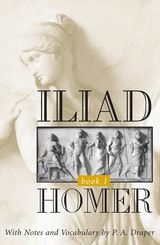
Iliad, Book 1
Homer
University of Michigan Press, 2002
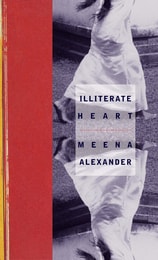
Illiterate Heart
PoemsMeena Alexander
Northwestern University Press, 2002
Recipient, 2008 Guggenheim Fellowship
Meena Alexander's poetry emerges as a consciousness moving between the worlds of memory and the present, enhanced by multiple languages. Her experience of exile is translated into the intimate exploration of her connections to both India and America. In one poem the thirteenth-century Persian poet Rumi visits with her while she speaks on the phone in her New York apartment, and in another she evokes fellow-poet Allen Ginsberg in the India she herself has left behind. Drawing on the fascinating images and languages of her dual life, Alexander deftly weaves together contradictory geographies, thoughts, and feelings.
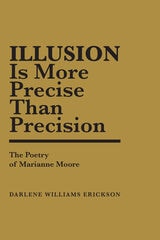
Illusion Is More Precise than Precision
The Poetry of Marianne MooreDarlene Williams Erickson
University of Alabama Press, 1992
Erickson examines the work of Marianne Moore in order to provide some consistently successful strategies for understanding her poetry
In 1935, T.S. Eliot wrote that Marianne Moore’s poems “form part of the small body of durable poetry written in our time.” In this comprehensive critical study of the American poet Marianne Moore (1887-1972) and her work, Erickson amply justifies Eliot’s praise, demonstrating the poet’s ability to combine close observation with a worldview presentation that is at once intuitive, kaleidoscopic, and optimistic. Unfortunately, over the years the excellence and originality of Moore’s work has been overshadowed by its apparent inscrutability. Erickson examines the work of Marianne Moore in order to provide some consistently successful strategies for understanding her poetry.
The thesis is centered in a line from Moore’s poem, “Armor’s Undermining Modesty”:” What is more precise than precision? Illusion.” Erickson argues that Moore came to see herself humorously as “Imagnifico, a Wizard in Words,” a magician who used her conjuries to express a truth beyond reason, a truth described by the philosopher Henri Bergson as intuition, the highest stage of the evolution of human understanding. Is Erickson’s contention that Moore’s sense of magic is inextricably bound up in her own uniquely feminine epistemology, the tendency to place great value on intuition, and to find one’s own voice among collections of many voices.
This study demonstrates that Moore’s voice is arguably the strongest female voice in twentieth century American literature and her poetic voice could hold its own in the company of the best of the other modernists. Unlike many current scholars, Erickson examines closely the texts of Moore’s poems themselves, allowing the poet’s own voice to speak clearly. The study also explores Moore’s obsession with time, her preoccupation with the visual, her interest in the forms of Hebrew verse and her “susceptibility to happiness,” an outlook at some odds with the twentieth century’s fascination with the “romance of failure.”
While the book is scholarly in its intent and carefully documented, it is eminently readable and will be of interest of anyone fascinated by the mind of a brilliant twentieth century woman.

Images of Kin
NEW AND SELECTED POEMSMichael S. Harper
University of Illinois Press, 1977
"It is Mr. Harper's achievement to have projected his most difficult and complex insights and feelings through the epical manner, yet at the same time carried us along to identify with him." -- New York Times Book Review
Imaginary Royalty
Miranda Field
Four Way Books, 2017

Imagination Transformed
The Evolution of the Female Character in Keat's PoetryKarla Alwes
Southern Illinois University Press, 1993
From the mortal maidens of 1817 to the omnipotent goddesses of 1819, Keats uses successive female characters as symbols portraying the salvation and destruction, the passion and fear that the imagination elicits. Karla Alwes traces the change in these female figures—multidimensional and mysteriously protean—and shows that they do more than comprise a symbol of the female as a romantic lover. They are the gauge of Keats’s search for identity. As Keats’s poetry changes with experience, from celebration to denial of the earth, the females change from meek to threatening to a final maternal and conciliatory figure.
Keats consistently maintained a strict dichotomy between the flesh-and-blood women he referred to in his letters and the created females of his poetry, in the same way that he rigorously sought to abandon the real for the ideal in his poetry. In her study of Keats’s poetry, Alwes dramatizes the poet’s struggle to come to terms with his two consummate ideals—women and poetry. She demonstrates how his female characters, serving as lovers, guides, and nemeses to the male heroes of the poems, embody not only the hope but also the disappointment that the poet discovers as he strives to reconcile feminine and masculine creativity. Alwes also shows how the myths of Apollo, which Keats integrated into his poetry as early as February 1815, point up his contradictory need for, yet fear of, the feminine. She argues that Keats’s attempt to overcome this fear, impossible to do by concentrating solely on Apollo as a metaphor for the imagination, resulted in his eventual use of maternal goddesses as poetic symbols.
The goddess Moneta in "The Fall of Hyperion" reclaims the power of the maternal earth to represent the final stage in the development of the female. In combining the wisdom of the Apollonian realm with the compassion of the feminine earth, Moneta is more powerful than Apollo and able to show the poet who does not recognize both realms that he is only a "dreamer," one who "venoms all his days, / Bearing more woe than all his sins deserve."
Because of Moneta’s admonishment, Keats becomes the poet capable of creating "To Autumn." In this final ode, Keats taps the transcendent power inherent in the temporal beauty of the earth. His imagination, once attempting to leave the earth, now goes beyond the Apollonian ideal into the realm of salvation—the human heart—that connects him to the earth. And because of his poetic reconciliation between heaven and earth, Keats is ultimately able to portray an earthly timelessness in which "summer has o’er-brimmed" the bees’ "clammy cells," making for "warm days [that] will never cease."
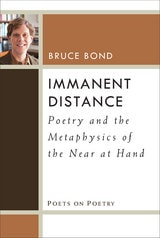
Immanent Distance
Poetry and the Metaphysics of the Near at HandBruce Bond
University of Michigan Press, 2015
Immortal Sofa
Maura Stanton
University of Illinois Press, 2008
Immortality
Alan Feldman
University of Wisconsin Press, 2015
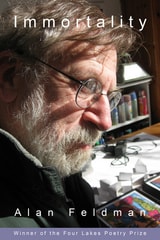
In a collection where the dead do speak, Feldman’s poems in his first segment, “Self-Portraits,” are more likely to be about others than about himself. The segment “Partners” reflects on marriage and divorce, the latter an “uncontested victor over marriage, / the way the flood is champion over the flood plain.” In the section “Offshore” Feldman writes about travel to Uruguay, his impractical love of sailing, and his wonder at Walter Cronkite’s obtuseness about Vietnam. In his final segment, “What Now?,” he asks about meaning itself. Babysitting his tiny granddaughter, he thinks of sailing—hours of boredom punctuated by moments of terror—and wonders if even this suggests something world-encompassing he’s “still hoping to find a name for. / If it isn’t joy.”
Winner of the Mass Book Award for Poetry, Massachusetts Center for the Book

Impastoral
Brandan Griffin
Omnidawn, 2022
The expansive reworking of language in Impastoral flies through the possible voices of outsides and insides—slug, probe, horse carriage, sewer, potted plant, lab rat, vampire, bot fly, giant cow. Language, in Brandan Griffin’s poetry, is neither human nor nonhuman, and it undoes that very idea of these distinctions, so beings—slugprobe, pottedhorsesewer, telepathybarcode, mammaltexts—morph and change in between boundaries.
Each of these poems is an organism, a collection of living connections, looped interiorities strung together in worlds tunneling through worlds. The poems’ composition becomes a decomposition of budding, breeding, and fluctuating. Reading this collection is an experience of becoming deformed and merged into the experiences of other beings; you are sea vent, microprocessor, cell gel, bug, a greenly translucent leaf typed half a sound at a time. Griffin invites us to imagine all possible beings and to hatch into a fresh world.
Impastoral won the Omnidawn Open Book contest, selected by Brian Teare.
Imperfect Fit
Aesthetic Function, Facture, and Perception in Art and Writing since 1950Allen Fisher
University of Alabama Press, 2016
Rethinking art, poetry, and perception through the creative disruptions of contemporary culture.
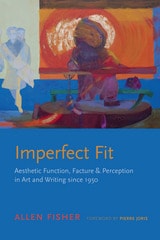
Imperfect Fit: Aesthetic Function, Facture, and Perception in Art and Writing since 1950 is an expansive and incisive examination of the patterns of connectedness in contemporary art and poetry. Allen Fisher—a highly accomplished poet, painter, critic, and art historian as well as a key figure in the British poetry revival of the 1960s and 1970s—has a close and discerning connection to his subjects.
In Imperfect Fit, Fisher focuses on the role of fracturing, ruptures, and breakages in many traditional ties between art and poetry, as well as the resulting use of collage and assemblage by practitioners of those arts. Fisher addresses, among other subjects, destruction as a signifier in twentieth-century art; the poetic employment of bureaucratic vocabularies and “business speak”; and the roles of public performance and memory loss in the fashioning of human knowledge and art.
Commonplace notions of coherence, logic, and truth are reimagined and deconstructed in this study, and Fisher concludes by suggesting that contemporary culture offers a particularly robust opportunity—and even necessity—to engage in the production of art as a pragmatic act. Scholars of art, poetry, and aesthetics will be engaged and challenged by this insightful work.
Impossible Things
Miller Oberman
Duke University Press, 2024
Improvisational Poetry from the Basque Country
Gorka Aulestia
University of Nevada Press, 1995
Foreword by William A. Douglass Translated by Lisa Corcostegui and Linda White.Improvisational Poetry from the Basque Country introduces the Basque bertsolari to the English-speaking world and provides an understanding of an interesting cultural phenomenon—the artist in Basque society who is capable of improvising verse on any subject spontaneously and setting it to music. The tradition is at least several centuries old and runs the gamut from amateurish efforts to periodic national championship competitions. These competitions draw thousands of listeners and pack theaters while many other thousands tune their radios to the broadcasts of the performances. Aulestia takes a scholarly and in-depth look at the art of the bertsolari. In a fascinating text, the author examines the history of a tradition that is truly unique and completely Basque. He introduces and analyzes the performing styles of great bertsolariak, including Xabier Amuriza and Jon Azpillaga. From the bertsolari’s roots in the old Basque Country to the social phenomenon it is today, Aulestia’s look at the improvisational oral literature of the Basques is an essential addition to their written history.