Results by title
168 books match the query 'Poland' and 9 start with i

I Rest My Case
Mark Verstandig
Northwestern University Press, 2002
His personal story interweaves the vast forces of politics and history with intimate details of the shtetl--from the pre-war intricacies of Galician society and the textures of a traditional Jewish education, to the agonizing contradictions of Polish-Jewish relations and the complexities of post-war Jewish politics.
His account of the displaced persons camps where 'transit Jews' awaited their chance to emigrate is a signifigant contribution to a little-known aspect of post-war history.
With his gift for observation and his acute powers of analysis, Mark Verstandig has achieved the rare feat of telling the story of his people through his own history. Part autobiography, part Holocaust literature, part sociological analysis, I Rest my Case is a fine achievement.
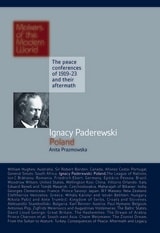
Ignacy Paderewski
PolandAnita Prazmowska
Haus Publishing, 2009
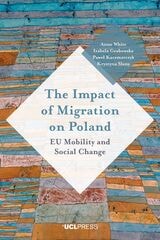
Impact of Migration on Poland
EU Mobility and Social ChangeAnne White, Izabela Grabowska, Pawel Kaczmarczyk, and Krystyna Slany
University College London, 2018
The Impact of Migration on Poland offers a new approach for understanding how migration affects sending countries and provides a wide-ranging analysis of how Poland has changed, and continues to change, since accession to the European Union in 2004. The authors explore an array of social trends and their causes before using in-depth interview data to illustrate how migration contributes to those causes. They address fundamental questions about whether and how Polish society is becoming more equal and more cosmopolitan, arguing that for particular segments of society migration does make a difference. While the book focuses mainly on those who have stayed in Poland, and their contacts with Poles in other countries, it also analyzes Polish society abroad, a concept that is a far more accurate description than “community” in countries such as the UK.
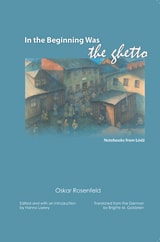
In the Beginning Was the Ghetto
Notebooks from LodzOskar Rosenfeld
Northwestern University Press, 2002
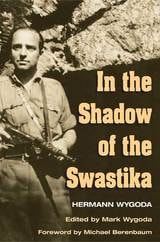
In the Shadow of the Swastika
Hermann Wygoda
University of Illinois Press, 1998
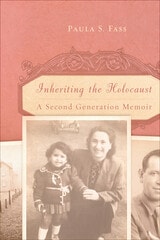
Inheriting the Holocaust
A Second-Generation MemoirPaula S. Fass
Rutgers University Press, 2011
Fass begins her journey through time and relationships when she travels to Poland and locates birth certificates of the murdered siblings she never knew. That journey to recover her family's story provides her with ever more evidence for the perplexing reliability of memory and its winding path toward historical reconstruction. In the end, Fass recovers parts of her family's history only to discover that Poland is rapidly re-imagining the role Jews played in the nation's past.
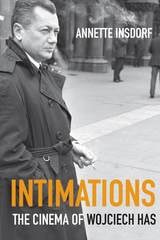
Intimations
The Cinema of Wojciech HasAnnette Insdorf
Northwestern University Press, 2017
Wojciech Has’s films are still less known outside of his native Poland than those of his countrymen Andrzej Wajda, Krzysztof Zanussi, and Krzysztof Kieslowski. Yet thanks to his singular vision, many critics rank Has among the masters of world cinema. Some of his movies have developed a cult following, notably The Saragossa Manuscript, the favorite film of the Grateful Dead’s Jerry Garcia, which has been praised by directors such as Luis Buñuel, Francis Ford Coppola, and Roman Polanski.
Has’s films reveal the inner lives of his characters, which he portrays by giving free rein to his own wildly creative imagination. In addition toThe Saragossa Manuscript, his diverse and innovative filmography includes The Hourglass Sanatorium, a vividly surreal depiction of Hassidic life in Poland between the world wars; The Noose, a stark poetic drama about a lucid alcoholic who knows he will not be able to kick the habit; and How to Be Loved, in which an actress remembers her wartime past.
Has made disparate but formally striking movies infused with European strains of existentialism and the avant-garde. With many of his films being restored and rereleased, new generations of film lovers are discovering his artistic genius. Intimations: The Cinema of Wojciech Has is the definitive guide in English to his work.

Irish Drama in Poland
Staging and Reception, 1900-2000Barry Keane
Intellect Books, 2016

Izabela Czartoryska and the Art of Persuation in Polish Visual Culture
Agnieszka Whelan
Central European University Press, 2026
As a prominent and outspoken member of the Commonwealth’s most influential political family, Czartoryska played a significant role in shaping the public image of the reformist movement through carefully orchestrated communal and cultural displays. The book examines social interactions within the public spaces of theatres and landscape gardens, highlighting the relationship between historical events and their visual and cultural responses.
By tracing the intersections of politics, sociability, and visual culture, the study demonstrates how the life of a single individual can illuminate the broader complexities of political transformation and cultural change at the end of the eighteenth century.