Results by title
637 books match the query 'Political activity' and 26 start with i

I Am of Ireland
Women of the North Speak OutElizabeth Shannon
University of Massachusetts Press, 1997

IN SEARCH OF WORKING CLASS
ESSAYS IN AMERICAN LABOR HISTORY AND POLITICAL CULTURELeon Fink
University of Illinois Press, 1994
"Fink places American labor history in the broader context of American political historiography better than any other historian I can think of." -- James R. Barrett, author of Work and Community in the Jungle: Chicago's Packinghouse Workers, 1894-1922
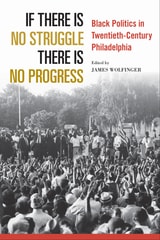
If There Is No Struggle There Is No Progress
Black Politics in Twentieth-Century PhiladelphiaEdited by James Wolfinger
Temple University Press, 2022
Philadelphia has long been a crucial site for the development of Black politics across the nation. If There Is No Struggle There Is No Progress provides an in-depth historical analysis—from the days of the Great Migration to the present—of the people and movements that made the city a center of political activism. The editor and contributors show how Black activists have long protested against police abuse, pushed for education reform, challenged job and housing discrimination, and put presidents in the White House.
If There Is No Struggle There Is No Progress emphasizes the strength of political strategies such as the “Don’t Buy Where You Can’t Work” movement and the Double V campaign. It demonstrates how Black activism helped shift Philadelphia from the Republican machine to Democratic leaders in the 1950s and highlights the election of politicians like Robert N. C. Nix, Sr., the first African American representative from Philadelphia. In addition, it focuses on grassroots movements and the intersection of race, gender, class, and politics in the 1960s, and shows how African Americans from the 1970s to the present challenged Mayor Frank Rizzo and helped elect Mayors Wilson Goode, John Street, and Michael Nutter.
If There Is No Struggle There Is No Progress cogently makes the case that Black activism has long been a powerful force in Philadelphia politics.

Illegalized
Undocumented Youth Movements in the United StatesRafael A. Martínez
University of Arizona Press, 2024
Rafael A. Martínez, an undocu-scholar, intricately weaves his lived experience into this deeply insightful exploration. Martínez’s interdisciplinary approach will engage scholars and readers alike, resonating with disciplines such as history, American studies, Chicana and Chicano studies, and borderlands studies.
Illegalized shows that undocumented youth and their activism represent a disruption to the social imaginary of the U.S. nation-state and its figurative and physical borders. It invites readers to explore how undocumented youth activists changed the way immigrant rights are discussed in the United States today.
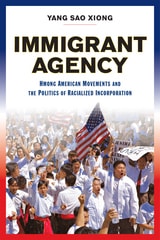
Immigrant Agency
Hmong American Movements and the Politics of Racialized IncorporationYang Sao Xiong
Rutgers University Press, 2022
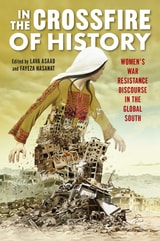
In the Crossfire of History
Women's War Resistance Discourse in the Global SouthLava Asaad
Rutgers University Press, 2022
The transformative mode of these examples expands the definition of heroism and defiance. To prevent these types of heroism from slipping into the abyss of history, this collection brings forth and celebrates women’s fortitude in conflict zones. In the Crossfire of History shines a light onwomen across the globe who are resisting the sociopolitical and economic injustices in their nation-states.

In the Shadows of State and Capital
The United Fruit Company, Popular Struggle, and Agrarian Restructuring in Ecuador, 1900-1995Steve Striffler
Duke University Press, 2002
In the Shadows of State and Capital tells the story of how Ecuadorian peasants gained, and then lost, control of the banana industry. Providing an ethnographic history of the emergence of subcontracting within Latin American agriculture and of the central role played by class conflict in this process, Steve Striffler looks at the quintessential form of twentieth-century U.S. imperialism in the region—the banana industry and, in particular, the United Fruit Company (Chiquita). He argues that, even within this highly stratified industry, popular struggle has contributed greatly to processes of capitalist transformation and historical change.
Striffler traces the entrance of United Fruit into Ecuador during the 1930s, its worker-induced departure in the 1960s, the troubled process through which contract farming emerged during the last half of the twentieth century, and the continuing struggles of those involved. To explore the influence of both peasant activism and state power on the withdrawal of multinational corporations from banana production, Striffler draws on state and popular archives, United Fruit documents, and extensive oral testimony from workers, peasants, political activists, plantation owners, United Fruit administrators, and state bureaucrats. Through an innovative melding of history and anthropology, he demonstrates that, although peasant-workers helped dismantle the foreign-owned plantation, they were unable to determine the broad contours through which the subsequent system of production—contract farming—emerged and transformed agrarian landscapes throughout Latin America.
By revealing the banana industry’s impact on processes of state formation in Latin America, In the Shadows of State and Capital will interest historians, anthropologists, and political scientists, as well as scholars of globalization and agrarian studies.
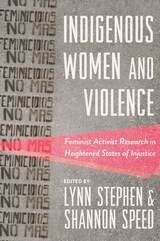
Indigenous Women and Violence
Feminist Activist Research in Heightened States of InjusticeEdited by Lynn Stephen and Shannon Speed
University of Arizona Press, 2021
Indigenous Women and Violence is built on engaging case studies that highlight the individual and collective struggles that Indigenous women face from the racial and gendered oppression that structures their lives. Gendered violence has always been a part of the genocidal and assimilationist projects of settler colonialism, and it remains so today. These structures—and the forms of violence inherent to them—are driving criminalization and victimization of Indigenous men and women, leading to escalating levels of assassination, incarceration, or transnational displacement of Indigenous people, and especially Indigenous women.
This volume brings together the potent ethnographic research of eight scholars who have dedicated their careers to illuminating the ways in which Indigenous women have challenged communities, states, legal systems, and social movements to promote gender justice. The chapters in this book are engaged, feminist, collaborative, and activism focused, conveying powerful messages about the resilience and resistance of Indigenous women in the face of violence and systemic oppression.
Contributors: R. Aída Hernández-Castillo, Morna Macleod, Mariana Mora, María Teresa Sierra, Shannon Speed, Lynn Stephen, Margo Tamez, Irma Alicia Velásquez Nimatuj
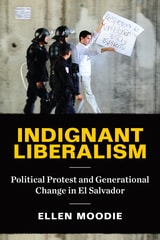
Indignant Liberalism
Political Protest and Generational Change in El SalvadorEllen Moodie
University of Texas Press, 2026
Documenting the rise and disillusionment of El Salvador’s postwar activists in the face of populist authoritarian politics.
The conclusion of El Salvador’s long civil war, in 1992, was supposed to bring about equality and political freedom. Leftist insurgents laid down arms, and the government formally embraced liberal ideals. Yet today, El Salvador is ruled by an authoritarian president who was reelected via unconstitutional means. What went wrong?
Anthropologist and journalist Ellen Moodie embedded with indignados—young middle-class protestors, demanding that the government live up to its liberal commitments—to better understand the course of political change since the civil war. Yet the “post-postwar” generation is only the latest demographic disappointed with liberalism in practice. Moodie examines a nineteenth-century “racial liberalism” that saw descendants of colonists “civilizing” Indigenous people while dispossessing them of lands and mobilizing them for labor. Today, the failure to make good on the promises of postwar liberalism has inspired robust support for strongman Nayib Bukele. Moodie argues that El Salvador’s case, though inflected by local concerns, is not unique. Rather, it is another stark demonstration of how liberalism’s imaginary social contract gives rise to populist authoritarianism.
Indonesian Women and Local Politics
Islam, Gender and Networks in Post-Suharto IndonesiaKurniawati Hastuti Dewi
National University of Singapore Press, 2015
Information Brokers
Political Socialization in Latino Immigrant FamiliesRoberto F. Carlos
University of Chicago Press, 2026
An insightful rethinking of political socialization within Latino immigrant households.
Conventional wisdom tells us that children are passive recipients of political lessons from their parents, with caregivers being the ones who mold the developing behavior and beliefs of the children under their roof. Roberto F. Carlos challenges this preconception by revealing how Latino children, especially those with immigrant parents, often become key sources of political information and guidance in their families. As migrant parents navigate unfamiliar institutions and customs in the United States, they often turn to their children to broker information about everything from daily life to civic engagement. These roles not only place unique responsibilities on children but also create new pathways for them to shape the political behavior of their parents. Moreover, by taking on these roles, children learn the skills that can make them effective advocates later in life, even as they face resource disadvantages that normally correlate with reduced political participation and sense of political efficacy.
Drawing on six original surveys, multiple experiments, and in-depth interviews, including the accounts of youth helping protect their families from deportation, InformationBrokers shows how these dynamics influence both immigrant parents and their children in politically consequential ways. With the Latino population now over 64 million, Information Brokers offers vital insight into the political incorporation of America’s largest ethnic group.
Inside Agitators
Australian Femocrats and the StateHester Eisenstein
Temple University Press, 1996

Inspiring Teens, Tweens, and Families to Make a Difference in the World
Programming to Advance the Sustainable Development GoalsAmanda Moss Struckmeyer
American Library Association, 2025
- programs and activities related to such topics as good health and well-being, ending poverty, peace and justice, responsible consumption and production, decent work, and clean water and sanitation;
- ideas perfect for multi-age audiences (families), tweens, and teens that can be tailored for different group sizes, programming spaces, budgets, and time frames;
- a plethora of flexible, cost-effective passive programs that patrons can engage in at any time;
- guidance on outreach opportunities for fostering partnerships with local experts and guest speakers; and
- pointers on additional and supporting resources including books, videos, and websites.
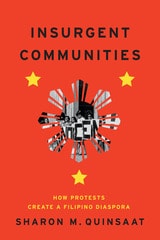
Insurgent Communities
How Protests Create a Filipino DiasporaSharon M. Quinsaat
University of Chicago Press, 2024
When people migrate and settle in other countries, do they automatically form a diaspora? In Insurgent Communities, Sharon M. Quinsaat explains the dynamic process through which a diaspora is strategically constructed. Quinsaat looks to Filipinos in the United States and the Netherlands—examining their resistance against the dictatorship of Ferdinand Marcos, their mobilization for migrants’ rights, and the construction of a collective memory of the Marcos regime—to argue that diasporas emerge through political activism. Social movements provide an essential space for addressing migrants’ diverse experiences and relationships with their homeland and its history. A significant contribution to the interdisciplinary field of migration and social movements studies, Insurgent Communities illuminates how people develop collective identities in times of social upheaval.
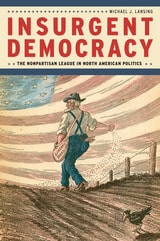
Insurgent Democracy
The Nonpartisan League in North American PoliticsMichael J. Lansing
University of Chicago Press, 2015
Michael J. Lansing aims to change that. Insurgent Democracy offers a new look at the Nonpartisan League and a new way to understand its rise and fall in the United States and Canada. Lansing argues that, rather than a spasm of populist rage that inevitably burned itself out, the story of the League is in fact an instructive example of how popular movements can create lasting change. Depicting the League as a transnational response to economic inequity, Lansing not only resurrects its story of citizen activism, but also allows us to see its potential to inform contemporary movements.

Insurgent Politics in the Lone Star State
Remembering the Antiwar Movement in Austin, Texas, 1967–1973Martin J. Murray
University of North Texas Press, 2025

Intellectuals, Socialism, and Dissent
The East German Opposition and Its LegacyJohn C. Torpey
University of Minnesota Press, 1995
Intellectuals, Socialism, and Dissent was first published in 1995. Minnesota Archive Editions uses digital technology to make long-unavailable books once again accessible, and are published unaltered from the original University of Minnesota Press editions.
Once the Berlin Wall fell in 1989, the people of East Germany had little use for the dissident intellectuals who had helped bring it down. Intellectuals, Socialism, and Dissent offers a penetrating look into the circumstances of this fall from grace, unique among the former Communist states.
John Torpey traces the dissident intellectuals' fate to the peculiar situation of the East German regime, which sought to build "socialism in a quarter of a country" on the anti-fascist foundations of Communist opposition to Nazism. He shows how the regime's unusual history and subnational status helped sustain the East German intelligentsia's conviction that socialism could be reformed and humane-that there was a "third way" between Soviet-style socialism and the capitalism that took root in West Germany. How the pursuit of this third way both supported and undermined the regime, and both galvanized and alienated the East German people, becomes clear in Torpey's nuanced analysis. His book makes a powerful contribution to our understanding of the politics of intellectuals during one of the most painful chapters in modern German history.
John C. Torpey is currently a Jean Monnet Fellow at the European University Institute in Florence.

Intellectuals
Aesthetics, Politics, AcademicsBruce Robbins
University of Minnesota Press, 1990

Iran on the Brink
Rising Workers and Threats of WarAndreas Malm and Shora Esmailian
Pluto Press, 2007
The authors offer a unique portrait of the social upheaval, why it is happening and where it may take the country. Following the fall of reformism, the rise of Ahmadinejad and the recent outbursts of ethnic violence, this book provides rare insights into the inner contradictions of the Islamic Republic.
The second part of the book deals with the international issues facing Iran - in particular the nuclear question, Iran's oil reserves and the serious threat of invasion. It is a sobering account of the realities of life in Iran, and the threat that war poses to the democratic aspirations of the Iranian people.

Iranian Intellectuals in the Twentieth Century
By Ali Gheissari
University of Texas Press, 1997
Since the middle of the nineteenth century, Iranian intellectuals have been preoccupied by issues of political and social reform, Iran's relation with the modern West, and autocracy, or arbitrary rule. Drawing from a close reading of a broad array of primary sources, this book offers a thematic account of the Iranian intelligentsia from the Constitutional movement of 1905 to the post-1979 revolution.
Ali Gheissari shows how in Iran, as in many other countries, intellectuals have been the prime mediators between the forces of tradition and modernity and have contributed significantly to the formation of the modern Iranian self image. His analysis of intellectuals' response to a number of fundamental questions, such as nationalism, identity, and the relation between Islam and modern politics, sheds new light on the factors that led to the Iranian Revolution—the twentieth century's first major departure from Western political ideals—and helps explain the complexities surrounding the reception of Western ideologies in the Middle East.
Iranians in Texas
Migration, Politics, and Ethnic IdentityMohsen Mostafavi MobasherForeword by Nestor Rodriguez
University of Texas Press, 2025
An exploration of the link between politics of migration, prospects of integration, and ethnic identity among Iranian immigrants and their descendants in the United States, spanning from the 1970s to the present day.
Thousands of Iranians fled their homeland when the 1978–1979 revolution ended the fifty-year reign of the Pahlavi dynasty. Some fled to Europe and Canada, while others settled in the United States, where anti-Iranian sentiment flared as the hostage crisis unfolded. For those who chose America, Texas became the fourth-largest settlement area. Iranians in Texas culls data, interviews, and participant observations in Iranian communities in Houston, Dallas, and Austin to reveal the difficult, private world of cultural pride, religious experience, marginality, culture clashes, and other aspects of the lives of these immigrants.
Examining the political nature of immigration between Iran and the United States and social, cultural, and economic life for Iranian immigrants and their American-born children, Mohsen Mostafavi Mobasher incorporates his own experience as a Texas scholar born in Iran. In this revised edition, two new chapters and a new introduction and conclusion provide updates on what has happened in the Obama, Trump, and Biden administrations, including the Iran nuclear deal and resulting controversy, the Muslim ban, and the global protests over the death of twenty-two-year-old Mahsa Amini for not wearing a hijab. Bringing to life a unique immigrant population in the context of global politics, Iranians in Texas overturns stereotypes and echoes diverse voices.

Irish Peasants
Violence and Political Unrest, 1780–1914Samuel Clark
University of Wisconsin Press, 1983
"The strength of this volume cannot be conveyed by an itemisation of its contents; for what it provides is an incisive commentary on the newly-recognised landmarks of Irish agrarian history in the modern period. . . . The importance, even indispensability, of this achievement is compounded by exemplary editing."—Roy Foster, London Times Literary Supplement
"As a whole, the volume demonstrates the wealth, complexity, and sophistication of Irish rural studies. The book is essential reading for anyone involved in modern Irish history. It will also serve as an excellent introduction to this rich field for scholars of other peasant communities and all interested in problems of economic and political developments."—American Historical Review
"A milestone in the evolution of Irish social history. There is a remarkable consistency of style and standard in the essays. . . . This is truly history from the grassroots."—Timothy P. O'Neill, Studia Hibernica

Islamists in a Zionist Coalition
The Political and Religious OriginsUriya Shavit
Rutgers University Press, 2025
Israel's Dead Soul
Authored by Steven Salaita
Temple University Press, 2011
In his courageous book, Israel's Dead Soul, Steven Salaita explores the failures of Zionism as a political and ethical discourse. He argues that endowing nation-states with souls is a dangerous phenomenon because it privileges institutions and corporations rather than human beings.
Asserting that Zionism has been normalized--rendered "benign" as an ideology of "multicultural conviviality"—Salaita critiques the idea that Zionism, as an exceptional ideology, leads to a lack of critical awareness of the effects of the Israeli occupation in Palestinian territory and to an unquestioning acceptance of Israel as an ethnocentric state.
Salaita's analysis targets the Anti-Defamation League, films such as Munich and Waltz with Bashir, intellectuals including Cornel West and Michael Eric Dyson, gay rights activists, and other public figures who mourn the decline of Israel's "soul." His pointed account shows how liberal notions of Zionism are harmful to various movements for justice.

Israel/Palestine and the Queer International
Sarah Schulman
Duke University Press, 2012
As Schulman learns more, she questions the contradiction between Israel's investment in presenting itself as gay friendly—financially sponsoring gay film festivals and parades—and its denial of the rights of Palestinians. At the same time, she talks with straight Palestinian activists about their position in relation to homosexuality and gay rights in Palestine and internationally. Back in the United States, Schulman draws on her extensive activist experience to organize a speaking tour for some of the Palestinian queer leaders whom she had met and trusted. Dubbed "Al-Tour," it takes the activists to LGBT community centers, conferences, and universities throughout the United States. Its success solidifies her commitment to working to end Israel's occupation of Palestine, and it kindles her larger hope that a new "queer international" will emerge and join other movements demanding human rights across the globe.

It Was Always a Choice
Picking Up the Baton of Athlete ActivismDavid Steele
Temple University Press, 2022
The recent flashpoint of Colin Kaepernick taking a knee renews a long tradition of athlete-activists speaking out against racism, injustice, and oppression. Like Kaepernick, Jackie Robinson, Paul Robeson, Muhammad Ali, Bill Russell, Tommie Smith, and John Carlos—among many others, of all races, male and female, pro and amateur—all made the choice to take a side to command public awareness and attention rather than “shut up and play,” as O. J. Simpson, Michael Jordan, and Tiger Woods did. Using their celebrity to demand change, these activists inspired fans but faced great personal and professional risks in doing so. It Was Always a Choice traces the history and impact of these decisive moments throughout the history of U.S. sports.
David Steele identifies the resonances and antecedents throughout the twentieth century of the choices faced by athletes in the post-Kaepernick era, including the advance of athletes’ political organizing in the era of activism following the death of George Floyd. He shows which athletes chose silence instead of action—“dropping the baton,” as it were—in the movement to end racial inequities and violence against Black Americans. The examples of courageous athletes multiply as LeBron James, Megan Rapinoe and the activist-athletes of the NBA, WNBA, and NFL remain committed to fighting daily and vibrantly for social change.