Results by title
99 books match the query 'Politics and culture' and 4 start with i
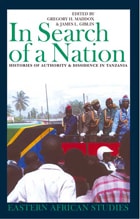
In Search of a Nation
Histories of Authority & Dissidence in TanzaniaGregory H. Maddox
Ohio University Press, 2005

Indigenous Archives
The Maya Diaspora and Mobile Cultural ProductionFloridalma Boj Lopez
Duke University Press, 2026
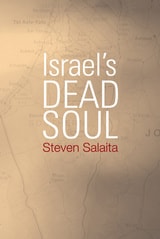
Israel's Dead Soul
Authored by Steven Salaita
Temple University Press, 2011
In his courageous book, Israel's Dead Soul, Steven Salaita explores the failures of Zionism as a political and ethical discourse. He argues that endowing nation-states with souls is a dangerous phenomenon because it privileges institutions and corporations rather than human beings.
Asserting that Zionism has been normalized--rendered "benign" as an ideology of "multicultural conviviality"—Salaita critiques the idea that Zionism, as an exceptional ideology, leads to a lack of critical awareness of the effects of the Israeli occupation in Palestinian territory and to an unquestioning acceptance of Israel as an ethnocentric state.
Salaita's analysis targets the Anti-Defamation League, films such as Munich and Waltz with Bashir, intellectuals including Cornel West and Michael Eric Dyson, gay rights activists, and other public figures who mourn the decline of Israel's "soul." His pointed account shows how liberal notions of Zionism are harmful to various movements for justice.
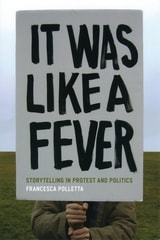
It Was Like a Fever
Storytelling in Protest and PoliticsFrancesca Polletta
University of Chicago Press, 2006
Francesca Polletta’s It Was Like a Fever sets out to account for the power of storytelling in mobilizing political and social movements. Drawing on cases ranging from sixteenth-century tax revolts to contemporary debates about the future of the World Trade Center site, Polletta argues that stories are politically effective not when they have clear moral messages, but when they have complex, often ambiguous ones. The openness of stories to interpretation has allowed disadvantaged groups, in particular, to gain a hearing for new needs and to forge surprising political alliances. But popular beliefs in America about storytelling as a genre have also hurt those challenging the status quo.
A rich analysis of storytelling in courtrooms, newsrooms, public forums, and the United States Congress, It Was Like a Fever offers provocative new insights into the dynamics of culture and contention.