Results by title
939 books match the query 'Religious aspects' and 40 start with i

I Belong to This Band, Hallelujah!
Community, Spirituality, and Tradition among Sacred Harp SingersLaura Clawson
University of Chicago Press, 2011
The Sacred Harp choral singing tradition originated in the American South in the mid-nineteenth century, spread widely across the country, and continues to thrive today. Sacred Harp isn’t performed but participated in, ideally in large gatherings where, as the a cappella singers face each other around a hollow square, the massed voices take on a moving and almost physical power. I Belong to This Band, Hallelujah! is a vivid portrait of several Sacred Harp groups and an insightful exploration of how they manage to maintain a sense of community despite their members’ often profound differences.
Laura Clawson’s research took her to Alabama and Georgia, to Chicago and Minneapolis, and to Hollywood for a Sacred Harp performance at the Academy Awards, a potent symbol of the conflicting forces at play in the twenty-first-century incarnation of this old genre. Clawson finds that in order for Sacred Harp singers to maintain the bond forged by their love of music, they must grapple with a host of difficult issues, including how to maintain the authenticity of their tradition and how to carefully negotiate the tensions created by their disparate cultural, religious, and political beliefs.
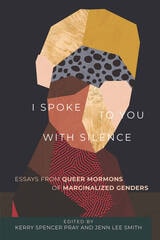
I Spoke to You with Silence
Essays from Queer Mormons of Marginalized GendersEdited by Kerry Spencer Pray and Jenn Lee Smith
University of Utah Press, 2022
This collection of essays gives voice to queer Mormons. The authors who share their stories—many speaking for the first time from the closet—do so here in simple narrative prose. They talk about their identities, their experiences, their relationships, their heartbreaks, their beliefs, and the challenges they face. Some stay in the church, some do not, some are in constant battles with themselves and the people around them as they make agonizing decisions about love and faith and community. Their stories bravely convey what it means to be queer, Mormon, and marginalized—what it means to have no voice and yet to speak anyway.

If Mother Braids a Waterfall
Dayna Patterson
Signature Books, 2020
Dayna Patterson has produced a book obsessed with motherhood and daughterhood, ancestry, and transition—of home, family, faith, and the narratives woven to uphold the Self. In her debut collection of poetry and lyric essay, Patterson grapples with a patriarchal and polygamous heritage. After learning about her mother’s bisexuality, Patterson befriends doubt while simultaneously feeling the urge to unearth a feminist theology, one that envisions God the Mother taking pride in her place at the banquet table.
Image
Three Inquiries in Technology and ImaginationMark C. Taylor, Mary-Jane Rubenstein, and Thomas A. Carlson
University of Chicago Press, 2021
Modern life is steeped in images, image-making, and attempts to control the world through vision. Mastery of images has been advanced by technologies that expand and reshape vision and enable us to create, store, transmit, and display images. The three essays in Image, written by leading philosophers of religion Mark C. Taylor, Mary-Jane Rubenstein, and Thomas A. Carlson, explore the power of the visual at the intersection of the human and the technological. Building on Heidegger’s notion that modern humanity aims to master the world by picturing or representing the real, they investigate the contemporary culture of the image in its philosophical, religious, economic, political, imperial, and military dimensions, challenging the abstraction, anonymity, and dangerous disconnection of contemporary images.
Taylor traces a history of capitalism, focusing on its lack of humility, particularly in the face of mortality, and he considers art as a possible way to reconnect us to the earth. Through a genealogy of iconic views from space, Rubenstein exposes the delusions of conquest associated with extraterrestrial travel. Starting with the pressing issues of surveillance capitalism and facial recognition technology, Carlson extends Heidegger’s analysis through a meditation on the telematic elimination of the individual brought about by totalizing technologies. Together, these essays call for a consideration of how we can act responsibly toward the past in a way that preserves the earth for future generations. Attending to the fragility of material things and to our own mortality, they propose new practices of imagination grounded in love and humility.
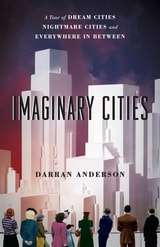
Imaginary Cities
A Tour of Dream Cities, Nightmare Cities, and Everywhere in BetweenDarran Anderson
University of Chicago Press, 2017
This book is about those cities. It’s neither a history of grand plans nor a literary exploration of the utopian impulse, but rather something different, hybrid, idiosyncratic. It’s a magpie’s book, full of characters and incidents and ideas drawn from cities real and imagined around the globe and throughout history. Thomas More’s allegorical island shares space with Soviet mega-planning; Marco Polo links up with James Joyce’s meticulously imagined Dublin; the medieval land of Cockaigne meets the hopeful future of Star Trek. With Darran Anderson as our guide, we find common themes and recurring dreams, tied to the seemingly ineluctable problems of our actual cities, of poverty and exclusion and waste and destruction. And that’s where Imaginary Cities becomes more than a mere—if ecstatically entertaining—intellectual exercise: for, as Anderson says, “If a city can be imagined into being, it can be re-imagined.” Every architect, philosopher, artist, writer, planner, or citizen who dreams up an imaginary city offers lessons for our real ones; harnessing those flights of hopeful fancy can help us improve the streets where we live.
Though it shares DNA with books as disparate as Calvino’s Invisible Cities and Jane Jacobs’s Death and Life of Great American Cities, there’s no other book quite like Imaginary Cities. After reading it, you’ll walk the streets of your city—real or imagined—with fresh eyes.
Imagining Judeo-Christian America
Religion, Secularism, and the Redefinition of DemocracyK. Healan Gaston
University of Chicago Press, 2019
Imago Dei
Thomas Albert Howard
Catholic University of America Press, 2013
Immigrants, Evangelicals, and Politics in an Era of Demographic Change
Janelle S. Wong
Russell Sage Foundation, 2018
Asian Americans and Latinos currently constitute 13 percent of evangelicals, and their churches are among the largest, fastest growing organizations in their communities. While evangelical identity is associated with conservative politics, Wong draws from national surveys and interviews to show that non-white evangelicals express political attitudes that are significantly less conservative than those of their white counterparts. Black, Asian American, and Latino evangelicals are much more likely to support policies such as expanded immigration rights, increased taxation of the wealthy, and government interventions to slow climate change. As Wong argues, non-white evangelicals’ experiences as members of racial or ethnic minority groups often lead them to adopt more progressive political views compared to their white counterparts.
However, despite their growth in numbers, non-white evangelicals—particularly Asian Americans and Latinos—are concentrated outside of swing states, have lower levels of political participation than white evangelicals, and are less likely to be targeted by political campaigns. As a result, white evangelicals dominate the evangelical policy agenda and are overrepresented at the polls. Also, many white evangelicals have adopted even more conservative political views in response to rapid demographic change, perceiving, for example, that discrimination against Christians now rivals discrimination against racial and ethnic minorities.
Wong demonstrates that immigrant evangelicals are neither “natural” Republicans nor “natural” Democrats. By examining the changing demographics of the evangelical movement, Immigrants, Evangelicals, and Politics in an Era of Demographic Change sheds light on an understudied constituency that has yet to find its political home.

Immortal for Quite Some Time
Scott Abbott
University of Utah Press, 2016
Winner of the Utah Arts Council's Original Writing Competition Book Manuscript Prize in Creative Nonfiction
Winner of the 15 Bytes Book Award for Creative Nonfiction
“This is not a memoir. Rather, this is a fraternal meditation on the question: ‘Are we friends, my brother?’ The story is uncertain, the characters are in flux, the voices are plural, the photographs are as troubled as the prose. This is not a memoir.”
Thus Scott Abbott introduces the reader to his exploration of the life of his brother John, a man who died of AIDS in 1991 at the age of forty. Writing about his brother, he finds he is writing about himself and about the warm-hearted, educated, and homophobic LDS family that forged the core of his identity.
Images and quotations are interwoven with the reflections, as is a critical female voice that questions his assertions and ridicules his rhetoric. The book moves from the starkness of a morgue’s autopsy through familial disintegration and adult defiance to a culminating fraternal conversation. This exquisitely written work will challenge notions of resolution and wholeness.

Imperial Bibles, Domestic Bodies
Women, Sexuality, and Religion in the Victorian MarketMary Wilson Carpenter
Ohio University Press, 2003
Of the many literary phenomena that sprang up in eighteenth-century England and later became a staple of Victorian culture, one that has received little attention until now is the “Family Bible with Notes.” Published in serial parts to make it affordable, the Family Bible was designed to enhance the family’s status and sense of national and imperial identity.
Imperial Bibles, Domestic Bodies reveals in its study of the production and consumption of British commercial Family Bibles startling changes in “family values.” Advertised in the eighteenth century as providing the family with access to “universal knowledge,” these Bibles suddenly shifted in the early nineteenth century to Bibles with bracketed sections marked “to be omitted from family reading” and reserved for reading “in the closet” by the “Master of the family.” These disciplinary Bibles were paralleled by Family Bibles designed to appeal to the newly important female consumer. Illustrations featured saintly women and charming children, and “family registers” with vignettes of family life emphasized the prominent role of the “angel in the house.”
As Mary Wilson Carpenter documents in Imperial Bibles, Domestic Bodies, the elaborate notes and “elegant engravings” in these Bibles bring to light a wealth of detail about the English commonsense view of such taboo subjects as same-sex relations, masturbation, menstruation, and circumcision. Her reading of literary texts by Charlotte Brontë, George Eliot, and Elizabeth Barrett Browning in the context of these commercial representations of the “Authorized Version” or King James translation of the Bible indicates that when the Victorians spoke about religion, they were also frequently speaking about sex.

In Defense of Women
A Bilingual EditionPompeo Colonna
Iter Press, 2024
Pompeo Colonna’s In Defense of Women (1530), presented in this volume in Latin and English translation, is one of several important defenses of women composed in the fifteenth and sixteenth centuries by male advocates of women’s moral and intellectual worth. Known as a cardinal and a warrior, but also as an active participant in sixteenth-century Italian literary circles, Colonna addresses the work to his cousin Vittoria Colonna, the most renowned Italian woman poet of the era, who, he writes, had urged him to undertake it. His Defense not only refutes arguments of women’s inferiority and incapacity but, remarkably, asserts their ability to hold political office and govern. It contains original Latin text and a critical introduction by Franco Minonzio. It also features a foreword by Margaret L. King, as well as a postscript by King, tracing the separate male-authored and female-authored Renaissance defenses of women.
In Sacred Loneliness
The DocumentsTodd Compton
Signature Books, 2022
This volume includes many autobiographical writings, diaries, and letters, with Compton providing annotations and introductory material that illuminates these crucial primary sources. This allows readers to take their understanding of this unique group of women to a new level and to drive home that fact that their lives go far beyond the Nauvoo experiment that forever links them to Mormonism’s founding prophet.
In the Eyes of God
A Study on the Culture of SufferingBy Fernando Escalante Gonzalbo
University of Texas Press, 2006
"Every culture needs to appropriate the universal truth of human suffering," says Fernando Escalante, ". . . to give its own meaning to this suffering, so that human existence is bearable." Originally published in Spanish as La mirada de Dios: Estudios sobre la cultura del sufrimiento, this book is a remarkable study of the evolution of the culture of suffering and the different elements that constitute it, beginning with a reading of Rousseau and ending with the appearance of the Shoah in the Western consciousness—"The memory endures, and this constitutes a fundamental transition for the Western conscience: we have witnessed."
Drawing on writings from the Greeks to Cervantes, Voltaire to Nietzsche, and Freud to William James, Escalante combines his considerable knowledge of politics and political theory with a vast array of literary examples to arrive at an intellectual understanding of the history and meaning of suffering. His investigation encompasses the rise of popular politics, the role of messianism in modern nationalism, and the contemporary implications of the Shoah.
This book will appeal to a wide audience: students of political theory, humanism, and philosophy, as well as the general reader interested in a glimpse into the mind of a highly original Latin American thinker.
In the Maw of the Earth Monster
Mesoamerican Ritual Cave UseEdited by James E. Brady and Keith M. Prufer
University of Texas Press, 2005
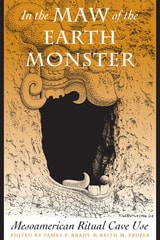
As portals to the supernatural realm that creates and animates the universe, caves have always been held sacred by the peoples of Mesoamerica. From ancient times to the present, Mesoamericans have made pilgrimages to caves for ceremonies ranging from rituals of passage to petitions for rain and a plentiful harvest. So important were caves to the pre-Hispanic peoples that they are mentioned in Maya hieroglyphic writing and portrayed in the Central Mexican and Oaxacan pictorial codices. Many ancient settlements were located in proximity to caves.
This volume gathers papers from twenty prominent Mesoamerican archaeologists, linguists, and ethnographers to present a state-of-the-art survey of ritual cave use in Mesoamerica from Pre-Columbian times to the present. Organized geographically, the book examines cave use in Central Mexico, Oaxaca, and the Maya region. Some reports present detailed site studies, while others offer new theoretical understandings of cave rituals. As a whole, the collection validates cave study as the cutting edge of scientific investigation of indigenous ritual and belief. It confirms that the indigenous religious system of Mesoamerica was and still is much more terrestrially focused that has been generally appreciated.
In the Name of Osama Bin Laden
Global Terrorism and the Bin Laden BrotherhoodRoland Jacquard
Duke University Press, 2002
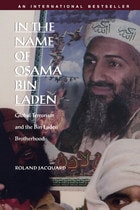
International terrorism expert Roland Jacquard’s In the Name of Osama bin Laden presents a dramatic portrait of the world's most wanted terrorist and his extensive brotherhood--the network of people who operate “in his name.” Published originally in France the very week of September 11, as events in the United States shook the world, the book has become an international bestseller.
Jacquard details how bin Laden became an international emblem of fundamentalist, pan-Islamic, anti-U.S. fervor and the leader of a brotherhood so passionate that devotees who have never met him will act autonomously in his name. The author explains the global character of bin Laden’s organization, elaborating the extent of his sphere of influence in Europe and Asia. Jacquard reveals the construction of bin Laden’s networks—including a profile of his inner circle—and their collaboration with overlapping webs of banking, drug trafficking, religious, and terrorist organizations. He considers the brotherhood’s access to biological, chemical, and nuclear weapons and warns that, with or without bin Laden, this global terrorist force will remain a threat.
Now in English, this edition has been substantially updated in light of recent world events and expanded to include previously unpublished materials, featuring a new introduction and afterword. New documents include an April 2001 interview by the author with bin Laden; a September 24 proclamation by bin Laden to Muslims in Pakistan; and a key page from Dr. Ayman al-Zawahiri’s book justifying eternal jihad, which was smuggled out of Afghanistan in October 2001.
In the Name of Women's Rights
The Rise of FemonationalismSara R. Farris
Duke University Press, 2017

In the Name of the Father
The Rhetoric of the New Southern Baptist ConventionCarl L. Kell and L. Raymond Camp. Foreword by Kenneth Chafin
Southern Illinois University Press, 1999
In the Name of the Father: The Rhetoric of the New Southern Baptist Conventionbegins with an analysis of the 1979 Southern Baptist Convention, the watershed convention where moderate forces fell before the powerful oratory of the ultraconservative faction, which has remained in power ever since. Communication professors Carl L. Kell and L. Raymond Camp investigate the rhetorical shift from moderate to ultraconservative in the Southern Baptist Convention, the largest denomination in the South and the largest Protestant denomination in the United States.
Drawing on sermons delivered at national conventions from 1979 to the present, Kell and Camp outline the discourses of fundamentalism, inerrancy, and exclusion. These discourses, the authors assert, point to the SBC leaders’ call for a return to times before feminism and tolerance of varying sexual orientations allegedly brought chaos to society and shook believers from their theological foundations.
In the Wake of Disaster
Religious Responses to Terrorism and CatastropheHarold G Koenig
Templeton Press, 2006
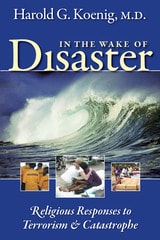
In a timely book with a powerful and persuasive message, Dr. Harold G. Koenig addresses federal, state, and local government policy leaders, urging them to more fully integrate religious organizations into the formal disaster response system, and he then provides recommendations on how this can effectively be done. Koenig also advocates faith communities and organizations to learn more about the role they can play in responding to disasters and terrorism.

Incarnation, Pain, Theology
A Phenomenology of the BodyEspen Dahl
Northwestern University Press, 2024
While the phenomenological tradition has carefully treated both the objective and the lived body, Espen Dahl explores a dimension of the body that does not fall neatly into either category, suggesting that philosophers should take account of the inner density of our organic, material body. By integrating the dimension of “flesh-and-blood” into the phenomenological notion of the body, Dahl argues that it is possible to reach a more adequate notion of human incarnation. The author explores the body in its subjectivity and its resistance, in activity founded on passivity, and in the ambiguous limits of its skin. The phenomenon of pain is given particular attention in this investigation, since pain is, as Dahl argues, what makes the body inescapably manifest in its otherwise hidden dimensions, including its ambiguity and vulnerability. Related to this focus, Dahl also engages with the Christian theological concerns of incarnation, pain, and hope. Phenomenologists have long drawn on this religious inheritance, particularly in what has been dubbed the French “theological turn.” In a similar manner, Incarnation, Pain, Theology: A Phenomenology of the Body draws on these theological sources while firmly holding to its philosophical commitments in methodological approach and analytic aims.

Inside Al-Qaeda and the Taliban
Beyond Bin Laden and 9/11Syed Saleem Shahzad
Pluto Press, 2011
President Obama may have delivered on his campaign promise to kill Osama bin Laden, but as an Al-Qaeda strategist bin Laden has been dead for years. This book introduces and examines the new generation of Al-Qaeda leaders who have been behind the most recent attacks.
Investigative journalist Syed Saleem Shahzad dedicated his life to revealing the strategies and inner workings of Al-Qaeda and the Taliban. He had access to top-level commanders in both movements, as well as within the ISI, Pakistan's intelligence service. Shahzad's work was praised by US Secretary of State Hillary Clinton for 'bringing to light the troubles extremism poses to Pakistan's stability.' Inside Al-Qaeda and the Taliban explains the wider aims of both organisations and provides an essential analysis of major terrorist incidents, including the 2008 Mumbai attacks.
In May 2011, Shahzad was abducted and killed in Pakistan, days after writing an article suggesting that insiders in the Pakistani navy had colluded with Al-Qaeda in an attack on a naval air station. This book is a testament to his fearless reporting and analytical rigour. It will provide readers worldwide with an invaluable introduction to a new phase of the ongoing struggle against terrorism which threatens lives in so many countries.
Intellectual Appetite
A Theological GrammarPaul J. Griffiths
Catholic University of America Press, 2009
Intelligently Designed
How Creationists Built the Campaign against EvolutionEdward Caudill
University of Illinois Press, 2013
International Security in a World of Fragile States
Islamic States and Islamist OrganizationsS. Yaqub Ibrahimi
University of Michigan Press, 2022
Following the 9/11 attacks on New York and Washington, DC, there has been an increasing interest among scholars, students, and the interested public to study and learn about the Islamist-oriented terrorist organizations called Jihadi Salafi Groups (JSGs). Considering that these organizations emerged in highly fragile states, S. Yaqub Ibrahimi asks: how and why is state fragility linked to the emergence of JSGs?
Ibrahimi bases his study on three events: the establishment of al-Qaeda in Afghanistan in 1998, the rise of Islamic State in the post-Saddam Hussein Iraq, and the failed al-Qaeda effort to establish a base in Saudi Arabia in 2003. These case studies contain major aspects and features of the rise of JSGs and, together, explain the contribution of state fragility to the process of the formation and expansion of these terrorist organizations.
International Security in a World of Fragile States stands out as a pivotal work on the interconnection between the root causes of JSGs and state fragility conditions and their amalgamated role in the formation and evolution of these organizations. It contributes to IR and international security debates by developing a comprehensive but readily understandable narrative of the rise of JSGs in Islamic countries, and examining them in an analytical framework in which their root causes are categorized on individual, group, and international levels.
Intersexual Persons and Theology of the Body
A Limit Case for John Paul II's Theological AnthropologyBeth Zagrobelny Lofgren
Catholic University of America Press, 2026
Intimate Connections
Love and Marriage in Pakistan’s High MountainsAnna-Maria Walter
Rutgers University Press, 2022
Intimate Reading
Textual Encounters in Medieval Women’s Visions and VitaeJessica Barr
University of Michigan Press, 2020
This new volume is structured around five case studies. Chapters consider the biographies of 13th-century holy women from Liège, the writings of Margery Kempe, Gertrude of Helfta, Mechthild of Magdeburg, Marguerite Porete, and Julian of Norwich. At the heart of Intimate Reading is the question of how reading works—what it means to enter imaginatively and intellectually into the words of another. The volume showcases the complexity of medieval understandings of the work of reading, deepening our perception of the written word’s capacity to signify something that lies even beyond rational comprehension.

Intimate Relations
Exploring Indian SexualitySudhir Kakar
University of Chicago Press, 1990
Kakar's sources are primarily textual, celebrating the primacy of the story in Indian life. He practices a cultural psychology that distills the psyches of individuals from the literary products and social institutions of Indian culture. These include examples of lurid contemporary Hindi novels; folktales; Sanskrit, Tamil, and Hindi proverbs; hits of the Indian cinema; Gandhi's autobiography; interviews with women from the slums of Delhi; and case studies from his own psychoanalytic practice. His attentive readings of these varied narratives from a vivid portrait of sexual fantasies and realities, reflecting the universality of sexuality as well as cultural nuances specific to India.
Moving from genre to genre, Kakar offers a brilliant reading of verses from the Laws of Manu, the original source of Hindu religious laws, to uncover their psychological foundations—male terror of the female sexual appetite that shields itself by idealizing women's maternal role. Kakar also examines the psychosexual history of Gandhi at length, though his near-lifelong celibacy makes him an atypical subject. Gandhi's story is universal, Kakar says, because "we all wage war on our wants."
In India's lore and tradition, complex symbols abound—snakes that take the shape of sensual women or handsome men, celibates sleep with naked women, gods rape their daughters, and a goddess fries a king in oil. With the analyst's "third ear," Kakar listens, decodes, and translates the psychological longings that find expression in Indian sexual relations.
Invisible Agents
Spirits in a Central African HistoryDavid M. Gordon
Ohio University Press, 2012
Invisible Agents shows how personal and deeply felt spiritual beliefs can inspire social movements and influence historical change. Conventional historiography concentrates on the secular, materialist, or moral sources of political agency. Instead, David M. Gordon argues, when people perceive spirits as exerting power in the visible world, these beliefs form the basis for individual and collective actions. Focusing on the history of the south-central African country of Zambia during the nineteenth and twentieth centuries, his analysis invites reflection on political and religious realms of action in other parts of the world, and complicates the post-Enlightenment divide of sacred and profane.
The book combines theoretical insights with attention to local detail and remarkable historical sweep, from oral narratives communicated across slave-trading routes during the nineteenth century, through the violent conflicts inspired by Christian and nationalist prophets during colonial times, and ending with the spirits of Pentecostal rebirth during the neoliberal order of the late twentieth century. To gain access to the details of historical change and personal spiritual beliefs across this long historical period, Gordon employs all the tools of the African historian. His own interviews and extensive fieldwork experience in Zambia provide texture and understanding to the narrative. He also critically interprets a diverse range of other sources, including oral traditions, fieldnotes of anthropologists, missionary writings and correspondence, unpublished state records, vernacular publications, and Zambian newspapers.
Invisible Agents will challenge scholars and students alike to think in new ways about the political imagination and the invisible sources of human action and historical change.
Invisible Hands
Self-Organization and the Eighteenth CenturyJonathan Sheehan and Dror Wahrman
University of Chicago Press, 2015
Why is the world orderly, and how does this order come to be? Human beings inhabit a multitude of apparently ordered systems—natural, social, political, economic, cognitive, and others—whose origins and purposes are often obscure. In the eighteenth century, older certainties about such orders, rooted in either divine providence or the mechanical operations of nature, began to fall away. In their place arose a new appreciation for the complexity of things, a new recognition of the world’s disorder and randomness, new doubts about simple relations of cause and effect—but with them also a new ability to imagine the world’s orders, whether natural or manmade, as self-organizing. If large systems are left to their own devices, eighteenth-century Europeans increasingly came to believe, order will emerge on its own without any need for external design or direction.
In Invisible Hands, Jonathan Sheehan and Dror Wahrman trace the many appearances of the language of self-organization in the eighteenth-century West. Across an array of domains, including religion, society, philosophy, science, politics, economy, and law, they show how and why this way of thinking came into the public view, then grew in prominence and arrived at the threshold of the nineteenth century in versatile, multifarious, and often surprising forms. Offering a new synthesis of intellectual and cultural developments, Invisible Hands is a landmark contribution to the history of the Enlightenment and eighteenth-century culture.
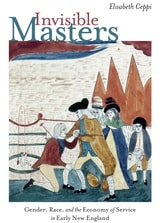
Invisible Masters
Gender, Race, and the Economy of Service in Early New EnglandElisabeth Ceppi
Dartmouth College Press, 2018
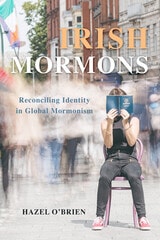
Irish Mormons
Reconciling Identity in Global MormonismHazel O'Brien
University of Illinois Press, 2023
Examining the Latter-day Saint experience against one nation’s rapid social and religious changes, Irish Mormons blends participant observation and interviews with analysis to offer a rare view of the Latter-day Saints in contemporary Ireland.
Islam and Anarchism
Relationships and ResonancesMohamed Abdou
Pluto Press, 2021
Discourse around Muslims and Islam all too often lapses into a false dichotomy of Orientalist and fundamentalist tropes. A popular reimagining of Islam is urgently needed. Yet it is a perhaps unexpected political philosophical tradition that has the most to offer in this pursuit: anarchism.
Islam and Anarchism is a highly original and interdisciplinary work, which simultaneously disrupts two commonly held beliefs - that Islam is necessarily authoritarian and capitalist; and that anarchism is necessarily anti-religious and anti-spiritual. Deeply rooted in key Islamic concepts and textual sources, and drawing on radical Indigenous, Islamic anarchistic and social movement discourses, Abdou proposes 'Anarcha-Islam'.
Constructing a decolonial, non-authoritarian and non-capitalist Islamic anarchism, Islam and Anarchism philosophically and theologically challenges the classist, sexist, racist, ageist, queerphobic and ableist inequalities in both post- and neo-colonial societies like Egypt, and settler-colonial societies such as Canada and the USA.
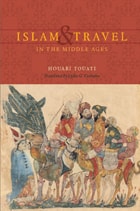
Islam and Travel in the Middle Ages
Houari Touati
University of Chicago Press, 2010
In the Middle Ages, Muslim travelers embarked on a rihla, or world tour, as surveyors, emissaries, and educators. On these journeys, voyagers not only interacted with foreign cultures—touring Greek civilization, exploring the Middle East and North Africa, and seeing parts of Europe—they also established both philosophical and geographic boundaries between the faithful and the heathen. These voyages thus gave the Islamic world, which at the time extended from the Maghreb to the Indus Valley, a coherent identity.
Islam and Travel in the Middle Ages assesses both the religious and philosophical aspects of travel, as well as the economic and cultural conditions that made the rihla possible. Houari Touati tracks the compilers of the hadith who culled oral traditions linked to the prophet, the linguists and lexicologists who journeyed to the desert to learn Bedouin Arabic, the geographers who mapped the Muslim world, and the students who ventured to study with holy men and scholars. Travel, with its costs, discomforts, and dangers, emerges in this study as both a means of spiritual growth and a metaphor for progress. Touati’s book will interest a broad range of scholars in history, literature, and anthropology.
Islam, Justice, and Democracy
Sabri Ciftci
Temple University Press, 2022
Justice (al-‘adl) is one of the principal values of the Islamic faith. In Islam, Justice, and Democracy, Sabri Ciftci explores the historical, philosophical, and empirical foundations of justice to examine how religious values relate to Muslim political preferences and behavior. He focuses on Muslim agency and democracy to explain how ordinary Muslims use the conceptions of divine justice—either servitude to God or exercising free will against oppressors—to make sense of real-world problems.
Using ethnographic research, interviews, and public opinion surveys as well as the works of Islamist ideologues, archives of Islamist journals, and other sources, Ciftci shows that building contemporary incarnations of Islamist justice is, in essence, a highly practical political project that has formative effects on Muslim political attitudes. Islam, Justice, and Democracy compares the recent Arab Spring protests to the constitutionalist movements of the nineteenth and twentieth centuries in the Middle East to demonstrate the continuities and rifts a century apart.
By putting justice at the center of democratic thinking in the Muslim world, Ciftci reconsiders Islam's potential in engendering both democratic ideals and authoritarian preferences.
Islam, Postmodernism and Other Futures
A Ziauddin Sardar ReaderEdited by Sohail Inayatullah and Gail Boxwell
Pluto Press, 2003
Ziauddin Sardar is a prolific writer and an insightful cultural commentator. His latest book, Why Do People Hate America?, has been a regular feature in bestseller lists in several countries. In the UK, he is known as a leading intellectual and his regular contributions to the Observer, the Independent and the New Statesman have brought his writings to a wide audience. As one of our most high-profile Muslim intellectuals, he has also become an increasingly important voice in the media since the events of September 11th 2001.
This is the first collection of his writings that offers a comprehensive introduction to his thought. Starting with his analysis of his own position as a British Muslim and a writer, it goes on to explore issues of Islam and cultural change, education, identity, post-modernism and the future. Drawn from a broad range of his work in scholarly journals as well as from his many books on aspects of culture and society, it includes his most frequently cited papers and makes an ideal introduction to the immense scope of his work in cultural studies.
Ziaddin Sardar is currently the editor of Third Text and Visiting Professor of Cultural Studies at City University, London. His books for Pluto Press include Postmodernism and the Other and Aliens R Us.
Islamic Divorce in the Twenty-First Century
A Global PerspectiveErin E. Stiles
Rutgers University Press, 2022
Islamic Legal Orthodoxy
Devin J Stewart
University of Utah Press, 2007
One of the most far-reaching developments in the history of Islam was the rise of the four classic Sunni schools of law between the ninth and eleventh centuries CE. Consolidation of these schools went hand in hand with the establishment of jurists’ dominance over religious discourse and social institutions. Orthodoxy came to be defined as the consensus (ijma’) of the Sunni jurists. Devin Stewart argues that it is to the margins of the emerging system that investigators must look to understand its historical dynamics. The development of Twelve Shi’ite jurisprudence in relation and reaction to the Sunni schools is particularly informative.
In Islamic Legal Orthodoxy, Stewart explores the process by which Shi’ite jurists participated in the mainstream of Islamic jurisprudence and were influenced by Sunni legal doctrines. He identifies three main reactions to Sunni legal definitions of othodoxy and the concept of consensus on which it was based. The Akhbaris rejected Sunni legal consensus and juristic authority for a scripture-based system; many Shi’ite outwardly accepted the ground rules of Sunni legal consensus and joined the Shafi’i school of jurisprudence; a third option was to adopt the concept of consensus to create a “fifth,” Shi’ite, legal system.
The development of the Sunni legal system effectively set the ground rules for the marginal sect’s negotiation of their identity with respect to Islamic legal orthodoxy. Accordingly, Shi’ite jurists developed a legal institution that is structurally similar to the four Sunni madhhabs and even today serves as means to position themselves in the Muslim world. Stewart points to an underlying tension in Shi’ite intellectual history between assimilationist and nativist impulses in the debate over consensus, dissmulation (taqiyyah) and the lives of certain Shi’ite scholars who lived and studies among Sunnis.
Islamic Modernism, Nationalism, and Fundamentalism
Episode and DiscourseMansoor Moaddel
University of Chicago Press, 2005
An ambitious comparative historical analysis of ideological production in the Islamic world from the mid-1800s to the present, Mansoor Moaddel's Islamic Modernism, Nationalism, and Fundamentalism provides a unique perspective for understanding the social conditions of these discourses. Moaddel characterizes these movements in terms of a sequence of cultural episodes characterized by ideological debates and religious disputations, each ending with a revolution or military coup. Understanding how the leaders of these movements formulated their discourses is, for Moaddel, the key to understanding Middle Eastern history. This premise allows him to unlock for readers the historical process that started with Islamic modernism and ended with fundamentalism.
Islamically Integrated Psychotherapy
Uniting Faith and Professional PracticeCarrie York Al-Karam
Templeton Press, 2018
Integrating the Islamic faith with modern psychotherapy is at the forefront of the spiritually integrated psychotherapy movement. To bring this work to wider attention and to promote its continuation, Dr. Carrie York Al-Karam has brought together the present volume of nine essays, each of which is written by a Muslim clinician who practices Islamically integrated psychotherapy (IIP)—a modern approach that unites the teachings, principles, and interventions of the faith with Western therapeutic approaches.
As delineated in the Introduction, IIP has emerged from a variety of domains including the psychology of religion and spirituality, multicultural psychology and counseling, transpersonal psychology, Muslim Mental Health, and Islamic Psychology. The individual chapters then describe a variety of ways IIP is practiced by Muslim clinicians in their service provision with Muslim clients.
The contributors discuss a wide range of topics, such as how Islam can be viewed as a system for psychological wellbeing, or a “science of the soul”; what marital counseling can look like from an Islamically-integrated perspective; Prophet Mohammed as a psycho-spiritual exemplar in a new approach called The HEART Method; the use of Quranic stories in family therapy; as well as using Islamic teachings when working with Muslim children and adolescents.
A description of the various approaches is supplemented with discussions of their theoretical underpinnings as well as research-based recommendations for advancing clinical application. What emerges is a vital resource for Muslim and non-Muslim clinicians alike as well as the lay Muslim reader wanting to know more about how the Islamic faith and psychotherapy are engaging with each other in a modern clinical context.
It's a New Day
Race and Gender in the Modern Charismatic MovementScott Billingsley
University of Alabama Press, 2008