Results by title
67 books match the query 'Romance' and 6 start with i
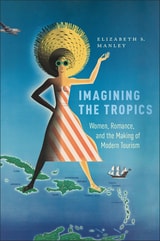
Imagining the Tropics
Women, Romance, and the Making of Modern TourismElizabeth S. Manley
Rutgers University Press, 2025

In the Shadows of Romance
Romantic Tragic Drama in Germany, England, and FranceJeffrey N. Cox
Ohio University Press, 2011
Interracial Intimacy
The Regulation of Race and RomanceRachel F. Moran
University of Chicago Press, 2003
"A good introduction to an issue too often overlooked. . . . The writing is clear and accessible, the evidence is evocative, and the ideas are challenging."—Beth Kiyoko Jamieson, Law and Politics Book Review
"U. S. government bodies have tried to regulate interracial intimacy from the day Pocahontas married John Rolfe up through Loving v. Virginia, which found antimiscegentation laws unconstitutional in 1967. . . . The weirder anecdotes from our racial history enliven this study, which is likely to become a classic in its field."—Publishers Weekly
"Moran examines the history of U. S. regulation of cross-racial romance, considering the impact of that regulation on the autonomy of individuals and families as well as on racial identity and equality. . . . She is attuned to the nuances of race in this polyglot nation, and supplies thoughtful analysis of these nuances."—Booklist

Intimate Disconnections
Divorce and the Romance of Independence in Contemporary JapanAllison Alexy
University of Chicago Press, 2020
Relating the intensely personal stories from people experiencing different stages of divorce, Alexy provides a rich ethnography of Japan while also speaking more broadly to contemporary visions of love and marriage during an era in which neoliberal values are prompting wide-ranging transformations in homes across the globe.
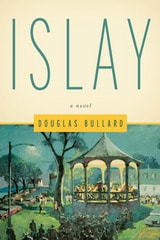
Islay
A NovelDouglas Bullard
Gallaudet University Press, 2013
Now, a new edition of the classic novel Islay promises to entertain a contemporary audience with its Deaf American dream first conceived by Douglas Bullard in 1986. Islay is the name of an imaginary island state coveted by Lyson Sulla, a Deaf man who is tired of feeling that “hearing think deaf means dumb, pat head.” Sulla signs this to his wife Mary in explanation of his desire to tum Islay into a state solely for Deaf people, with himself as governor. From there, his peripatetic quest begins.
Sulla initiates his plan by driving to Islay to survey the lay of the land. There, he meets Gene Owls, another Deaf man who also has designs on the island. Sulla then embarks on travels around the nation recruiting Deaf people to join his crusade. Along the way, he meets a Deaf doctor, a bowling alley owner, a family of peddlers, a Deaf minister, and a willing businessman. Far from a heroic character, Sulla engages in each encounter in an earthy, self-sewing fashion that sends up all parties involved, hearing and Deaf.
Islay uniquely blends classic English forms of satire with the direct, down-to-earth expression of American Sign Language ingenuously rendered throughout. Deaf himself, Bullard has created a wonderfully amusing story that features Deaf people seeking their American dream in a manner both serious and joyous at the same time.
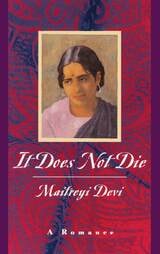
It Does Not Die
A RomanceMaitreyi Devi
University of Chicago Press, 1994
Proud of her intelligence, Maitreyi Devi's father had provided her with a fine and, for that time, remarkably liberal education — and encouraged his brilliant foreign student, Eliade, to study with her. "We were two good exhibits in his museum," Devi writes. They were also, as it turned out, deeply taken with each other. When their secret romance was discovered, Devi's father banished the young Eliade from their home.
Against a rich backdrop of life in an upper-caste Hindu household, Devi powerfully recreates the confusion of an over-educated child simultaneously confronting sex and the differences, not only between European and Indian cultures, but also between her mother's and father's view of what was right. Amid a tangle of misunderstandings, between a European man and an Indian girl, between student and teacher, husband and wife, father and daughter, she describes a romance unfolding in the face of cultural differences but finally succumbing to cultural constraints. On its own, It Does Not Die is a fascinating story of cultural conflict and thwarted love. Read together with Eliade's Bengal Nights, Devi's "romance" is a powerful study of what happens when the oppositions between innocence and experience, enchantment and disillusion, and cultural difference and colonial arrogance collide.
"In two novels written forty years apart, a man and a woman tell stories of their love. . . . Taken together they provide an unusually touching story of young love unable to prevail against an opposition whose strength was tragically buttressed by the uncertainties of a cultural divide."—Isabel Colegate, New York Times Book Review
"Recreates, with extraordinary vividness, the 16-year-old in love that she had been. . . . Maitreyi is entirely, disarmingly open about her emotions. . . . An impassioned plea for truth."—Anita Desai, New Republic
"Something between a reunion and a duel. Together they detonate the classic bipolarities: East-West, life-art, woman-man."—Richard Eder, New York Newsday
"One good confession deserves another. . . . Both books gracefully trace the authors' doomed love affair and its emotional aftermath."—Nina Mehta, Chicago Tribune