Results by title
254 books match the query 'Sex' and 7 start with i

Imperial Bibles, Domestic Bodies
Women, Sexuality, and Religion in the Victorian MarketMary Wilson Carpenter
Ohio University Press, 2003
Of the many literary phenomena that sprang up in eighteenth-century England and later became a staple of Victorian culture, one that has received little attention until now is the “Family Bible with Notes.” Published in serial parts to make it affordable, the Family Bible was designed to enhance the family’s status and sense of national and imperial identity.
Imperial Bibles, Domestic Bodies reveals in its study of the production and consumption of British commercial Family Bibles startling changes in “family values.” Advertised in the eighteenth century as providing the family with access to “universal knowledge,” these Bibles suddenly shifted in the early nineteenth century to Bibles with bracketed sections marked “to be omitted from family reading” and reserved for reading “in the closet” by the “Master of the family.” These disciplinary Bibles were paralleled by Family Bibles designed to appeal to the newly important female consumer. Illustrations featured saintly women and charming children, and “family registers” with vignettes of family life emphasized the prominent role of the “angel in the house.”
As Mary Wilson Carpenter documents in Imperial Bibles, Domestic Bodies, the elaborate notes and “elegant engravings” in these Bibles bring to light a wealth of detail about the English commonsense view of such taboo subjects as same-sex relations, masturbation, menstruation, and circumcision. Her reading of literary texts by Charlotte Brontë, George Eliot, and Elizabeth Barrett Browning in the context of these commercial representations of the “Authorized Version” or King James translation of the Bible indicates that when the Victorians spoke about religion, they were also frequently speaking about sex.
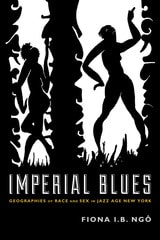
Imperial Blues
Geographies of Race and Sex in Jazz Age New YorkFiona I. B. Ngô
Duke University Press, 2013
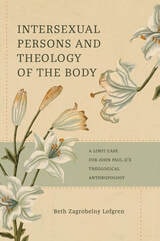
Intersexual Persons and Theology of the Body
A Limit Case for John Paul II's Theological AnthropologyBeth Zagrobelny Lofgren
Catholic University of America Press, 2026
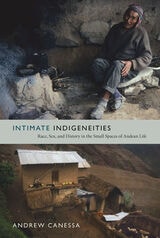
Intimate Indigeneities
Race, Sex, and History in the Small Spaces of Andean LifeAndrew Canessa
Duke University Press, 2012

Intimate Relations
Exploring Indian SexualitySudhir Kakar
University of Chicago Press, 1990
Kakar's sources are primarily textual, celebrating the primacy of the story in Indian life. He practices a cultural psychology that distills the psyches of individuals from the literary products and social institutions of Indian culture. These include examples of lurid contemporary Hindi novels; folktales; Sanskrit, Tamil, and Hindi proverbs; hits of the Indian cinema; Gandhi's autobiography; interviews with women from the slums of Delhi; and case studies from his own psychoanalytic practice. His attentive readings of these varied narratives from a vivid portrait of sexual fantasies and realities, reflecting the universality of sexuality as well as cultural nuances specific to India.
Moving from genre to genre, Kakar offers a brilliant reading of verses from the Laws of Manu, the original source of Hindu religious laws, to uncover their psychological foundations—male terror of the female sexual appetite that shields itself by idealizing women's maternal role. Kakar also examines the psychosexual history of Gandhi at length, though his near-lifelong celibacy makes him an atypical subject. Gandhi's story is universal, Kakar says, because "we all wage war on our wants."
In India's lore and tradition, complex symbols abound—snakes that take the shape of sensual women or handsome men, celibates sleep with naked women, gods rape their daughters, and a goddess fries a king in oil. With the analyst's "third ear," Kakar listens, decodes, and translates the psychological longings that find expression in Indian sexual relations.
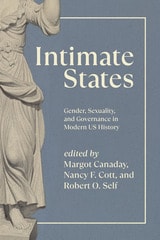
Intimate States
Gender, Sexuality, and Governance in Modern US HistoryEdited by Margot Canaday, Nancy F. Cott, and Robert O. Self
University of Chicago Press, 2021
The last few decades have seen a surge of historical scholarship that analyzes state power and expands our understanding of governmental authority and the ways we experience it. At the same time, studies of the history of intimate life—marriage, sexuality, child-rearing, and family—also have blossomed. Yet these two literatures have not been considered together in a sustained way. This book, edited and introduced by three preeminent American historians, aims to close this gap, offering powerful analyses of the relationship between state power and intimate experience in the United States from the Civil War to the present.
The fourteen essays that make up Intimate States argue that “intimate governance”—the binding of private daily experience to the apparatus of the state—should be central to our understanding of modern American history. Our personal experiences have been controlled and arranged by the state in ways we often don’t even see, the authors and editors argue; correspondingly, contemporary government has been profoundly shaped by its approaches and responses to the contours of intimate life, and its power has become so deeply embedded into daily social life that it is largely indistinguishable from society itself. Intimate States makes a persuasive case that the state is always with us, even in our most seemingly private moments.
Intricate Relations
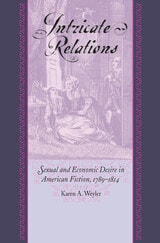
Sexual and Economic Desire in American Fiction, 1789-1814Karen A. Weyler
University of Iowa Press, 2005
Intricate Relations charts the development of the novel in and beyond the early republic in relation to these two thematic and intricately connected centers: sexuality and economics. By reading fiction written by Americans between 1789 and 1814 alongside medical theory, political and economic tracts, and pedagogical literature of all kinds, Karen Weyler recreates and illuminates the larger, sometimes opaque, cultural context in which novels were written, published, and read.
In 1799, the novelist Charles Brockden Brown used the evocative phrase “intricate relations” to describe the complex imbrication of sexual and economic relations in the early republic. Exploring these relationships, he argued, is the chief job of the “moral historian,” a label that most novelists of the era embraced. In a republic anxious about burgeoning individualism in the 1790s and the first two decades of the nineteenth century, the novel foregrounded sexual and economic desires and explored ways to regulate the manner in which they were expressed and gratified.
In Intricate Relations, Weyler argues that understanding how these issues underlie the novel as a genre is fundamental to understanding both the novels themselves and their role in American literary culture. Situating fiction amid other popular genres illuminates how novelists such as Charles Brockden Brown, Hannah Foster, Samuel Relf, Susanna Rowson, Rebecca Rush, and Sally Wood synthesized and iterated many of the concerns expressed in other forms of public discourse, a strategy that helped legitimate their chosen genre and make it a viable venue for discussion in the decades following the revolution.
Weyler’s passionate and persuasive study offers new insights into the civic role of fiction in the early republic and will be of great interest to literary theorists and scholars in women’s and American studies.